
Reviewed · SNORKELING
Reef Rehabilitation Course and Snorkeling
A reef needs hands, not just applause. This six-hour Nusa Penida experience gives you a real conservation task: learning about coral, preparing fragments, and planting 70 corals across about 4 square meters of reef. I like the clear, measurable result, and I like that the day connects reef work with local life through lunch, knot-tying, and community projects.
The small group, capped at 10 people, should keep the instruction personal. Nyoman, Festi, and their team are praised for explaining the coral garden and showing how fragments are secured to ropes and placed on the seabed. The main consideration is physical: you need to swim comfortably and manage several snorkeling sessions, so this is not a passive boat outing.
In This Review
- Key details before you book
- What makes this Nusa Penida reef course different
- The coral presentation gives the day its purpose
- The nursery turns a lesson into hands-on work
- Three snorkeling sessions keep the work active
- Knot-tying makes the restoration work practical
- Planting 70 corals gives you a clear result
- Coral Cafe adds a useful break
- Saturday adds a community connection
- The group size and local team matter
- Is $62.61 a fair price?
- Who should book this experience?
- Booking and cancellation advice
- Should you book the reef rehabilitation course?
- FAQ
- How long does the reef rehabilitation course last?
- What is the price per person?
- Where does the activity start?
- Where does the activity end?
- How many corals does each person plant?
- Is lunch included?
- Is snorkeling equipment provided?
- Do I need to be able to swim?
- How many people can join the activity?
- What happens on Saturdays?
- Are service animals allowed?
- Can I cancel for a full refund?
Key details before you book
- 70 corals per person: Your work is designed to cover roughly 4 square meters of reef.
- Three guided snorkeling sessions: You visit the nursery, collect coral fragments, and help plant them.
- A seven-year local restoration effort: The course grows from a community project rather than a one-off photo stop.
- Lunch at Coral Cafe: A local meal breaks up the water work and classroom-style presentation.
- Maximum of 10 people: The small group should make hands-on instruction easier.
- Saturday school visit: On Saturdays, the program includes English teaching and conservation activities with local children.
What makes this Nusa Penida reef course different
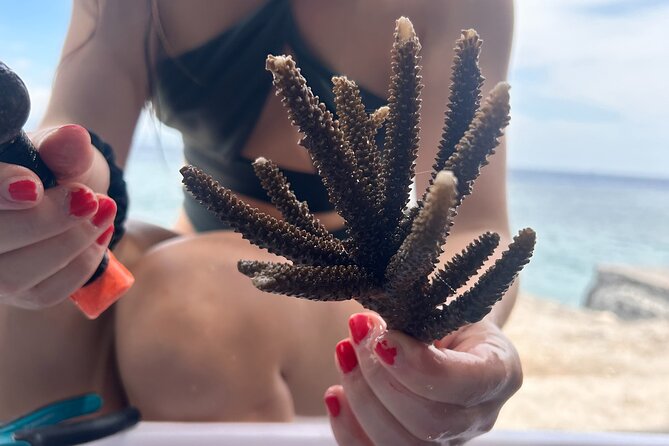
Many conservation activities ask you to donate money, pose with a symbolic coral certificate, or watch a short presentation. This one gives you a practical job beneath the water. You learn what coral needs, handle fragments, tie them to ropes, and place them in the restoration area.
That distinction matters. You are not simply paying for a snorkeling trip with a conservation label attached. The day is built around reef repair, with snorkeling used as the way you reach and work with the coral nursery.
The program comes from a local community with seven years of coral restoration experience. That does not guarantee perfect sea conditions or a dramatic reef recovery during your visit, but it does give the activity a longer purpose. Your planted coral is part of an ongoing effort, not an isolated gesture.
The promised result is unusually specific: 70 corals and about 4 square meters of restored reef per person. Numbers like these help you understand what your fee supports. They also explain why the day involves more than a quick swim and a few photographs.
More snorkeling trips in Nusa Penida:
- ️Nusa Penida by Private Boat – Snorkeling 4 spots, Swim with Mantas + Land Tour
★ 5.0 · 6,424 reviews - One Day Nusa Penida Island West with Snorkeling
★ 4.5 · 560 reviews - Snorkeling Manta Ray Safari in Nusa Penida
★ 4.0 · 167 reviews
The coral presentation gives the day its purpose
The first stage is a conservation presentation covering coral biology, ocean conditions, and the value of reef ecosystems. You learn why reefs matter and how damaged areas can be brought back.
This introduction is important because coral restoration can look deceptively simple from above. A fragment tied to a rope may seem like a small object, but its placement, attachment, and growing conditions all matter. The presentation gives you a reason for each later step.
You also learn how the nursery works. Coral nurseries provide a managed place where fragments can grow before being used in restoration. Seeing that process helps you understand the work behind a healthy reef, rather than treating coral as scenery beneath the surface.
The course is likely best for you if you enjoy learning by doing. It is less suitable if you want a relaxed morning of floating with little instruction. The conservation material is central to the experience, not filler between snorkeling stops.
The nursery turns a lesson into hands-on work
After the introduction, you see how the coral nursery is cultivated. This is where the project becomes easier to understand. You can connect the careful nursery work with the larger goal of rebuilding damaged reef areas.
You then harvest coral fragments for planting. The supplied information does not specify the coral species or the exact nursery structure, so you should not expect a detailed marine science field course. Still, the sequence gives you a practical look at how restoration material is prepared.
The work also changes the way you view snorkeling. Instead of only looking for fish or colorful coral, you are watching for the systems that help a reef grow. You become more aware of ropes, attachment points, nursery areas, and the care needed to avoid damaging existing coral.
That is one of the best parts of the course. It encourages you to pay attention without pretending that a few hours can solve the wider problems facing the ocean.
Three snorkeling sessions keep the work active
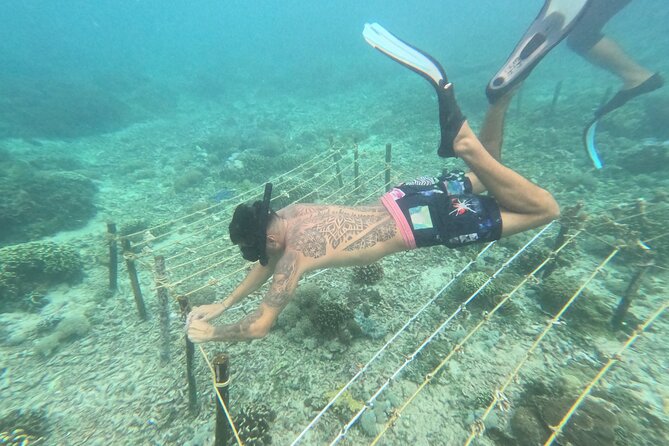
The experience includes three guided snorkeling sessions. They serve different purposes within the course, including visiting the nursery, collecting fragments, preparing the planting materials, and placing the coral on the seabed.
The water sessions are not described as identical sightseeing loops. They are tied to the restoration work, so you should expect to use your hands and follow instructions rather than simply swim wherever you like. The team provides snorkeling equipment and the materials used for coral restoration.
You must be comfortable in the water. The physical requirement is listed as moderate fitness, and you should be able to swim comfortably. That is worth taking seriously because the day combines swimming, handling equipment, knot work, and repeated movement between tasks.
Conditions at sea can affect the experience. The course description points to local knowledge of currents and coastline, but it does not promise a particular visibility level, water temperature, or marine life encounter. If your main goal is perfect snorkeling scenery, you may find the conservation work more dependable than the wildlife viewing.
If your priority is active participation, the structure is a strength. You are given a useful reason to enter the water each time, and the three sessions break the day into manageable stages.
A completely different kind of day out on the same trip:
- Bali to Nusa Penida: Premium Private Full Day Tour-All Inclusive
★ 5.0 · 764 reviews - One Day Nusa Penida Island West & East
★ 4.5 · 425 reviews - Nusa Penida Two Dives Trip for Certified Divers
★ 5.0 · 197 reviews - One Day Nusa Penida Island West
★ 4.5 · 177 reviews
Knot-tying makes the restoration work practical
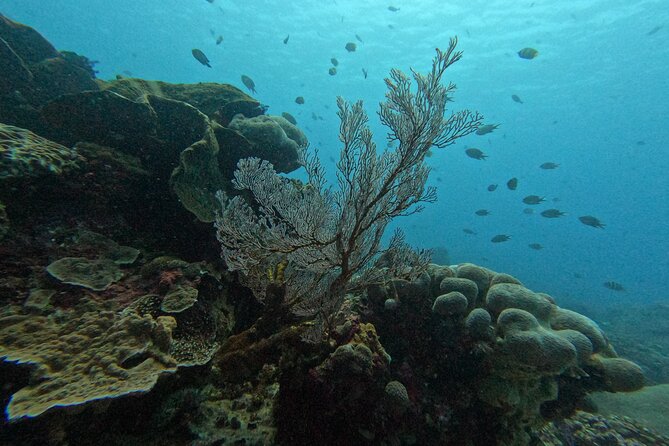
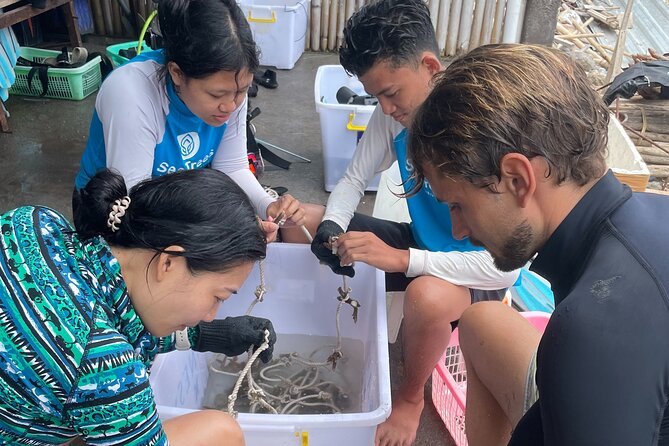
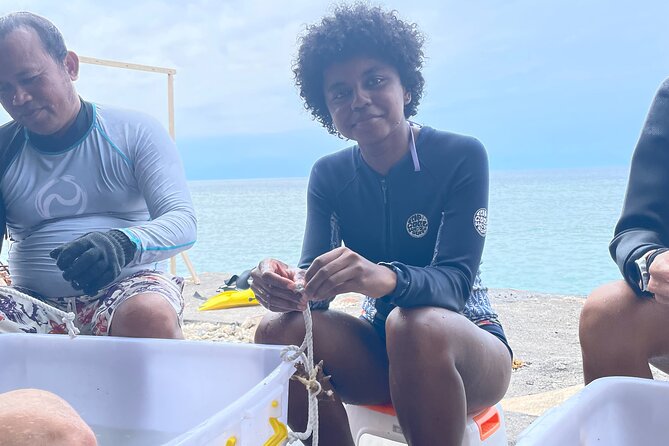
One of the more unusual parts of the course is the underwater knot-tying lesson. You learn how to prepare ropes with the collected coral fragments before attaching them for restoration.
This may sound minor, but it is a useful skill within the project. Coral fragments need to be secured properly, and underwater work is different from tying a rope on land. You have to work while swimming, manage the material, and follow the team’s method.
The program does not say which knots you will learn or how difficult they are. You should expect a basic practical lesson, not a professional diving qualification or marine construction course.
The knot lesson also gives the experience a welcome sense of participation. You are not handing your coral to someone else and watching from a distance. You help prepare it and take part in the planting process.
Planting 70 corals gives you a clear result
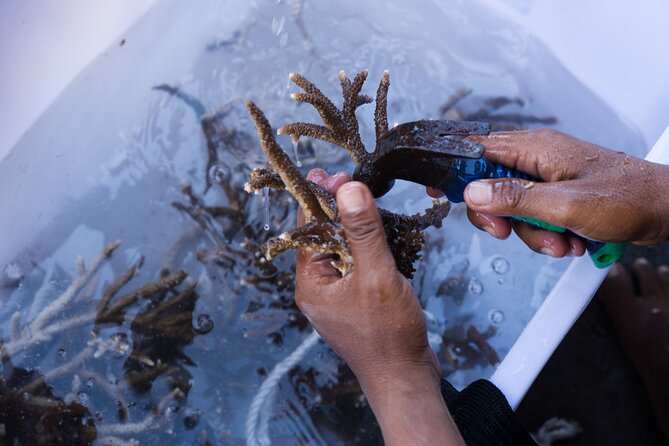
The central task is planting 70 corals per person, covering around 4 square meters. This is the part that gives the course its strongest value.
A clear target helps you understand what your time and money are doing. By the end, you are not left with only a vague feeling that you supported conservation. You have taken part in a defined amount of reef restoration.
The figure should not be read as an instant guarantee of a healthy reef. Coral growth takes time, and the course does not provide a timetable for survival or a system for tracking each participant’s coral afterward. The honest value is the labor and materials you contribute to a continuing restoration program.
The planting also requires care. Existing coral is fragile, and you will need to follow the team’s directions closely. This is a good setting for a calm, attentive person who can listen underwater and handle the equipment gently.
A past participant particularly enjoyed learning how to work with the coral garden, attach coral to ropes, and secure the ropes on the seabed. That sequence captures the practical appeal of the day: the task moves from nursery to rope to reef.
Coral Cafe adds a useful break
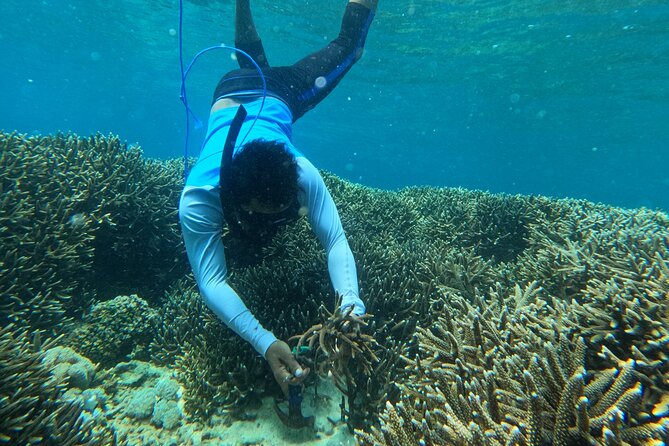
Lunch at Coral Cafe is included. It gives you a chance to leave the water, eat, and regroup before the later conservation tasks.
The information does not specify the menu, dietary options, or drinks, so you should not book this expecting a particular dish. It is best viewed as a convenient local lunch built into a six-hour program, not as a separate culinary event.
Including lunch improves the day’s rhythm. Coral planting and snorkeling require energy, and a scheduled break keeps the course from feeling like one long block of instruction. It also supports the experience’s local focus, which reaches beyond the reef itself.
Personal expenses are not included. Bring money if you expect to buy anything outside the provided lunch or need additional personal items.
Saturday adds a community connection
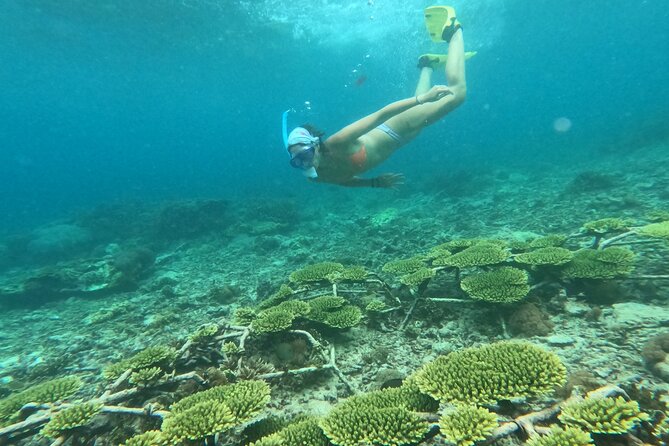
On Saturdays, the program visits a local school, teaches English, and takes part in conservation activities such as beach cleanups with children. A gift to local children and the school is included.
This makes Saturday a different version of the course. The reef work remains the main reason to book, but the school visit adds a direct connection with the community. You get to see conservation presented as a shared local responsibility rather than a service delivered only to visitors.
The schedule for the school visit is not specified, so ask the operator for the exact Saturday timing if this part matters to you. It may affect how the six hours are divided between reef work, lunch, and community activities.
The school element should appeal to you if you want your visit to include a social contribution. If you prefer a tightly focused marine workshop with no community stop, choose a non-Saturday date if available.
The group size and local team matter
The maximum group size is 10 people. That is a practical advantage for a hands-on course. When you are learning knots or placing coral, clear instruction matters more than it would on a standard sightseeing tour.
The experience is operated by Ecotourism Nusa Penida and begins and ends at the meeting point in Ped, Nusa Penida. The listed starting location is Ecotourism Nusa PenidaBuyuk on Jalan in Ped, Klungkung Regency.
No hotel pickup is included in the supplied details. Plan your own way to the meeting point and allow enough time to arrive ready for a six-hour activity. The mobile ticket is convenient once you are on the move, and booking confirmation is provided at the time of booking.
Nyoman and Festi are named as members of the team. Their work received particular praise for explaining the reef, coral garden, rope preparation, and seabed planting. That is exactly the kind of guidance you need for an activity where technique matters.
Is $62.61 a fair price?
At $62.61 per person, the course costs more than a basic snorkeling excursion, but it offers a different product. You receive snorkeling equipment, coral restoration materials, lunch, instruction, and hands-on work intended to restore about 4 square meters of reef.
The program states that a similar level of impact through typical nongovernmental organizations can cost hundreds of dollars. That comparison should be treated as a guide to the project’s stated value, not as a guarantee that every dollar can be measured as a direct donation. Even so, the fee is reasonable if you place value on instruction and active conservation.
The strongest value comes from the combination of three things:
- You learn how reef restoration works.
- You contribute labor and materials directly.
- You support a local project with a seven-year history.
The price is less compelling if you want only free swimming time, a luxury lunch, or guaranteed marine life sightings. In that case, a conventional snorkeling trip may suit you better.
Who should book this experience?
I would recommend it to you if you can swim comfortably, enjoy moderate physical activity, and want a conservation experience with a defined task. It also fits people who prefer small groups and practical instruction over a large boat outing.
Families or groups considering the Saturday program should check the exact school arrangements before booking. The supplied information does not give a minimum age, so do not assume that young children can take part in every activity.
You should also be happy working to a schedule. The day includes a presentation, nursery visit, fragment collection, lunch, knot instruction, rope preparation, and coral planting. That structure is useful, but it leaves less room for wandering or choosing your own pace.
Service animals are allowed. The activity is described as suitable for people with moderate fitness, but the requirement to swim comfortably remains important.
Booking and cancellation advice
The activity offers free cancellation when you cancel at least 24 hours before the local start time. Cancellations made less than 24 hours before the start, along with late changes, are not accepted for a refund.
That policy is fairly useful for a planned island schedule, but check your transport plans carefully. Since the course lasts about six hours and starts and ends at the listed meeting point, a late boat, delayed transfer, or change in weather plans could affect your day.
The group maximum is 10, and the activity is often booked around 38 days ahead. If you want a particular date, especially a Saturday with the school visit, booking early makes sense.
Should you book the reef rehabilitation course?
Book it if you want your time in Nusa Penida to include real work, not just reef viewing. The strongest reasons are the small group, the named local team, the three guided snorkeling sessions, and the clear goal of planting 70 corals across about 4 square meters.
Skip it if you cannot swim comfortably, want a quiet sightseeing trip, or need a menu and schedule tailored to special requirements that are not described. For the right person, $62.61 is a fair price for instruction, equipment, lunch, materials, and a tangible role in a seven-year local restoration effort.
The best way to approach it is with modest expectations. You are not fixing an entire reef in one morning. You are learning how restoration works and adding your hands to a continuing community project. That is a worthwhile reason to get wet.
FAQ
How long does the reef rehabilitation course last?
The experience lasts approximately six hours.
What is the price per person?
The listed price is $62.61 per person.
Where does the activity start?
It starts at Ecotourism Nusa PenidaBuyuk on Jalan in Ped, Nusa Penida, Klungkung Regency, Bali 80771, Indonesia.
Where does the activity end?
The activity ends back at the starting meeting point.
How many corals does each person plant?
Each person plants 70 corals, covering approximately 4 square meters of reef.
Is lunch included?
Yes. Lunch at Coral Cafe is included.
Is snorkeling equipment provided?
Yes. Snorkeling equipment and the materials used for coral restoration are provided.
Do I need to be able to swim?
Yes. You should be able to swim comfortably, and the activity recommends a moderate level of physical fitness.
How many people can join the activity?
The group has a maximum of 10 participants.
What happens on Saturdays?
On Saturdays, the program includes a visit to a local school, English teaching, and conservation activities such as beach cleanups with children. A gift to the local children and school is included.
Are service animals allowed?
Yes. Service animals are allowed.
Can I cancel for a full refund?
Yes, if you cancel at least 24 hours before the local start time. Cancellations and changes made less than 24 hours before the start are not accepted for a refund.
Newest reviews from Nusa Penida
- Snorkeling 4 Spot With Manta Bay Or Optional Land Trip★ 5.0 · 14 reviews
- Snorkeling Manta Rays, Land Tour Tembeling Pool & Kelingking★ 4.5 · 16 reviews
- Nusa Penida : Snorkeling Trip Manta Point, Gamat Bay and Wall Bay★ 5.0 · 17 reviews
- Full-Day Nusa Penida Island with Snorkeling from Bali★ 5.0 · 21 reviews
- Manta Point Snorkeling & West Nusa Penida Island Day Tour★ 4.5 · 23 reviews
- One Day Nusa Penida Island East★ 5.0 · 29 reviews
- Explore 4 iconic snorkeling spots of Manta Bay in Nusa Penida★ 4.5 · 29 reviews
- Try Freediving on Nusa Penida★ 5.0 · 30 reviews
Snorkeling, compared.
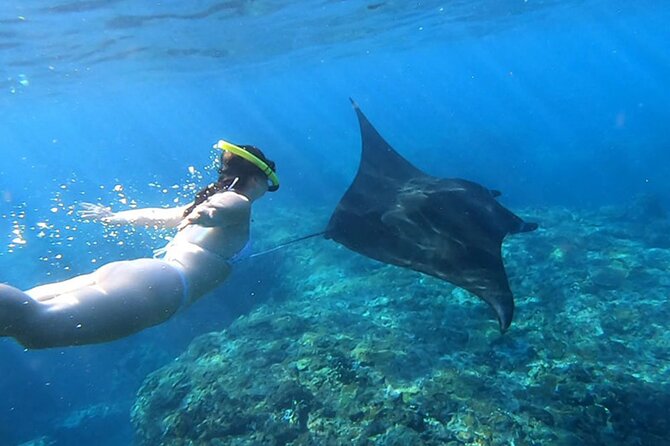
️Nusa Penida by Private Boat – Snorkeling 4 spots, Swim with Mantas + Land Tour
Read our review →Bali Snorkeling Tour at Blue Lagoon Beach – All-Inclusive
Read our review →
Nusa Penida day trip: boat, 4 snorkeling, Manta rays & Land tour
Read our review →
Nusa Penida Snorkeling Adventure (Private & All-Inclusive)
Read our review →
All Inclusive : Bali Blue Lagoon Snorkeling, Lunch, and Transport
Read our review →
Bali Blue Lagoon Snorkeling – Lunch and Transport All Inclusive
Read our review →
One Day Nusa Penida Island West with Snorkeling
Read our review →
Blue Lagoon Snorkeling – Lunch – Kantolampo – Tibumana Waterfall
Read our review →Browse the lists this tour appears in