
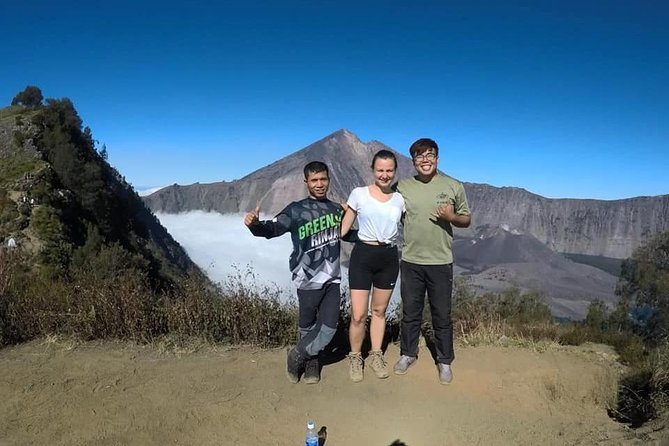
Reviewed · MOUNT RINJANI TREKS
Rinjani trekking 2D 1N RIM
Mountain sunsets rarely come easy. Green Rinjani’s 2-day, 1-night Senaru trek gives you a demanding but manageable route to Mount Rinjani’s crater rim, then returns you to the village without the tougher summit climb. I especially like the sunset views toward the three Gilis and Bali’s Mount Agung, plus the generous supply of food, water, fruit, and snacks. The private format is another strong point, since your guide can match the pace to your group rather than a large crowd.
The main catch is simple: this is still a serious mountain hike. The climb from Senaru to the rim takes roughly seven to eight hours, with a steep and stony final section, and the descent takes another five to six hours. You also need to bring several personal items, including a headlamp, suitable shoes, long trekking clothes, and a small day pack.
In This Review
- Key points to know before booking
- What the $205 package really covers
- Day one: from Senaru village into the forest
- Pos 3 and the monkey problem
- Leaving the trees for the Senaru rim
- Sunset, Lake Segara Anak, and a night above Lombok
- Day two: sunrise and the long descent
- Guides, porters, and the service level
- Who will enjoy this trek most
- What to pack, and what not to expect
- Booking details and cancellation
- Should you book Green Rinjani’s 2-day rim trek?
- FAQ
- Where does the Rinjani trek start?
- How high is the crater rim?
- How long is the first day of hiking?
- How long is the descent on day two?
- Does the tour climb to Mount Rinjani’s summit?
- Is camping equipment included?
- Are meals and drinks included?
- Do I need to bring a headlamp?
- Can I hire a porter for my personal luggage?
Key points to know before booking
- Senaru offers the easier Rinjani goal, not an easy walk: You reach the 2,641-meter crater rim, but the ascent is long and the final approach is steep.
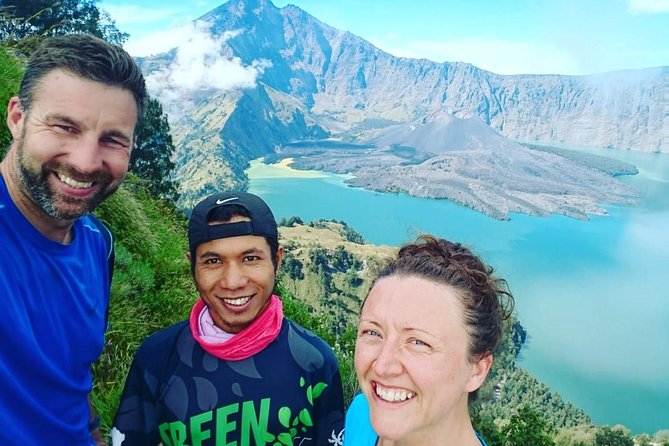
- Sunset comes with a grand view: From the rim, you can look toward the three Gilis, Bali’s Mount Agung, Lake Segara Anak, and Rinjani’s 3,726-meter summit.
- Food is a major strength: Breakfast, lunch, dinner, fruit, biscuits, soft drinks, coffee, tea, bottled water, and snacks are included.
- Camping gear is supplied: Your package includes a tent, sleeping bag, pillow, sleeping mat, camping table and chairs, and a toilet tent.
- Private pacing helps: You hike only with your own group, guide, and porters, making rest stops more flexible.
- Pack carefully: A headlamp or torch, trekking shoes, long trousers, warm layers, sun protection, insect repellent, and a small backpack are not included.
What the $205 package really covers
At about $205, this is not simply a guided walk with a tent at the end. The price includes transport from the meeting point and back to your next destination, a local guide, porters, meals, drinks, camping equipment, and a private hiking arrangement.
That bundle matters on Rinjani. Carrying food, shelter, sleeping equipment, and cooking supplies up the mountain would make an already long walk much harder. The porters handle the shared camping load, while the guide manages the route and your pace.
You should note one confusing detail before booking. A porter is included, but an extra porter for your own luggage costs $22 per day. In practice, you should plan to carry your own day pack unless you arrange this extra service. Keep that bag light. It needs to hold your water, camera, rain or wind layer, sun protection, snacks, toiletries, and anything you need during the day.
The food provision sounds particularly good for a trek of this length. Lunch is prepared at Pos 3, and dinner is served at the crater rim. Breakfast follows the sunrise the next morning. Fruit such as bananas and pineapple, biscuits, crackers, soft drinks, coffee, tea, and bottled water are part of the package, so you are not left relying only on what you packed.
Alcoholic drinks are also listed as included, though you should confirm the exact selection with Green Rinjani before setting out. On a steep mountain route, hydration remains much more useful than a celebratory drink.
More Rinjani treks:
- Mount Rinjani 2 Days 1 Night Senaru Crater Rim
★ 5.0 · 131 reviews - 3D-2N Explore Mount Rinjani – Summit -Lake and Hotspring
★ 5.0 · 112 reviews - Rinjani Trekking 3D2N Summit
★ 4.5 · 85 reviews
Day one: from Senaru village into the forest
The trek begins around 7:30 to 8:00 in the morning after registration at the Rinjani Trekking Centre in Senaru. The listed meeting time is 7:00, so allow time for preparation and registration rather than arriving at the last minute.
The first half hour passes through open ground near the village. You see coffee trees, bamboo, and other plants grown by local residents. This opening is a pleasant change from the usual instant jump into thick forest, and it gives you a look at the agricultural life around Senaru.
After roughly 30 minutes, the route enters tropical rainforest. The shade is welcome, especially as the climb continues, but humidity can make the walk feel harder than the distance suggests. Large trees line the trail, and you may hear or spot black or brown monkeys. The forest is not just a corridor to the rim. It is the first distinct part of the walk, with cooler shade, animal sounds, and a strong contrast to the open volcanic slopes above.
The first major rest point is Pos 2, also called Montong Satas, at about 1,500 meters. Reaching it takes around three hours from the start, according to the itinerary. Here, the guide and porters prepare soft drinks, crackers, and fresh fruit. This is a useful break, not a quick photo stop. You can sit down, eat, drink, and let your legs recover before the next section.
From Pos 2 to Pos 3 takes about two hours. In June, July, and August, the trail may offer local wild strawberries. Treat that as a seasonal extra rather than a guaranteed feature, but it is a nice detail of the route.
Pos 3 and the monkey problem
Pos 3, known as Mondokan Lokak, sits at roughly 2,000 meters. Lunch is cooked here, and you receive more fruit and biscuits. After several hours on foot, a proper hot meal makes a real difference.
This is also where you need to pay attention to your belongings. Brown monkeys live near the rest area and may grab small backpacks if you leave them unattended. Keep your bag close, zip every pocket, and do not leave food exposed. It is a small practical nuisance, but an easy one to avoid.
The break at Pos 3 lasts about 90 minutes in the stated schedule. That sounds generous, and it should help you conserve energy for the hardest part of day one. Still, the overall climb remains long. If you usually walk only on flat paths, this section will test you.
Leaving the trees for the Senaru rim
About 25 minutes after leaving Mondokan Lokak, the route exits the rainforest. The mood changes quickly. You are now walking through open savanna on hillsides, with more sky and wider views around you.
The trail becomes steeper and stony. A rest point called Cemara Lima offers a chance to stop and look back toward Senaru village. The itinerary describes views covering about 40 percent of the village from this area, which gives you a sense of how much height you have gained.
The final approach to Pelawangan 1, the Senaru crater rim, takes roughly another hour. This is the section where patience matters most. The surface is loose and rocky, and the uphill grade can feel sharp after several hours in the forest.
You reach the rim at about 2,641 meters. The total day usually runs from the morning start until late afternoon, though the exact arrival time depends on your group’s pace and rest stops. Since this is a private trip, you can ask the guide for more breaks, but you should not assume the mountain will feel gentle. Several people describe the two days as tough, even while praising the care of the guides and porters.
More treks in Lombok:
- 2D1N Senaru Crater Rim Trekking
★ 5.0 · 178 reviews - 3D/2N Rinjani trekking summit,lake and hot springs.
★ 5.0 · 85 reviews - Rinjani Trekking 3 Days 2 Nights (Sembalun – Senaru)
★ 5.0 · 84 reviews - Mount Rinjani 3D 2N Trekking
★ 5.0 · 75 reviews
Sunset, Lake Segara Anak, and a night above Lombok
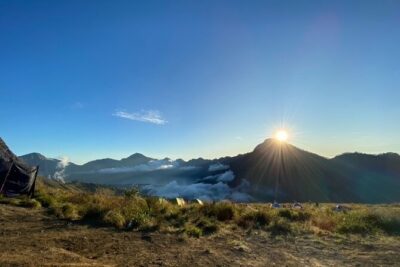
The reward for the climb comes at the crater rim. Looking outward, you can watch the sun set over the three Gilis and Bali’s Mount Agung. The view reaches beyond Lombok, which gives this camp a sense of scale that a forest viewpoint cannot match.
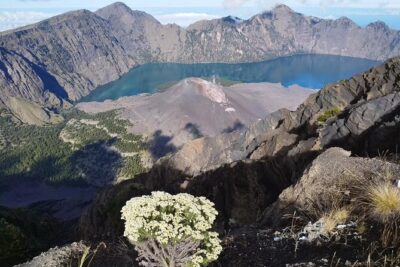
The crater interior brings a second kind of drama. You can see Lake Segara Anak, the smoke rising through a volcanic opening in the lake, and the summit of Rinjani at 3,726 meters. This itinerary does not climb to the summit or descend to the lake. That is important. You get a strong view into the crater without committing to the much more demanding summit route.
The night is spent camping beside the rim. The supplied equipment includes a tent, sleeping bag, camping pillow, sleeping mat, camping table and chairs, and a toilet tent. That is a generous camping setup for a one-night mountain trip, especially because the porters carry the shared equipment.
Still, mountain camping is not a hotel night. Bring a warm, windproof jacket and suitable layers. The recommended packing information also calls for long trekking trousers, spare T-shirts, a small towel, toiletries, and optional trekking poles. You may sleep under the stars, but warmth and comfort depend heavily on what you pack.
Day two: sunrise and the long descent
Day two begins with breakfast and sunrise at the rim. This is your best chance to see the lake and surrounding peaks in clearer morning light, then take photographs before starting down.
The return to Senaru takes about five to six hours. Descending sounds easier than climbing, but the stony trail can be hard on knees, ankles, and tired feet. Trekking poles are optional, yet I would consider them useful for balance and braking on the downhill sections.
You should reach the Rinjani Trekking Centre at about 12:30 to 1:00 in the afternoon. A private car then takes you to your next destination. This transfer is valuable if you have a hotel, airport connection, or ferry plan later in the day, but leave a sensible time margin. Mountain schedules can shift with walking speed, rest breaks, and conditions.
The route returns to Senaru rather than continuing around the crater. That makes this trip a good fit if your main goal is the crater-rim view and a night in the mountains, not a full Rinjani expedition.
Guides, porters, and the service level
The strongest part of the arrangement appears to be the people. Guides named in the feedback include Dana, Adi, Yun, Ubang, and Sri. The praise is specific: Dana is described as supportive and attentive, Adi as patient and careful with group pace, Ubang as helpful and good at keeping the trek enjoyable, and Sri as focused on safety and comfort.
Green Rinjani also receives strong praise for its porters. They carry equipment, set up the campsite, and prepare the meals. The food is described as plentiful enough that one person joked about weighing almost five kilograms more after a two-day hike. That is a funny way to say the portions are not miserly.
The company has also arranged airport pickup, accommodation before the hike, and onward transport for some bookings. A night at the Green Rinjani guest house may be included in certain arrangements, and the accommodation has been described as clean, comfortable, and equipped with hot water. Do not assume every booking includes the same pre-trek room unless it is clearly confirmed, but it is worth asking.
Communication before departure has been described as fast and uncomplicated. That matters in Lombok, where a clear pickup plan and a confirmed meeting point can remove much of the stress before a strenuous walk.
Who will enjoy this trek most
I would recommend this route to someone with moderate physical fitness who wants a major Rinjani view without a summit attempt. You need to be comfortable walking uphill for most of a day, then descending for several hours the next day.
It suits couples, friends, and families with older children who can manage a long mountain route. A child rate applies only when the child shares with two paying adults, so check the exact family pricing before booking.
The private format is especially useful if one person in your group is slower, needs frequent breaks, or wants to stop for photographs. It also works well for a group that prefers quiet time rather than joining a large mixed party.
I would not choose it if you want a relaxed overnight outing or dislike basic camping. The phrase relatively gentle applies only when compared with harder Rinjani routes. The elevation gain, steep final climb, and long descent still demand preparation.
What to pack, and what not to expect
Bring a headlamp or hand torch. This is not included, and a phone light is a poor substitute when you are moving around camp or packing before sunrise.
Your essential packing list should include:
- Trekking or trail shoes with a secure grip
- Long trousers and spare T-shirts
- A warm, windproof jacket
- Small backpack or day pack
- Sun block, hat, and sunglasses
- Insect repellent
- Toiletries and a small towel
- Muscle balm or spray if you use it
- Camera and spare power arrangements
- Optional trekking poles and sandals
The operator supplies the tent, sleeping bag, pillow, mat, table, chairs, toilet tent, meals, drinks, and shared camping equipment. Trekking shoes, long trousers, a jacket, and personal lighting remain your responsibility.
Pack for changing conditions rather than for a beach day in Lombok. The starting village may feel warm, while the crater rim can be cool and windy. A small bag is better than an overloaded one, and you can arrange the additional $22-per-day porter if you do not want to carry your own luggage.
Booking details and cancellation
This is a mobile-ticket activity, and confirmation normally arrives at booking. If you book within one day of departure, confirmation depends on availability and may arrive later.
Free cancellation is available up to 24 hours before the local start time for a full refund. Changes or cancellations inside that 24-hour window are not accepted for a refund.
The activity begins and ends in Lombok, West Nusa Tenggara, with the listed start time at 7:00 in the morning. Since the itinerary itself begins trekking around 7:30 to 8:00, confirm the pickup time and exact meeting point with Green Rinjani before departure.
Should you book Green Rinjani’s 2-day rim trek?
I would book this trip if you want the classic Rinjani crater view, a sunset camp, solid meal support, and a private guide without taking on the summit route. The $205 price has good value because it covers transport, porters, meals, drinks, a guide, and nearly all camping equipment.
I would pause if you are not ready for seven to eight hours of uphill walking on day one and five to six hours downhill on day two. Pack proper shoes, a torch, warm clothing, and a light bag, then tell the guide honestly how fast you hike.
For the right walker, this is a well-supported way to see Rinjani’s crater, lake, Gilis, and Bali’s Mount Agung in a short visit. It asks for effort, but it also gives you a clear reward at the rim.
FAQ
Where does the Rinjani trek start?
The trek starts at the Rinjani Trekking Centre in Senaru village, Lombok, at an elevation of about 601 meters.
How high is the crater rim?
The Senaru crater rim, also called Pelawangan 1, is about 2,641 meters above sea level.
How long is the first day of hiking?
Day one involves roughly seven to eight hours of hiking from Senaru village to the crater rim, including rest stops.
How long is the descent on day two?
The walk from the crater rim back to Senaru village takes about five to six hours.
Does the tour climb to Mount Rinjani’s summit?
No. This itinerary goes to the Senaru crater rim and back. It does not include a summit climb or a descent to Lake Segara Anak.
Is camping equipment included?
Yes. The package includes a tent, sleeping bag, camping pillow, sleeping mat, camping table and chairs, and a toilet tent.
Are meals and drinks included?
Yes. Breakfast, lunch, dinner, bottled water, coffee or tea, snacks, fruit, soft drinks, and crackers are included.
Do I need to bring a headlamp?
Yes. A headlamp or hand torch is not included, so you should bring one.
Can I hire a porter for my personal luggage?
Yes. An extra porter for your own luggage can be arranged for $22 per day. The standard package already includes a local porter for the shared trekking and camping equipment.
More 2-Day Experiences
- Mount Rinjan 2Days Summit Full Sunrise View Point 3726m
★ 5.0 · 96 reviews - Mt. Rinjani 2D1N Senaru Crater Rim
★ 5.0 · 75 reviews - Trekking Mt. Rinjani 2 Days 1 Night Senaru Crater Rim
★ 5.0 · 55 reviews - Mount Rinjani Hiking to summit( 2 Days 1 Night )
★ 5.0 · 50 reviews
Newest reviews from Lombok
- Explore Traditional Villages & to the South Coast★ 5.0 · 7 reviews
- Lombok Private Car Hire with Driver★ 5.0 · 7 reviews
- See The Stuning View Of Selong Hill And Tiu Kelep Waterfall★ 5.0 · 7 reviews
- Day Trip Secret Island West Of Lombok★ 4.5 · 7 reviews
- 3D 2N Mount Rinjani Trekking Tour To Summit And Lake★ 4.5 · 7 reviews
- MODERATE HIKING: 2D/1N Crater Rim Senaru | Rinjani Samalas Tour★ 5.0 · 8 reviews
- Popular Rinjani Trekking Tour Service To Summit For 2 Days Via Sembalun Trail★ 5.0 · 8 reviews
- Mount Rinjani 2D 1N trekking to summit★ 4.5 · 8 reviews
Mount Rinjani Treks, compared.
Mount Rinjani 2 Days 1 Night Senaru Crater Rim
Read our review →
3D-2N Explore Mount Rinjani – Summit -Lake and Hotspring
Read our review →
3D/2N Rinjani trekking summit,lake and hot springs.
Read our review →
Rinjani Trekking 3 Days 2 Nights (Sembalun – Senaru)
Read our review →
Rinjani Trekking Three Days Two Night Summit Lake
Read our review →Browse the lists this tour appears in