
Reviewed · MOUNT RINJANI TREKS
2 Day Guided Hiking to Mount Rinjani Senaru Crater Rim
Rinjani rewards steady legs with wild views. This two-day hike from Senaru gives you panoramic views of Segara Anak Lake without adding the summit climb, and I like the mix of rainforest, Sasak culture, sunset, sunrise, and a night beneath the stars. I also like the small group limit of six, which should make the pace and guide support more personal. The main catch is simple: this is a serious uphill walk, not a gentle nature stroll.
You begin near Senaru in the cool morning, pass coffee plantations and tropical forest, then camp at the crater rim. The next morning brings sunrise and lake views before a four-to-five-hour descent. At $165, the price is fair if dinner, lunch, guides, porters, and park arrangements are handled smoothly, but you should confirm exactly what is covered, especially breakfast, transfers, and luggage carrying.
In This Review
- Key points to know before you book
- What this Senaru Crater Rim hike really offers
- Day one: coffee plantations, rainforest, and a long climb
- The crater rim camp and the best light on Rinjani
- Day two: sunrise over Segara Anak Lake
- Guides, porters, and the human side of the trip
- How hard is the walk?
- Price, food, group size, and what is not included
- Weather, timing, and cancellation rules
- Who should choose this Rinjani tour?
- Should you book the Senaru Crater Rim hike?
- FAQ
- How long is the Mount Rinjani Senaru Crater Rim tour?
- Where does the hike begin and end?
- What time does the tour start?
- Is food included?
- Are tips included in the price?
- Can I hire an extra porter for my own luggage?
- How many people can join the tour?
- What happens if bad weather cancels the hike?
Key points to know before you book
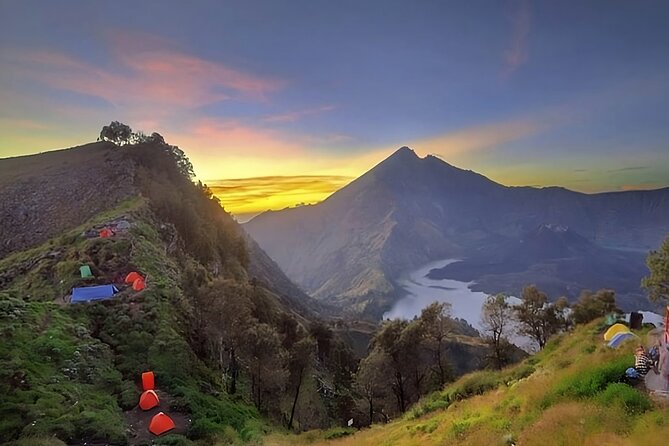
- Seven hours uphill on day one: The first day begins at the Rinjani Trekking Centre and leads through plantations and rainforest toward the Senaru Crater Rim.
- Lake views without a summit attempt: You see Segara Anak Lake from the rim, but this itinerary does not include climbing Mount Rinjani’s summit.
- Sunrise, sunset, and one night outdoors: The overnight camp is the heart of the trip, with open mountain views and a chance to sleep under the stars.
- Small groups capped at six: A useful limit for a demanding trail, since guides can keep a closer eye on the pace.
- Local support is a major strength: Organizers have arranged guides and porters, with names such as Baba and Tuman praised for encouragement and care on related departures.
- The return walk takes four to five hours: Day two is shorter than day one, but the descent can still test tired knees and feet.
What this Senaru Crater Rim hike really offers
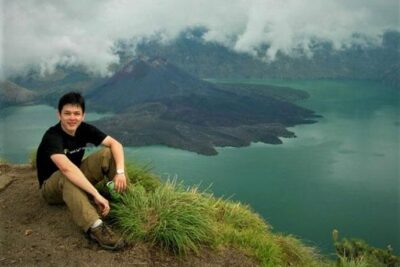
Mount Rinjani is one of Lombok’s great outdoor experiences, but you do not need to attempt the summit to enjoy its best scenery. This route takes you to the Senaru Crater Rim, where the reward is a broad view toward Segara Anak Lake, volcanic slopes, forest, and changing light across the mountain.
The trip is also more than a walk from point A to point B. The plan includes contact with Sasak culture, traditional villages, and ancient rituals, although the supplied schedule gives few exact details about which village or ceremony you will visit. Treat that cultural element as part of the intended setting, not as a guaranteed formal performance.
At $165, this is priced as a guided, supported mountain trip rather than an independent hike. That matters on Rinjani. You are paying for local route support, food listed in the package, porters, camp arrangements, and the experience of having someone manage the practical details while you focus on walking.
Still, the package wording leaves a few gaps. Dinner and lunch are included. Day two refers to breakfast, but breakfast is not clearly listed among the inclusions, so ask before setting out. Tipping is extra, and you pay more if you want an additional porter to carry your personal luggage.
More Rinjani treks:
- Mount Rinjani 2 Days 1 Night Senaru Crater Rim
★ 5.0 · 131 reviews - 3D-2N Explore Mount Rinjani – Summit -Lake and Hotspring
★ 5.0 · 112 reviews - Rinjani trekking 2D 1N RIM
★ 5.0 · 94 reviews
Day one: coffee plantations, rainforest, and a long climb
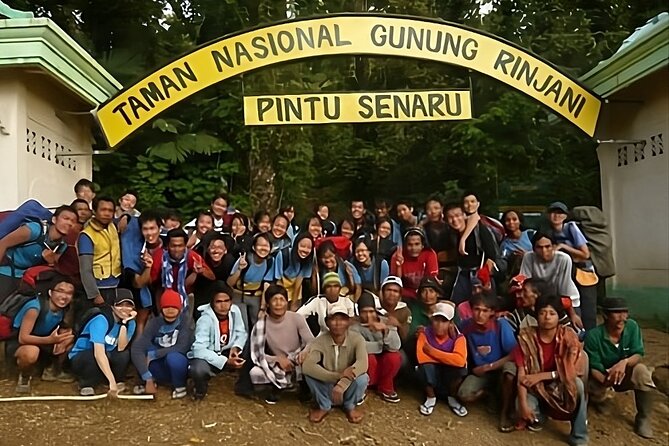
The first morning starts at the Rinjani Trekking Centre in Senaru. The schedule gives a meeting time around 6:30 AM, while the walking itinerary says to begin between 7:30 and 8:00 AM. That one-hour difference is worth confirming with the operator before the trip, particularly if transport or a medical check is involved.
The early section is a pleasant start. You walk through coffee plantations and thick greenery for roughly 30 minutes, with the cooler morning air helping you settle into the pace. This is a good place to avoid rushing. The trail will get harder later, and a calm first hour saves energy.
A short break comes at the tropical rainforest gate. The stop is brief, but it divides the day nicely. From here, the route enters thicker forest and continues uphill for about seven hours in total, including breaks. The forest offers shade and a more sheltered setting than the open upper slopes, though the long climb still requires moderate fitness.
The supplied plan does not give exact elevation figures or a detailed list of rest posts. That means you should not build your expectations around precise hourly targets. Your guide will likely set the walking rhythm, and the small group size should help with regular pauses when needed.
The upper part of the route brings the big visual payoff. As the trees thin, the views open toward the crater and Segara Anak Lake. The route is not designed around a summit push, so you can focus on reaching the rim and enjoying the setting instead of starting another brutal climb before dawn.
The crater rim camp and the best light on Rinjani
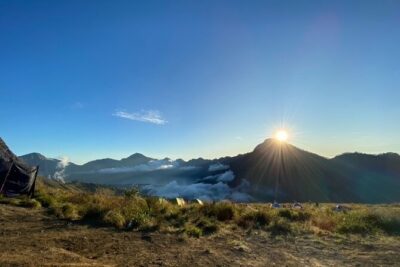
The overnight camp is the emotional center of the trip. You arrive at the Senaru Crater Rim, settle in, eat dinner, and watch the light change over the mountain. The plan specifically highlights sunset and a starlit sky, though clear views depend on weather.
Camping at the rim is valuable because it gives you time to experience Rinjani at more than one hour of the day. The same view can look warm and soft at sunset, dark and open after nightfall, then sharp and cool at sunrise. You also avoid turning the entire trip into one long push up and one long push down.
Dinner is included, which removes one practical worry after a hard day. The menu is described as traditional Indonesian cuisine, but no exact dishes are promised. If you have dietary needs, raise them before departure rather than hoping the camp kitchen can adjust at the last minute.
The camp itself will be basic. The information confirms an overnight stay and starlit camping, but it does not spell out the tent setup, sleeping mat, toilet arrangements, or shower access. Ask what equipment is supplied and what you must bring. A guide and porter service can make the night easier, but it does not turn a mountain camp into a hotel.
Day two: sunrise over Segara Anak Lake
Day two begins with breakfast and sunrise viewing. This is the moment to take photographs of Segara Anak Lake and the surrounding crater scenery. Morning light usually gives you the clearest chance for dramatic views, but mountain weather can change quickly, and the tour can be affected by poor conditions.
The lake view is the reason this route works well for people who want a major Rinjani sight without adding a summit climb. You get a strong sense of the volcano’s scale from above, with the water sitting inside the crater below.
After the morning viewing, you descend toward Senaru village. The return walk takes about four to five hours, including breaks and lunch. Lunch is listed as included and is planned for the area around Pos 2 or Pos Extra.
The descent is shorter on paper, but do not underestimate it. After the previous day’s climb, your legs may feel heavy, and downhill walking can be hard on knees. Trekking poles would be a sensible addition if you already use them, although the tour information does not confirm whether they are supplied.
The activity ends back at the meeting point in Senaru. That is convenient if you are staying nearby, but the package details do not clearly promise transport to another Lombok hotel or the airport. Some arrangements connected with this operator have included airport pickup, accommodation before the hike, breakfast, registration help, and return transport, but those services should be confirmed for this exact booking rather than assumed.
More treks in Lombok:
- 2D1N Senaru Crater Rim Trekking
★ 5.0 · 178 reviews - 3D/2N Rinjani trekking summit,lake and hot springs.
★ 5.0 · 85 reviews - Rinjani Trekking 3D2N Summit
★ 4.5 · 85 reviews - Rinjani Trekking 3 Days 2 Nights (Sembalun – Senaru)
★ 5.0 · 84 reviews
Guides, porters, and the human side of the trip
The strongest part of the service is the personal support. The organizer, Mr. Hardy, has been praised for fast replies, patience with changing pickup plans, packing advice, and hands-on help before the hike. That kind of communication is useful in Lombok, where timing and transport can shift.
Guides named Baba and Tuman have also received warm praise for encouragement and practical help on mountain trips arranged through the same team. You should not assume one of them will lead your departure, but it is reasonable to ask who your guide will be and how many porters are assigned to your group.
Porters are included in the operating setup described by the supplied information, but carrying your own luggage with an extra porter costs more. Ask what the standard porter service covers. There is a difference between carrying group camping supplies and carrying your personal pack, and knowing that difference prevents an awkward discussion on the trail.
Tipping is not included. The amount is not stated, so ask the operator for current local guidance. You should budget for it as a normal part of the mountain service, especially when porters are carrying food, tents, or shared equipment.
The six-person maximum is another practical advantage. A smaller group can move more naturally and may allow the guide to give better attention to slower walkers. It does not guarantee a private hike, but it is more manageable than joining a large crowd on a steep route.
How hard is the walk?
The tour asks for moderate physical fitness, and that wording should be taken seriously. Day one lasts about seven hours and goes uphill through forest toward the rim. Day two adds four to five hours of downhill walking after a night outdoors.
You do not need to be a technical climber based on the information provided. You do need to be comfortable walking for much of a day, handling uneven mountain ground, and managing tiredness without losing your temper at every uphill turn.
I would choose this trip if you regularly walk, hike, or exercise and want a demanding but contained mountain outing. I would hesitate if you dislike steep climbs, have little walking experience, or expect a relaxed sightseeing schedule. The itinerary is short in calendar days, not necessarily easy in effort.
Pack light, but do not pack too light. You need clothing for changing temperatures, sturdy footwear, water, sun protection, personal medication, and warm layers for the rim. Since the exact equipment list is not supplied, confirm whether tents, sleeping gear, and other camp items are provided.
Price, food, group size, and what is not included
The $165 price makes sense when you value local support and do not want to organize the route, food, camp, and porter arrangements yourself. The two-day format also keeps the trip shorter than longer Rinjani programs, which can be useful if you are working within a Lombok itinerary.
The price includes dinner and lunch. Breakfast appears in the day two schedule, but it is not clearly included in the formal list, so confirm this before you pay. Food is not a small detail after a seven-hour climb.
Extra costs include tips and an additional porter for your personal luggage. Transport, accommodation before or after the hike, airport pickup, medical checks, park fees, and equipment are not clearly itemized in the information provided. Some of these may be arranged separately, but you should request a written breakdown.
The activity uses a mobile ticket and accepts confirmation at booking. The small group cap is six people. These are useful features, but they do not replace a proper equipment and inclusions check.
Weather, timing, and cancellation rules
Mountain weather controls the schedule. If poor weather causes the trip to be canceled, you are offered another date or a full refund. That is reassuring, since forcing a crater-rim trip in bad conditions would be a poor bargain.
You can cancel for a full refund up to 24 hours before the local start time. Cancellations or changes made inside that 24-hour window are not accepted for a refund. Keep the local time in mind if you are booking from another country.
The best practical move is to confirm the exact meeting time, pickup plan, breakfast, camping gear, porter allowance, and weather decision process before departure. The listed schedule has both a 6:30 AM start time and a 7:30 to 8:00 AM trail start, so clarity here will make your morning much easier.
Who should choose this Rinjani tour?
This hike suits you if you want Rinjani’s crater scenery, lake views, and overnight mountain atmosphere without committing to a summit attempt. It is also a good match if you value a local guide, a small group, and a cultural angle that includes Sasak communities.
It may suit first-time highland hikers who are reasonably fit and willing to prepare. The guide support and porter arrangements can reduce logistical stress, but they cannot remove the physical work.
I would choose a longer Rinjani program if you want more time away from the main route or a fuller summit experience. The supplied feedback includes praise for three-day hikes, especially for the extra locations and quieter areas, but that is a different program. Do not book this two-day trip expecting those added sections.
Should you book the Senaru Crater Rim hike?
Book it if your priority is a compact two-day Rinjani adventure with lake views, local support, and a night at the crater rim. The $165 cost is reasonable when the guiding, meals, porters, and camp service are properly included.
Pause before booking if you need a clear all-in price, airport transfers, specific camping equipment, or a guaranteed breakfast. Ask those questions first. Also be honest about your fitness. The views are a fine reward, but the mountain collects its payment in hours of uphill walking.
FAQ
How long is the Mount Rinjani Senaru Crater Rim tour?
The tour lasts approximately two days. Day one takes about seven hours, while day two takes about five hours, including the descent and breaks.
Where does the hike begin and end?
It begins at the Rinjani Trekking Centre area in Senaru, Bayan, North Lombok Regency. The activity ends back at the meeting point in Senaru.
What time does the tour start?
The stated start time is 6:30 AM. The walking schedule also says to start at the Rinjani Trekking Centre between 7:30 and 8:00 AM, so confirm the exact meeting and walking times with the provider.
Is food included?
Dinner and lunch are included. Day two refers to breakfast, but breakfast is not clearly listed in the formal inclusions, so confirm whether it is covered.
Are tips included in the price?
No. Tipping for the guide and porter is excluded from the tour price.
Can I hire an extra porter for my own luggage?
Yes. An extra porter can be arranged to carry your personal luggage, but that cost is not included.
How many people can join the tour?
The activity has a maximum group size of six people.
What happens if bad weather cancels the hike?
If poor weather causes a cancellation, you are offered a different date or a full refund. You can also cancel up to 24 hours before the local start time for a full refund.
More 2-Day Experiences
- Mount Rinjan 2Days Summit Full Sunrise View Point 3726m
★ 5.0 · 96 reviews - Mt. Rinjani 2D1N Senaru Crater Rim
★ 5.0 · 75 reviews - Trekking Mt. Rinjani 2 Days 1 Night Senaru Crater Rim
★ 5.0 · 55 reviews - Mount Rinjani Hiking to summit( 2 Days 1 Night )
★ 5.0 · 50 reviews
Newest reviews from Lombok
- Explore Traditional Villages & to the South Coast★ 5.0 · 7 reviews
- Lombok Private Car Hire with Driver★ 5.0 · 7 reviews
- See The Stuning View Of Selong Hill And Tiu Kelep Waterfall★ 5.0 · 7 reviews
- Day Trip Secret Island West Of Lombok★ 4.5 · 7 reviews
- 3D 2N Mount Rinjani Trekking Tour To Summit And Lake★ 4.5 · 7 reviews
- MODERATE HIKING: 2D/1N Crater Rim Senaru | Rinjani Samalas Tour★ 5.0 · 8 reviews
- Popular Rinjani Trekking Tour Service To Summit For 2 Days Via Sembalun Trail★ 5.0 · 8 reviews
- Mount Rinjani 2D 1N trekking to summit★ 4.5 · 8 reviews
Mount Rinjani Treks, compared.
Mount Rinjani 2 Days 1 Night Senaru Crater Rim
Read our review →
3D-2N Explore Mount Rinjani – Summit -Lake and Hotspring
Read our review →
3D/2N Rinjani trekking summit,lake and hot springs.
Read our review →
Rinjani Trekking 3 Days 2 Nights (Sembalun – Senaru)
Read our review →
Browse the lists this tour appears in