
Reviewed · HISTORICAL TOURS
Majapahit Heritage Archaelogy tour via surabaya
Java’s forgotten capital rewards curious visitors. I like this tour for its careful mix of red-brick temples and the Trowulan archaeological museum, and I also like the private vehicle, which gives your group more control than a large coach. The main drawback is the museum’s limited English information, so the experience is stronger for travelers who enjoy looking closely, asking questions, and doing a little reading before arrival.
The full outing takes about six to ten hours, depending on timing and traffic. At $80 per person, the price is fair if you value private transport, entrance fees, lunch, snacks, and a guide-driver such as Barli or Bari. It is less compelling if you want a polished museum presentation or a tightly timed historical lecture at every stop.
In This Review
- Key points before you book
- Why Majapahit matters in East Java
- Starting from Surabaya in a private vehicle
- Wringinlawang, the old gateway to Majapahit
- Three hours at the Trowulan Archaeological Site
- Bajangratu and the character of red brick
- Tikus Temple and the sacred bathing pool
- Brahu and Gentong, a Buddhist note in a Hindu kingdom
- Traditional lunch and East Javanese scenery
- Is $80 good value?
- Who will enjoy this day most?
- Should you book the Majapahit Heritage Archaeology Tour?
- FAQ
- Where does the Majapahit archaeology tour start and end?
- How long does the tour take?
- Is this a private tour?
- What sites are included?
- Are entrance tickets included?
- Is lunch included?
- Is vegetarian food available?
- What documents are required?
Key points before you book
- Five important Majapahit-era sites: See Wringinlawang, Trowulan, Bajangratu, Tikus, and Brahu and Gentong in one long day.
- Private vehicle for your group: You avoid being tied to strangers and may be able to adjust the pace.
- Trowulan is the main history stop: Plan about three hours for the museum and archaeological material.
- Red brick defines the visit: The temples have a distinct East Javanese appearance, unlike the stone monuments many visitors associate with Indonesia.
- Lunch and snacks are included: A traditional meal adds a useful local touch to a day focused on the past.
- English information can be thin: A guide matters, and independent background reading will make the remains easier to understand.
Why Majapahit matters in East Java
Majapahit was a major Hindu kingdom in eastern Java, and its former center around Trowulan is one of the most important archaeological areas in the region. What you see today is not a single grand palace complex. Instead, the experience comes through scattered temples, gateways, museum objects, village surroundings, and fragments of an older urban world.
That scattered quality is part of the appeal. You are not simply walking into a finished monument and taking a quick photograph. You are assembling an idea of the kingdom from red-brick structures, religious buildings, household objects, artifacts, and the remains of a former capital.
The tour also presents a useful picture of religious variety. Most of the sites connect with Hindu traditions, while Brahu is identified as a Buddhist temple. The combination helps explain the religious tolerance associated with Majapahit, at least as it is presented during this visit.
I would choose this outing for its sense of place rather than for grand architecture. The temples are often modest in size, but their brick construction, unusual forms, and connection to the former capital give them real character.
More heritage tours:
- Half-Day Private Majapahit Historical Tour from Surabaya
★ 5.0 · 38 reviews - Crafting Heritage Batik Painting Workshops
★ 5.0 · 164 reviews - Jakarta Heritage of Old Batavia Private City Tour (Historical)
★ 5.0 · 143 reviews
Starting from Surabaya in a private vehicle
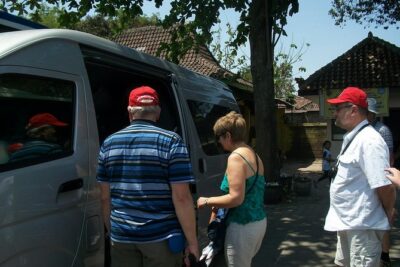
The tour begins and ends in Surabaya, with pickup offered in the city. Transport is by private vehicle, and only your group takes part. That arrangement matters on a day with several stops because you can spend more time at the sites that interest you and less time waiting for a large group to gather.
The stated duration is six to ten hours. That wide range reflects the number of stops and the travel involved, so you should keep most of the day free. This is not a quick morning activity that leaves plenty of room for another major excursion.
The private format is especially useful if one person in your group wants to linger over museum objects while another prefers a shorter visit. It can also make the day feel less hurried, although the total route still includes five scheduled locations.
Guide and driver quality will shape the day. Barli, also called Pak Barli or Bari in the tour feedback, received especially warm praise for his explanations, entertaining manner, and ability to handle both guiding and driving. I would confirm the pickup time clearly before the day begins, since one booking involved confusion over the stated 9 a.m. start and communication about the meeting arrangement.
Wringinlawang, the old gateway to Majapahit
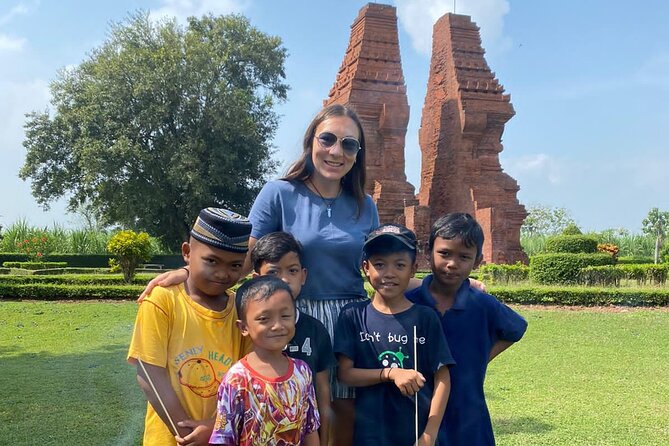
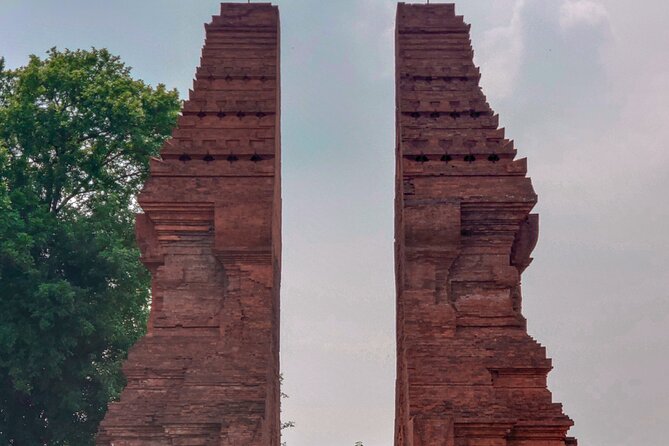
Your first scheduled stop is Candi Wringinlawang, a tall red-brick gateway associated with the entrance to the former Majapahit capital. You have about an hour here, with admission included.
The structure is a strong opening because it immediately gives you the visual language of the day: warm brick, clean geometric lines, and a monument that feels different from Indonesia’s better-known stone temples. Its gateway form also helps you imagine movement into an important settlement, even though the capital itself is no longer intact in front of you.
This is one of the best photography stops. The tall form is easy to appreciate from a distance, and the surrounding East Javanese scenery provides a broader setting than a museum room can offer.
Do not expect a vast complex or a long indoor interpretation center. The value is in seeing the structure in its setting and beginning to understand how Majapahit remains are spread across the area. If you arrive with the idea that every stop will be a giant temple, Wringinlawang may feel smaller than expected.
Three hours at the Trowulan Archaeological Site
Trowulan is the centerpiece of the tour, and the schedule allows roughly three hours. The museum holds Majapahit relics and objects connected with daily life, including traditional items, artifacts, and household material.
This is where the kingdom becomes more than a series of brick monuments. A temple can show you religious architecture, but ordinary objects help you think about cooking, work, craft, and domestic life. The museum therefore provides the context needed to connect the surviving structures with the people who used the former capital.
I would save your questions for this stop. Ask Barli or your assigned guide about the objects, the role of the capital, and how the museum material relates to the temples you will see later. The guide’s explanations are important because the English-language display material may be underwhelming for visitors who cannot read Indonesian.
That limitation deserves a clear warning. If you rely only on labels, you may leave without understanding why individual objects matter. The museum is still worthwhile, but it does not appear to offer the polished English presentation that many international visitors expect at a major archaeological site.
Three hours is generous, though. You can take your time with the collection, pause for explanations, and avoid treating the museum as a brief stop between temples. For anyone interested in the daily life of Majapahit, this is likely the most valuable portion of the day.
A few more tours worth putting side by side
- Mount Bromo Sunrise Tour from Surabaya or Malang – 1 Day
★ 5.0 · 1,759 reviews - From Surabaya / Malang : Mt Bromo Sunrise – Ijen Blue Fire 3D2N
★ 5.0 · 351 reviews - Surabaya – Mount Bromo – Tumpak Sewu Waterfall – Ijen Bluefire Tour – Bali 4d3n
★ 5.0 · 350 reviews - From Surabaya / Malang : Mt Bromo Sunrise – Ijen Blue Fire 2D1N
★ 5.0 · 330 reviews
Bajangratu and the character of red brick
Candi Bajangratu follows with about an hour at another distinctive red-brick temple. It is described as smaller than some famous Indonesian monuments, but its form is elegant and unusual.
This stop works well after the museum because you have already seen objects from the past and can now return to the architecture. Look for the way the brick creates a different mood from dark volcanic stone. The East Javanese style feels lean and warm, with a restrained quality that rewards close attention.
Bajangratu is also a good place to compare temple design across the route. I would ask your guide what is known about its purpose and how much of the present structure has survived or been restored. The supplied information identifies it as a unique Hindu temple, but it does not provide a detailed explanation of its original function, so a guide’s interpretation will be useful.
The stop is not likely to satisfy anyone looking for a huge monument that takes hours to explore. Its appeal lies in shape, brickwork, and atmosphere rather than scale.
Tikus Temple and the sacred bathing pool
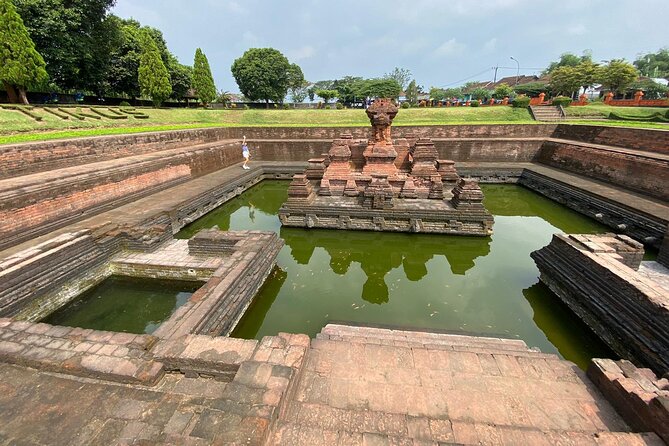
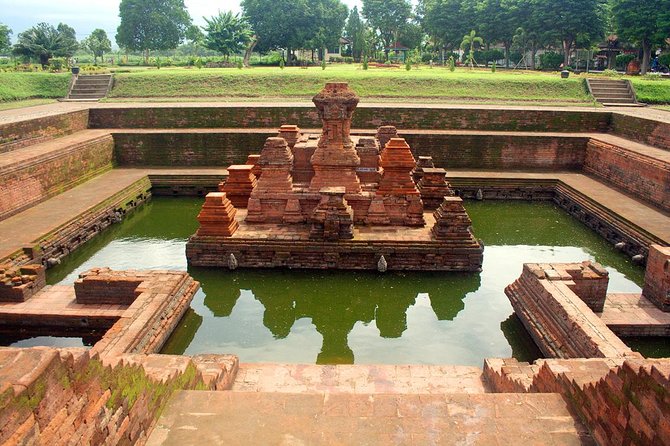
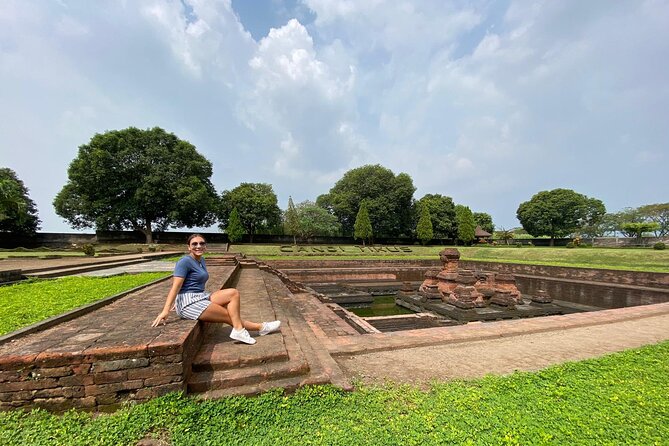
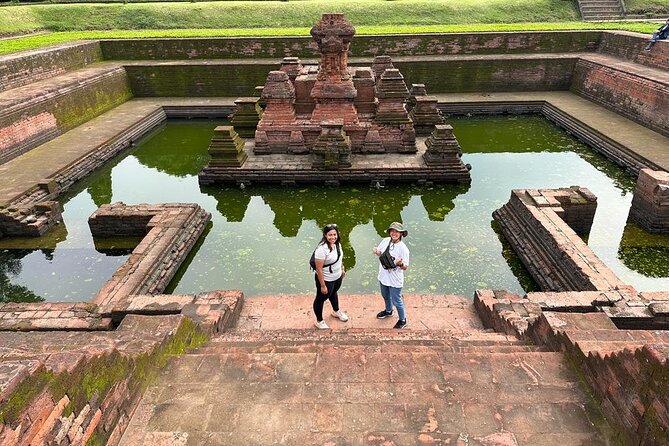
Candi Tikus is one of the most intriguing stops because its form is different from a conventional temple. It is a box-shaped place of worship with a pool at the center, believed to have served as a holy Hindu bathing place.
The water feature gives the site a practical and ceremonial quality. Instead of imagining worship only through towers and shrines, you can think about ritual cleansing and the role of water in religious life. That makes Tikus especially useful for visitors who want to understand how sacred spaces functioned.
You have about an hour here. Take time to look at the layout rather than rushing toward a single photo. The rectangular design and central pool are the main points of interest, and the unusual plan makes this one of the more memorable stops.
The wording about its use is important: it is believed to have been a holy bathing place. You should treat that as an interpretation rather than an absolute certainty. A good guide can explain what is established and what remains a matter of scholarly understanding.
Brahu and Gentong, a Buddhist note in a Hindu kingdom
The final scheduled stop is Candi Brahu and Gentong, allocated about an hour. Brahu is identified as a Buddhist temple, round in form, and rising upward in the familiar red-brick style of East Java.
This stop broadens the story. A tour focused only on Hindu monuments could leave you with a narrow picture of Majapahit. Brahu introduces the Buddhist presence and gives the day a clear reminder that the religious life of the kingdom was not one-dimensional.
The contrast in form is worth noting. Wringinlawang is a gateway, Tikus is a pool-centered structure, and Brahu is rounded and vertical. By the final stop, you have seen several ways red brick could be used for religious or ceremonial buildings.
Gentong is included in the stop name, but the supplied details do not explain its form or specific role. I would ask your guide for clarification rather than assuming that every feature has the same purpose as Brahu. That is a small example of why a private guide can add value at archaeological sites where English signs may be brief.
Traditional lunch and East Javanese scenery
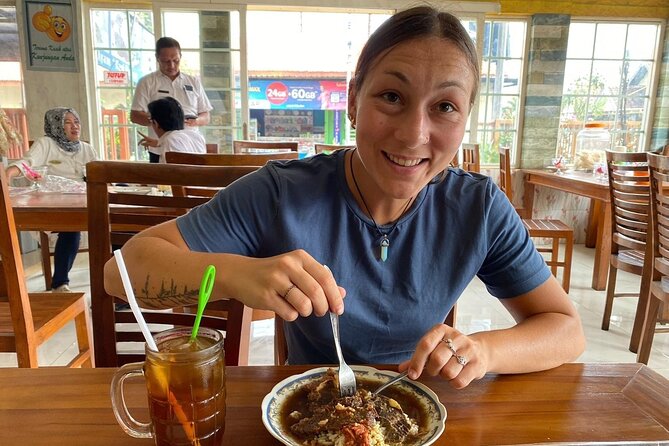
Lunch is included, along with snacks, and the experience is intended to include traditional cuisine. That matters on a full day away from Surabaya. You are not left to find a meal between temple visits, and local food gives the tour a connection to present-day East Java rather than treating the area as an open-air museum.
Specific dishes are not provided, so you should not book expecting a particular menu. Vegetarian food is available, but you need to request it when booking. You should also provide any other dietary requirements in advance.
The route includes village areas and communities described as indigenous to the region. The information does not promise a formal village visit or a structured cultural demonstration, so I would see this as part of the passing scenery and setting rather than a separate cultural activity.
That distinction helps keep expectations realistic. The focus is archaeology, with villages, countryside views, and local food adding texture to the day. You will get photographs of East Javanese scenery, but this is not primarily a nature tour.
Is $80 good value?
At $80 per person, the price makes the most sense for people who value convenience. The package includes private transport, lunch, snacks, admission tickets, taxes, fees, and handling charges. You are paying for a full day of site visits without having to arrange separate transport from Surabaya or manage each entrance fee yourself.
For a solo participant or a small group, the private format can be particularly appealing. One person reported enjoying the ability to set a faster personal pace while still visiting every planned site. Group discounts are available, which may improve the value for families or larger parties.
The price is less attractive if you mainly want a high-end museum experience or a specialist academic guide. The museum’s English presentation can be weak, and the quality of explanation may depend heavily on the individual guide. You should think of this as a practical archaeological day trip with local guiding, not a university seminar.
Food and drinks are included only where specified. Lunch and snacks are listed, while additional personal food, drinks, souvenirs, and other expenses are not included. Souvenir photographs may be available for purchase, but they are optional.
Who will enjoy this day most?
I would recommend this tour to you if you enjoy archaeology, religious buildings, local history, and travel days that connect several smaller sites. It suits visitors staying in Surabaya who want to see an important part of East Java without arranging a private route themselves.
It is also a good choice if you prefer a private vehicle and want the option of spending more or less time at each stop. Families can participate, although children must be accompanied by an adult. Most people can take part, and the route is near public transportation, though the tour itself uses private transport.
You may want to skip it if your interest in history is slight, if you need extensive English museum labels, or if you prefer one spectacular monument over a series of related archaeological sites. The day asks you to appreciate fragments and connections.
Book at least a few practical details carefully. A passport is required on the day, and passport name, number, expiry date, and country are requested for every participant at booking. Confirmation is provided at booking, and free cancellation is available until 24 hours before the local start time. Changes or cancellations inside that window are not accepted for a refund.
Should you book the Majapahit Heritage Archaeology Tour?
Book it if you want the clearest, easiest introduction to Trowulan from Surabaya. The combination of five sites, a three-hour museum visit, private transport, included meals, and guide support offers solid value at $80, especially when group discounts apply.
Go in with the right expectations. The temples are meaningful rather than enormous, the museum may frustrate English readers, and the day is long. Ask for clear pickup confirmation, request vegetarian food or other dietary needs in advance, and make sure your passport details are correct.
For history-minded visitors, this is one of the better ways to see Majapahit’s remains without trying to piece together transport and admissions alone. I would choose it for the range of sites and the chance to connect monumental ruins with everyday objects, while treating the guide as an essential part of making the museum and temples understandable.
FAQ
Where does the Majapahit archaeology tour start and end?
The tour starts in Surabaya, East Java, and returns to Surabaya at the end of the experience. Pickup is offered.
How long does the tour take?
The tour lasts approximately six to ten hours. The exact length can vary because it includes several stops and travel between them.
Is this a private tour?
Yes. Only your group participates, and transport is provided by private vehicle.
What sites are included?
The scheduled sites are Candi Wringinlawang, Trowulan Archaeological Site, Candi Bajangratu, Tikus Temple, and Candi Brahu and Gentong.
Are entrance tickets included?
Yes. Admission tickets for the listed stops are included in the tour price.
Is lunch included?
Yes. Lunch and snacks are included. Other food and drinks are not included unless specifically stated.
Is vegetarian food available?
Yes. A vegetarian option is available, but you must request it when booking. You should also provide any other dietary requirements at that time.
What documents are required?
A current valid passport is required on the day of travel. Passport name, number, expiry date, and country are requested for all participants when booking.
Newest reviews from Surabaya
- East Java Tours with Bromo Photography, Ijen Blue Fire and Waterfall★ 5.0 · 7 reviews
- 4D3N Ijen Crater,Papuma Beach, Tumpak Sewu Waterfal & Mount Bromo★ 4.5 · 11 reviews
- Mount Bromo Sunrise Shared Guided Tour from Surabaya★ 4.5 · 13 reviews
- Probolinggo City Tour For Cruise Passengers★ 4.0 · 13 reviews
- Bromo sunrise tour – start Surabaya // 1 day★ 5.0 · 14 reviews
- Private Bromo Sunrise Tour (All included)★ 5.0 · 19 reviews
- Explore volcano Bromo – start Surabaya // 2 days 1 night★ 5.0 · 20 reviews
- 3 Days Tour To Explore Mt Bromo★ 5.0 · 21 reviews
Historical Tours, compared.
Jakarta Heritage of Old Batavia Private City Tour (Historical)
Read our review →
Bali Unesco World Heritage Sites Tour (Private & All-Inclusive)
Read our review →Ulun Danu Beratan Temple – Tanah Lot Temple Tour by UNESCO World Heritage
Read our review →
Yogyakarta Cultural Tour: Borobudur Temple, Prambanan Temple and Merapi Volcano
Read our review →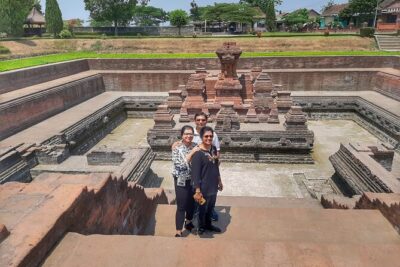
Half-Day Private Majapahit Historical Tour from Surabaya
Read our review →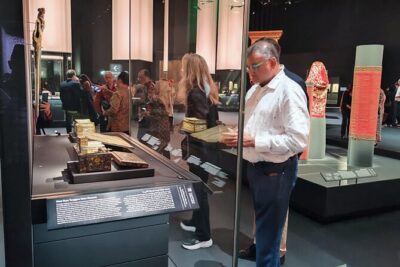
Browse the lists this tour appears in