
Reviewed · BATIK AND CRAFT WORKSHOPS
Crafting Heritage Batik Painting Workshops
Batik turns patience into art. At Five Arts Studio outside Ubud, you sketch a design, draw with hot wax, add colorful dye, and leave with your own piece of Indonesian fabric art. I like the calm, personal setting and the chance to see an artist’s working family compound rather than a polished souvenir shop. The $29 price also covers materials, instruction, snacks, tea, coffee, and water.
I especially like that you can work at your own pace. Instructor Agong and the studio team guide beginners closely, yet they also give confident artists room to make their own choices. The finished cloth becomes a personal keepsake, not something pulled from a shelf.
The main caution is simple: batik takes patience. Wax can land where you did not plan, and painting within the lines is harder than it first appears. That is part of the fun, but perfectionists may need to relax their standards.
In This Review
- Key points to know before you book
- Why batik makes a better souvenir than a shop-bought trinket
- Arriving at Five Arts Studio near Keliki
- The first stage: choosing and sketching your design
- The hot wax stage requires a steady hand
- Painting with dye brings the cloth to life
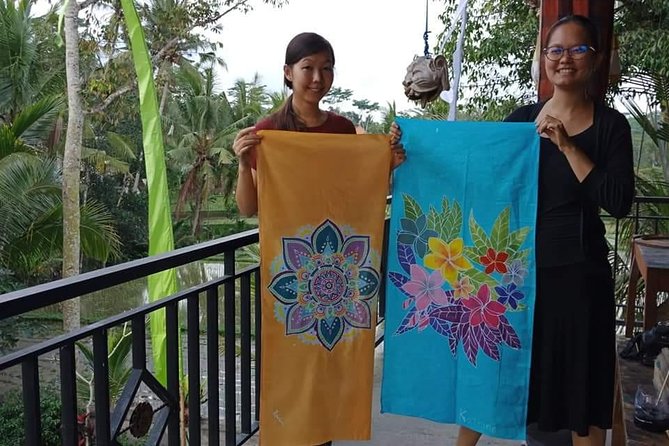
- The finished cloth reveals the real charm
- A peaceful studio with room for different working styles
- What $29 really buys you
- Who will enjoy this workshop most
- Should you book Five Arts Studio?
- FAQ
- Where does the batik workshop take place?
- How long does the experience last?
- What does the $29 price include?
- Is lunch included?
- Can beginners and children join?
- What is the cancellation policy?
Key points to know before you book
- You make the artwork yourself: Sketch, apply hot wax, paint with dye, and take home an original batik piece.
- The setting is a working family compound: Five Arts Studio offers a casual, local-feeling place outside central Ubud.
- Beginners are welcome: The instructors demonstrate each step and can provide close help, including for children.
- The class lasts about three hours: Allow enough time for the full process, not just a quick painting session.
- The atmosphere is peaceful: Tea, coffee, mineral water, and snacks are included, with local food available to order.
- The value is strong at $29: You receive instruction, supplies, refreshments, and a handmade souvenir in one visit.
Why batik makes a better souvenir than a shop-bought trinket
Batik is not simply fabric with paint on it. The method uses wax as a barrier, allowing dye to color selected areas while the wax protects the original cloth beneath it. When the wax is removed, the preserved lines and shapes remain as part of the design.
That process gives you a clearer sense of the craft’s demands. A finished batik cloth may look effortless, but your own work quickly shows how much control and care the technique requires. You will handle the tools, make decisions about color, and discover how one small mistake can become part of the final pattern.
I like this kind of souvenir because it carries a memory of time spent learning. You are not just buying something made in Bali. You are taking home a piece you shaped yourself, complete with its small quirks and happy accidents.
The class also offers a brief introduction to batik as an important Indonesian art form. The focus is practical rather than academic, which suits the three-hour format. You learn enough background to understand what you are doing, then spend most of your time at the worktable.
More craft workshops:
- Batik Master Class with Full Process
★ 5.0 · 103 reviews - Borobudur: Village Tour with Pottery and Tofu Making
★ 5.0 · 34 reviews - Half Day – Malang Batik Class
★ 5.0 · 8 reviews
Arriving at Five Arts Studio near Keliki
The meeting point is Five Arts Studio on Jalan Raya Keliki, in Keliki, Tegallalang, Gianyar, Bali 80561. The studio sits outside central Ubud, so check your route and allow time to reach the address.
This location matters. You are visiting a family compound used as a working art space, not a large commercial classroom. The setting is described as casual and comfortable, with local artists, children, and international visitors sometimes working side by side. That mix gives the session a more natural feel.
You may be welcomed with tea while waiting for the class to begin. One account describes an instructor showing an early arrival around the studio before the lesson started. Details can vary, but arriving a little early should give you time to settle in rather than rushing straight into the first instruction.
The end point is the same as the start. There is no separate sightseeing stop or transfer included, so plan this as a studio visit. Public transportation is nearby, and service animals are allowed. The activity notes also call for a strong level of physical fitness, so ask the provider if you have concerns about sitting, standing, or working for several hours.
The first stage: choosing and sketching your design
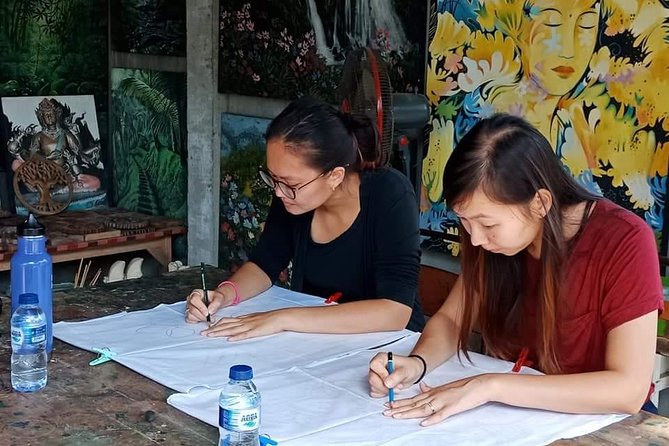
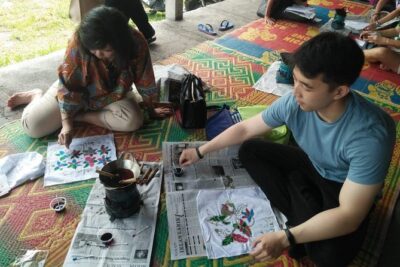
The class begins with an idea. You can bring your own motif or choose from designs supplied at the studio. The available patterns range from simpler outlines to more detailed examples, so you do not need to arrive with drawing skills or a fully formed plan.
This is a useful point for beginners. A blank piece of fabric can feel intimidating, while a suggested design gives you a clear starting point. You can follow a pattern closely or add your own touches as you become more comfortable.
You will first sketch the design on the fabric. Take your time here. The wax stage depends on the lines you create, and a rushed drawing can make the next step harder.
I would choose a design that matches the time available. An intricate pattern may look tempting, but three hours can pass quickly once you begin applying wax and dye. A simpler motif can leave you more room to experiment with color.
The instructors can help you decide how much detail is sensible. Their teaching style appears gentle and encouraging, especially for first-time artists. They offer direction without taking over the piece, which is exactly what you want from a hands-on workshop.
The hot wax stage requires a steady hand
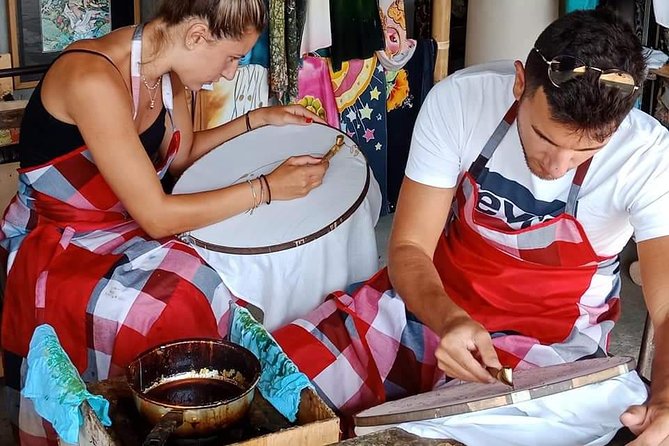
Once your design is ready, you trace the lines with hot wax. The wax creates the barrier that controls where the dye can spread. It is the technical heart of the workshop, and it is also where many beginners discover that batik is less easy than it looks.
You will need to work carefully. A misplaced drop of wax cannot always be ignored, and an uneven line can affect the finished pattern. One practical lesson from the class is to accept that the cloth will not behave like a sheet of paper. The wax flows, your hand may wobble, and the design may change as you work.
That does not mean you need artistic training. Several participants with little confidence in their coordination still produced pieces they felt proud of. The instructors offer step-by-step help, and Agong is specifically praised for guiding a six-year-old through the process.
Families should take note. This can work well as a shared activity, but younger children may need close adult attention around hot wax and art materials. The studio team can help children take part, yet the process is not a completely hands-off children’s craft.
For adults, the wax stage rewards slowing down. I would rather leave extra space in a design than crowd the fabric with lines you cannot comfortably control. If a drop lands in the wrong place, treat it as part of the design and keep going.
More heritage tours in Ubud:
- Ulun Danu Beratan Temple – Tanah Lot Temple Tour by UNESCO World Heritage
★ 5.0 · 74 reviews - BALI ATV Kuber Through Historic Tunnel and Scenic Waterfalls
★ 5.0 · 34 reviews - Royal Karangasem Heritage Tour
★ 4.5 · 29 reviews - Private Jatiluwih Rice Terraces Heritage Site and Culture Tour
★ 5.0 · 21 reviews
Painting with dye brings the cloth to life
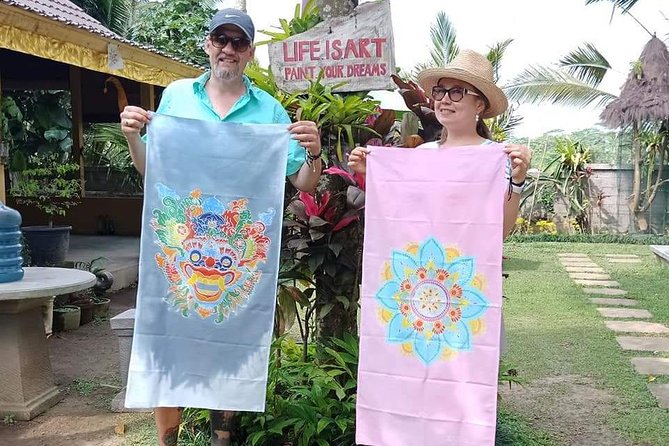
After the wax outlines are in place, you apply colorful dyes to selected areas. This is where the cloth begins to change from a pale sketch into a finished artwork.
The studio provides the materials, and the team can help you choose and blend colors. You may follow a sample, work from your own idea, or let the colors develop as you paint. The dye stage gives you more freedom than the wax stage, but it still calls for care around the protected lines.
I like that the class leaves space for personal choices. The goal is not to make every piece identical. Two people can begin with similar patterns and finish with very different results because of their color choices and small adjustments.
You should also expect some surprises. Dye can spread or blend in ways you did not plan, and the final piece may look different once the wax is removed. This is why the instructors encourage a flexible attitude. Batik rewards curiosity more than rigid control.
The reviews describe the class as relaxing, but do not confuse relaxed with effortless. You are still learning a new process. The calm atmosphere helps, yet you will need concentration during the drawing and painting stages.
The finished cloth reveals the real charm
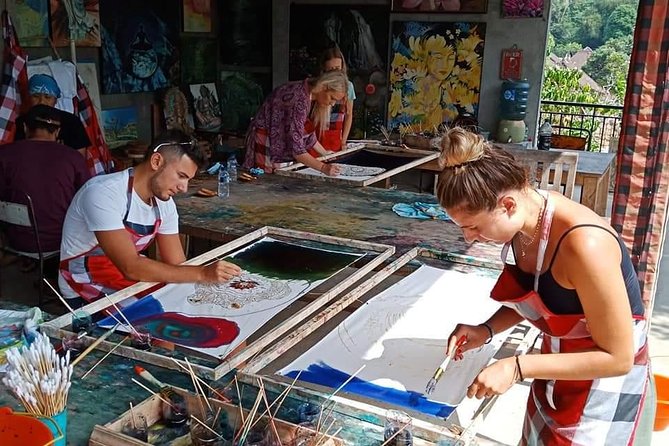
The most satisfying moment comes when the wax is washed off and the protected outlines remain in the original color. That contrast makes the design visible and gives the cloth its batik character.
You may not know exactly how your piece will look until this stage. Some flaws disappear into the larger design. Others become reminders of the afternoon. That is not a weakness of the activity. It is the reason a handmade piece feels different from a factory-made souvenir.
The studio team helps guide the process so you can finish with something presentable. Several accounts describe surprise at producing artwork that looked better than expected, even from people who did not consider themselves artistic.
Do not expect a museum-quality textile after one three-hour class. The value is in learning the method and making something personal. If you want a polished professional piece, buy one from an established artist. If you want a souvenir connected to your own time in Bali, this workshop is the better choice.
A peaceful studio with room for different working styles
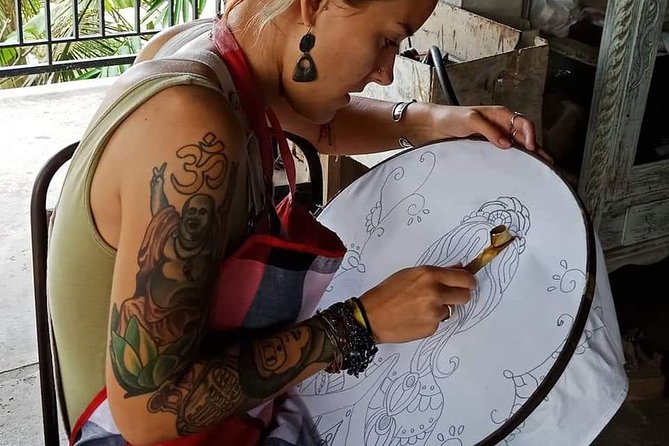
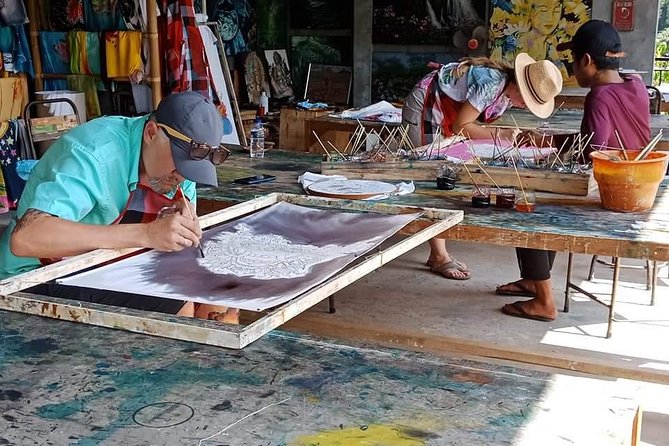
The mood is one of the strongest reasons to choose this activity. The studio is described as peaceful, rustic, and active, with a working-art atmosphere rather than a formal schoolroom. You can focus on your fabric while still feeling part of a shared creative space.
The instructors receive repeated praise for patience, warmth, and clear help. Names vary in the accounts, but Agong is specifically mentioned as guiding a young child, while Dika is praised for being helpful and fun. That personal attention seems to be a central part of the experience.
You can choose how much help you want. Ask for close instruction if you are unsure about the wax or dye. If you already have a clear design and some confidence, you can work more independently while checking in when needed.
The group limit is 30 people. That is a reasonable maximum for a workshop, though the actual class may be smaller. One person found the one-on-one format useful but a little less lively than working with other students. If you prefer a social class, ask about the expected group size when booking.
Refreshments help keep the session comfortable. Snacks, coffee, tea, and mineral water are included. Lunch is not part of the price, but local food can be ordered at an extra cost. Alcohol is available to purchase, though it is hardly the best companion for a careful hot-wax activity.
What $29 really buys you
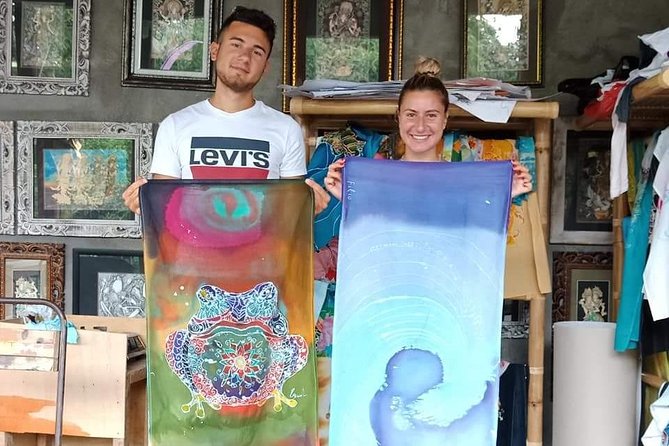
At $29 per person, this is good value if you want more than a short demonstration. You receive about three hours of instruction, use of the necessary materials, refreshments, and a finished piece to take home.
The price also includes something harder to measure: access to a local artist’s working environment and a chance to learn a traditional craft directly. You are paying for time, guidance, supplies, and the patient correction that keeps a beginner from giving up halfway through.
Compare it with a standard souvenir purchase. A bought textile may be more polished, but it will not give you the memory of tracing wax lines or choosing the colors yourself. Compare it with a private art lesson, and the workshop looks even stronger in value, particularly if you receive close individual help.
There are limits. Lunch costs extra, and transport to Keliki is not listed as part of the experience. If you are staying in central Ubud, factor in the time and cost of reaching the studio.
The high rating, 5 out of 5 from 164 reviews, with 99 percent recommending the activity, fits the main strengths: supportive teachers, a calm setting, and a finished souvenir. Those figures do not remove the need to be patient, but they suggest the class delivers what it promises.
Who will enjoy this workshop most
I would recommend it to anyone who likes making things with their hands. You do not need to draw well, and the instructors can provide designs and guidance. A willingness to accept imperfect lines matters more than formal talent.
It is a good choice for families, couples, solo visitors, and small groups of friends. Children can take part with adult supervision, and adults can choose a more demanding pattern if they want a serious creative challenge.
It also suits a slower day in an Ubud itinerary. After temples, markets, and busy roads, a seated craft session offers a change of pace. The three-hour length gives the activity enough time to feel worthwhile without taking up an entire day.
I would hesitate if you dislike careful handwork or want a fast, predictable result. The process can be frustrating, especially when wax lands outside the outline or the dye spreads unexpectedly. You will get the most from it if you can laugh at a mistake and keep painting.
Book at least 24 hours ahead if your plans may change. Cancellation is free with at least 24 hours notice, while cancellations or changes made inside that period are not refunded or accepted. The activity ends back at the studio, so plan your next stop from there.
Should you book Five Arts Studio?
Yes, if you want an affordable, hands-on cultural activity near Ubud. The combination of a family compound, patient instruction, supplied materials, refreshments, and a handmade souvenir gives the workshop real substance for $29.
Book it for the process, not just the final cloth. You will learn why batik demands care, meet artists who enjoy sharing their craft, and leave with something that carries your own decisions in every line and color.
Skip it if you need a polished result with no room for mistakes. For everyone else, especially families and first-time artists, Five Arts Studio offers a relaxed and memorable way to spend three hours making something distinctly your own.
FAQ
Where does the batik workshop take place?
The class takes place at Five Arts Studio, Jalan Raya Keliki, Keliki, Tegallalang, Gianyar, Bali 80561, Indonesia. The activity ends back at the same meeting point.
How long does the experience last?
The workshop lasts approximately three hours.
What does the $29 price include?
The price includes the batik materials, instruction, snacks, coffee or tea, mineral water, and the fabric artwork you create during the workshop.
Is lunch included?
Lunch is not included, but local food is available to order at an additional cost. Alcohol is also available for purchase.
Can beginners and children join?
Yes. The workshop is suitable for beginners, and the instructors can guide children through the process. Adult supervision is sensible when hot wax is being used.
What is the cancellation policy?
You can cancel for a full refund up to 24 hours before the experience start time. Cancellations or changes made less than 24 hours before the start time are not accepted, and the amount paid is not refunded.
More Workshops and Classes in Ubud
- Ubud Cooking Class Bali with Balinese Chef
★ 5.0 · 1,609 reviews - Ubud Silver Class Jewelry making in bali
★ 5.0 · 978 reviews - PRIVATE Authentic Balinese Cooking Class in Ubud at Putu’s Home
★ 5.0 · 644 reviews - Balinese Farm Cooking Class by Pemulan Bali
★ 5.0 · 410 reviews
Newest reviews from Ubud
- Explore Rice Fields and Hidden Villages with Ubud E-Bike Tour★ 5.0 · 7 reviews
- Monkey Forest Ubud Half day Tour★ 4.0 · 7 reviews
- Private Tour: Heaven Gate Temple, Tirta Gangga and Blue Lagoon Snorkeling★ 5.0 · 7 reviews
- Ubud Monkey Forest Rice Terrace Temple Waterfall Private Tour★ 5.0 · 7 reviews
- UBUD : Temple and Waterfall All Inclusive Day Tour★ 5.0 · 7 reviews
- Bali – Silver Jewelry Making Class★ 5.0 · 7 reviews
- One way fast Boat between Padangbai and Gili Islands or Lombok★ 5.0 · 7 reviews
- Bali ATV Quad Bike and White Water Rafting – All Inclusive★ 5.0 · 7 reviews
Batik and Craft Workshops, compared.
Borobudur: Village Tour with Pottery and Tofu Making
Read our review →
Batik Heritage Introduction Class with Lunch & Souvenir
Read our review →
Browse the lists this tour appears in