
Reviewed · HIKING & TREKKING
Mount Agung Sunrise Trekking Private Tours
The hardest sunrise in Bali is worth the effort. Mount Agung Sunrise Trekking takes you up Bali’s 9,944-foot sacred volcano through the night, with a private guide, hotel transfers, breakfast, and a sunrise view toward Lombok’s Mount Rinjani. I like the small private setup and the care shown by several guides, including Gede Darta and Darta, who paced hikers carefully and helped nervous climbers. I also like that the price includes practical gear such as trekking poles, a flashlight, and a raincoat.
This is not a gentle walk with a pretty finish. The trail is steep, rocky, slippery, and tiring in both directions. You may spend four or more hours climbing, then face another long descent over loose stone and mud. The biggest consideration is simple: you need real hiking fitness, good shoes, warm layers, and plenty of water.
In This Review
- Key things to know before climbing Mount Agung
- Why Mount Agung is a very different Bali hike
- Midnight pickup and the road to Besakih
- The first hours: forest, humidity, and steady climbing
- The upper slope is where the real test begins
- The final approach to the crater rim
- Sunrise above Bali and Mount Rinjani
- The descent is no easy victory
- What the private format adds
- What to pack, and what not to expect
- Is $55 a fair price for this mountain day?
- Should you book Mount Agung Sunrise Trekking?
- FAQ
- How long does Mount Agung Sunrise Trekking take?
- Where does the trek begin and end?
- What is included in the tour?
- Are warm clothes and hiking shoes included?
- How physically difficult is the climb?
- Can I cancel for a full refund?
Key things to know before climbing Mount Agung
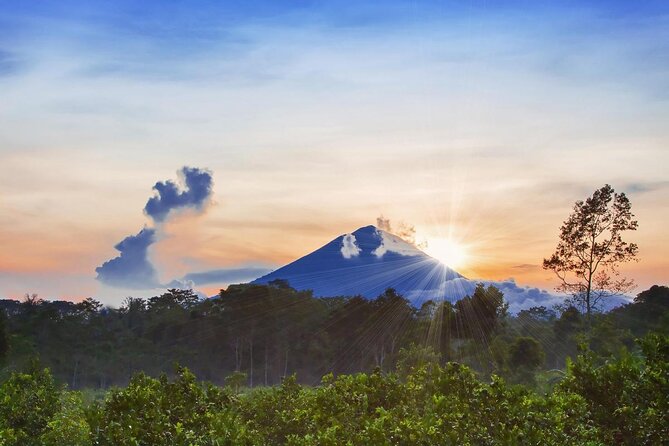
- The climb begins around midnight: Expect darkness, a long ascent, and a sunrise arrival after several hours on foot.
- This is Bali’s toughest major sunrise hike: The trail gains roughly 4,000 feet on the route described by one hiker, with steep ground near the top.
- The private guide matters: Guides such as Darta have helped hikers manage pace, fear, cold, and difficult sections.
- The summit views reach beyond Bali: On a clear morning, you can see Bali, the ocean, Lombok, and the three peaks of Mount Rinjani.
- Breakfast is basic but welcome: Bread, boiled eggs, fruit, biscuits, and hot tea or coffee taste very good after a night climb.
- Warm clothing is not included: Bring a jacket, gloves if you have them, and proper hiking footwear with strong grip.
Why Mount Agung is a very different Bali hike
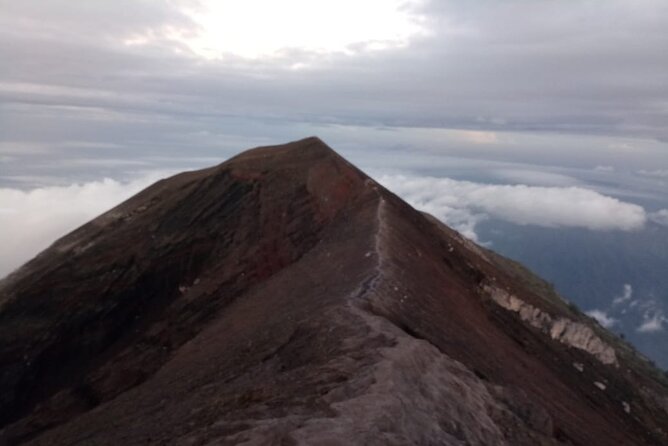
Mount Agung is Bali’s highest mountain and its most sacred volcano, rising to 3,031 meters. That gives this experience a different feeling from a standard viewpoint tour or the more popular Mount Batur sunrise walk.
You are not simply walking to a scenic platform. You are climbing a serious mountain in the dark, often on a narrow, rough trail, to reach the crater rim in time for first light. The reward is a broad view over Bali and, on a clear day, across the water to Lombok’s Mount Rinjani.
I would choose this trip for the challenge first and the sunrise second. If your only goal is an easy dawn photo, Mount Batur is likely a better match. Mount Agung asks much more of you, but the sense of reaching Bali’s highest point is also much stronger.
The tour costs about $55 per person. For a private guide, private driver, return transport from several parts of Bali, breakfast, water, poles, a flashlight, and a raincoat, that is a fair price. You are paying for support on a demanding route, not luxury. The value depends heavily on your guide and your own preparation.
More treks in Ubud:
- Mount Batur Sunrise Hike and Natural Hot Spring Option
★ 5.0 · 1,927 reviews - Mount Batur Sunrise Hike with Breakfast
★ 5.0 · 1,757 reviews - Mount Batur Sunrise Trekking Private All Inclusive
★ 5.0 · 906 reviews
Midnight pickup and the road to Besakih
The advertised duration is about 12 to 16 hours. That sounds long because it includes late-night pickup, the drive to the mountain, the climb, the descent, and the return transfer.
Pickup and drop-off are available from south Bali, Ubud, Amed, Lovina, and Candidasa. The meeting point is Pura Pengubengan Besakih in Rendang, Karangasem Regency. If you are staying in Ubud, the drive can take about an hour and 20 minutes according to the timing given by one hiker. From Canggu, the pickup was around 9 p.m., with the hike beginning near midnight.
The driver is separate from the mountain guide. That arrangement worked well for several people, especially when the driver was prompt, calm, and friendly. Drivers named Rodih and Ketut Bude received warm praise for safe driving and pleasant conversations during the long night journey.
You may pass the Besakih temple complex if your route uses the Besakih side of the mountain. Pura Besakih is Bali’s largest Hindu temple, and its high position gives wide views toward the sea. The temple is an important cultural marker on this route, though the main purpose of the excursion is the mountain climb, not a temple visit.
Because the pickup is late at night, prepare before the driver arrives. Eat a proper meal earlier, organize your layers, and keep water and personal items within reach. You do not want to sort through your bag beside the trail while everyone else is ready to move.
The first hours: forest, humidity, and steady climbing
The hike begins in darkness. Your flashlight becomes your world, showing only a small section of trail ahead. The first section can feel manageable, but it soon turns into a steady uphill push through forest.
Several people found this lower part warm and humid. You may sweat heavily even though the summit will later feel cold. That change is one reason your clothing needs to work in layers. A shirt or light base layer can handle the early climb, while a jacket must be ready for the exposed upper slopes.
The guide provides a flashlight, and some guides carry spares. I would still bring your own headlamp if you have one. A hands-free light makes it easier to use trekking poles, steady yourself, and check where you place your feet.
The trail is not a smooth mountain path. It includes rough ground, steep sections, loose stones, and what one experienced hiker described as something close to an angled rocky stream bed. The exact condition can change with rain. Even on a dry hiking day, the forest can hold mud and slick ground from earlier weather.
Your private guide should set a pace that fits your ability. Darta received especially strong praise for staying calm, matching a hiker’s speed, and helping during difficult moments. Another guide, Darta, was described as caring, professional, and safety-conscious.
Do not confuse quiet guidance with poor service, though communication can vary. Some people found their guides attentive but not very talkative. Others wanted more information about the mountain, clearer estimates for breaks, and more encouragement. If you want explanations about geology, religion, or local life, ask directly at the start.
The upper slope is where the real test begins
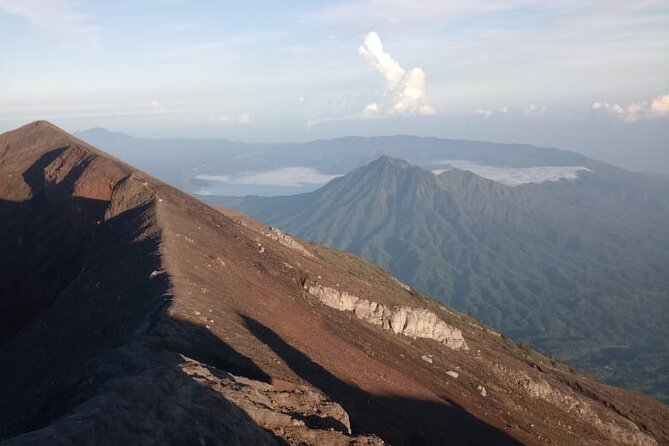
The forest eventually gives way to rockier, more exposed ground. The air gets colder, the footing gets less forgiving, and the slope becomes more demanding. This is the section that separates a hard walk from a serious climb.
One account described a gain of about 4,000 feet over three miles, with roughly four hours needed for the ascent. Another described about 2,000 meters of elevation gain over six kilometers and warned that many people turn back. These figures show why you should not judge the hike by its relatively low price or by your success on ordinary Bali walks.
The guides usually include rest stops. If the group reaches the upper section ahead of sunrise, you may wait near a fire before making the final push. Some people spent about 90 minutes to two hours warming themselves, eating breakfast, or resting while other groups caught up.
This pause can be helpful, but it can also be uncomfortable. Several people reached the upper area early and waited in the cold for sunrise. Bring enough insulation to sit still. A raincoat protects against showers, but it is not a substitute for a warm jacket.
Breakfast includes water, bread, hardboiled eggs, seasonal fruit, biscuits, and tea or coffee. It is simple food, but after four or five hours of climbing, it becomes exactly what you want. Some guides also made a fire, and one carried extra water when the hikers had not brought enough.
I would carry at least three liters of water per person, based on the practical advice from the climb. The included water helps, but you should not depend on the tour to cover all your needs.
More early starts in Ubud:
- Mount Batur Sunrise Jeep Tour with Optional Activities
★ 5.0 · 1,555 reviews - Mount Batur Sunrise Jeep Tour
★ 5.0 · 1,247 reviews - Mount Batur Sunrise Jeep Tour
★ 5.0 · 1,198 reviews - Private Mount Batur Sunrise Trekking Tour
★ 5.0 · 634 reviews
The final approach to the crater rim
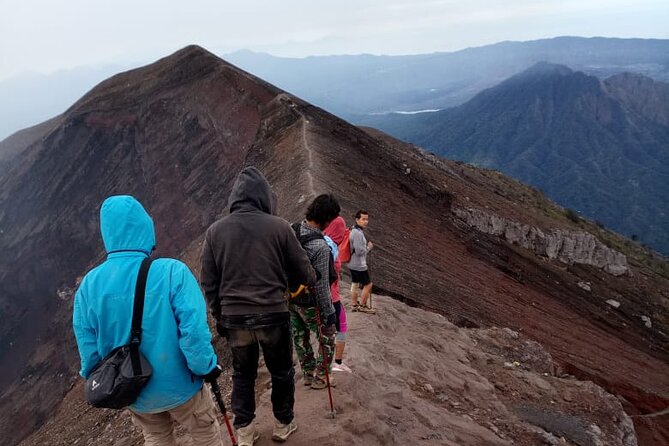
The last section can feel mentally harder than physically hard. The path becomes steep, narrow, and exposed in places. Loose rock can shift under your feet, and the darkness hides the drop beside the trail.
If you feel afraid, tell your guide. One hiker became nervous and dizzy near the top, and the guide offered a lower place to sit, eat breakfast, and watch the sunrise rather than forcing the issue. That is the right attitude for a mountain guide. Reaching the absolute top is not worth an injury.
Your guide may carry your bag if you are struggling. Darta did this for one hiker who needed a lighter load near the summit. That kind of help can make the difference between continuing safely and turning around.
The advertised goal is the crater rim, not a technical climb into the crater. The route and final access can depend on current mountain conditions and local guidance, so follow your guide’s instructions closely. The upper trail is not the place to improvise or rush for a photograph.
Sunrise above Bali and Mount Rinjani
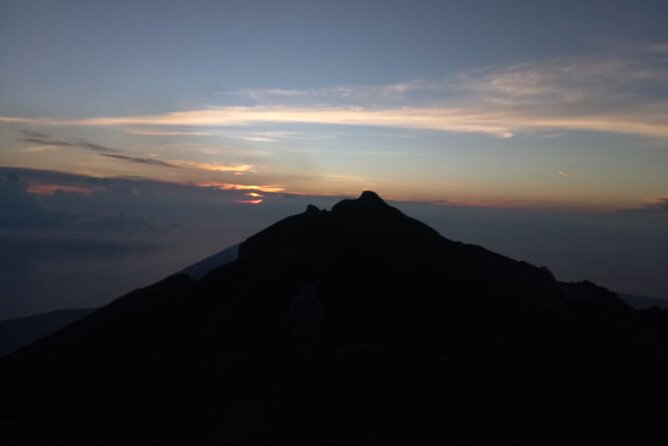
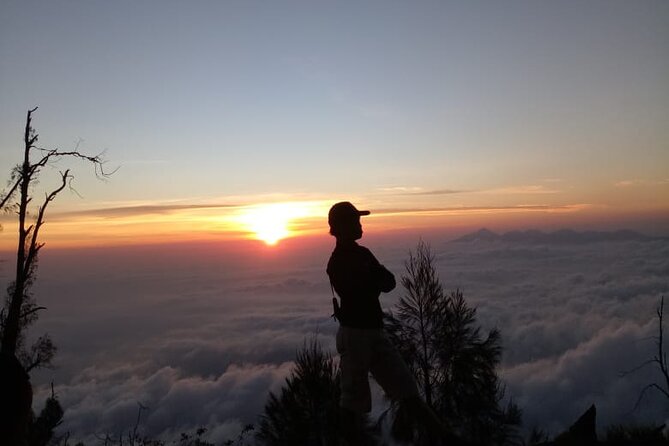
At the top, the reason for the long night becomes clear. Sunrise spreads over Bali, the sea, and Lombok. With good visibility, you can see the three peaks of Mount Rinjani, while Mount Agung’s own shadow may stretch across the clouds below.
The views can be spectacular, but weather controls the show. Fog and cloud may soften the panorama or hide distant peaks. Even without a perfect summit view, the changing sky, cloud sea, and sight of the mountain itself can make the climb worthwhile.
You may have around 30 minutes at the top, depending on timing and conditions. The summit area can be windy and cold, so do not plan to linger in light clothing. Eat, drink, take your photos, and keep track of how your body feels.
A clear view is not guaranteed. That is true of every mountain sunrise, but it matters more here because the physical cost is high. I would book this trip for the climb and the chance of a major view, not as a guaranteed sunrise picture.
The descent is no easy victory
Many first-time mountain hikers assume the hard part ends at the summit. Here, the way down can be just as demanding, and sometimes more dangerous.
In daylight, you finally see the trail you climbed in darkness. Narrow sections, loose stones, fine grit, and steep drops become much more obvious. Rain can make the path slick, while the dry, loose surface can send your feet sliding.
Good hiking shoes with strong tread are important. Several people regretted wearing ordinary running shoes, and sandals would be a poor choice. Take short steps, use the poles, and move slowly on the descent. Your knees and ankles may be tired, so careful foot placement matters.
The walk back can take about four hours. One group finished the hike around 10 a.m. after reaching the mountain at night. By then, you may be tired, hungry, dusty, and ready for the vehicle.
Do not treat the return walk as a formality. The most useful guide is the one who watches your footing, gives you time, and accepts that a slower descent is safer. This is another reason I consider a private guide worthwhile, even for strong hikers.
What the private format adds
Only your group takes part in this private activity. That gives you more control than a large group outing, at least in principle. Your guide can adjust the pace, take longer breaks, or stop the climb if someone is unwell.
The quality of that benefit depends on communication. Some guides were quiet and offered limited information, while others were warm, attentive, and deeply reassuring. Names such as Gede Darta came up as particularly good choices for hikers who want a calm, safety-minded guide.
If you have a guide preference, ask whether a specific guide is available, but do not assume a particular person is guaranteed. Guides may also be working the mountain several times a week, so their energy and conversation style can vary.
The private format is especially useful for couples, friends with similar fitness levels, or solo hikers who want direct support. It is less useful if you expect a polished educational tour with constant commentary. The core service is safe route-finding and mountain support.
What to pack, and what not to expect
The tour supplies trekking poles, a flashlight, a raincoat, breakfast, and water. It does not supply warm jackets, shoes, or other personal items.
Pack:
- A warm jacket and extra layers
- Gloves and warm socks
- Hiking shoes with strong grip
- At least three liters of water per person
- Personal snacks
- A headlamp if you own one
- Clothing that can handle mud and rain
- Any personal medication you may need
The temperature changes sharply as you climb. The forest may feel hot, while the upper mountain can be freezing and windy. One guide lent gloves and extra clothing to underprepared hikers, but you should treat that as kindness, not part of the promised equipment.
A moderate fitness level is listed as the minimum, but I would set the bar higher. You should be comfortable with several hours of continuous uphill walking and a long descent over uneven ground. Previous hiking experience is strongly helpful.
The activity is not recommended for people who are menstruating, according to the supplied safety information. You should also consider your own health, stamina, fear of heights, and reaction to cold before booking.
Is $55 a fair price for this mountain day?
At $55 per person, the tour offers solid practical value. A private driver from a wide range of Bali areas, a private guide, food, water, poles, a flashlight, and a raincoat would be difficult to arrange as cheaply on your own.
The price does not remove the need for preparation. You still pay with sleep, effort, sore legs, and several hours of hard movement. The tour is good value if you want a serious Mount Agung attempt and prefer not to manage transport and route-finding yourself.
It is poor value if you only want a sunrise view and are not interested in the climb itself. In that case, a shorter mountain excursion may suit you better.
Free cancellation is available when you cancel at least 24 hours before the experience begins. Changes made within 24 hours are not accepted, and no refund is offered for a late cancellation. If the minimum number of participants is not met and the activity is canceled, you are offered another date or experience, or a full refund.
Should you book Mount Agung Sunrise Trekking?
Book it if you are fit, prepared, and excited by a demanding night hike. You will get a private guide, practical equipment, a simple breakfast, and the chance to watch sunrise from Bali’s highest mountain with views toward Lombok.
Do not book it casually because the photos look good. Wear proper shoes, bring warm layers, carry plenty of water, and accept that weather may block the distant views. Ask for a guide who matches your pace and tell the guide early if you feel dizzy, frightened, or unwell.
For a determined hiker, this can become the most memorable physical challenge of a Bali trip. For someone seeking an easy sunrise, choose another mountain.
FAQ
How long does Mount Agung Sunrise Trekking take?
The full experience lasts approximately 12 to 16 hours, including pickup, transport, the overnight ascent, sunrise, descent, and return transfer.
Where does the trek begin and end?
The listed meeting point is Pura Pengubengan Besakih in Rendang, Karangasem Regency, Bali. The activity ends back at the meeting point, while pickup and drop-off are offered from selected areas of Bali.
What is included in the tour?
The tour includes breakfast, water during the hike, a private driver and guide, trekking poles, a flashlight, and a raincoat.
Are warm clothes and hiking shoes included?
No. Warm jackets, shoes, and other personal needs are not included. You should bring warm layers and hiking shoes with good grip.
How physically difficult is the climb?
You need at least a moderate level of fitness, but the route is highly demanding. It includes several hours of steep uphill walking and a long descent over rocky, loose, and sometimes slippery ground.
Can I cancel for a full refund?
Yes, if you cancel at least 24 hours before the experience start time. Cancellations or changes made less than 24 hours in advance are not accepted for a refund.
Newest reviews from Ubud
- Explore Rice Fields and Hidden Villages with Ubud E-Bike Tour★ 5.0 · 7 reviews
- Monkey Forest Ubud Half day Tour★ 4.0 · 7 reviews
- Private Tour: Heaven Gate Temple, Tirta Gangga and Blue Lagoon Snorkeling★ 5.0 · 7 reviews
- Ubud Monkey Forest Rice Terrace Temple Waterfall Private Tour★ 5.0 · 7 reviews
- UBUD : Temple and Waterfall All Inclusive Day Tour★ 5.0 · 7 reviews
- Bali – Silver Jewelry Making Class★ 5.0 · 7 reviews
- One way fast Boat between Padangbai and Gili Islands or Lombok★ 5.0 · 7 reviews
- Bali ATV Quad Bike and White Water Rafting – All Inclusive★ 5.0 · 7 reviews
Hiking & Trekking, compared.
Mount Batur Sunrise Hike and Natural Hot Spring Option
Read our review →
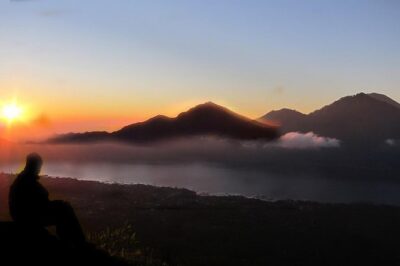
Mount Batur Sunrise Trekking Private All Inclusive
Read our review →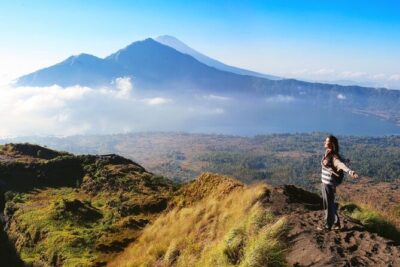
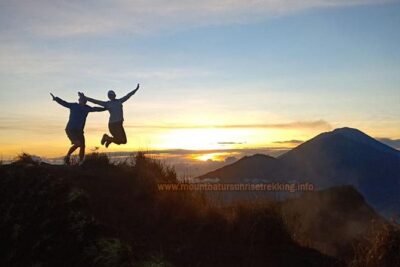
Mount Batur Sunrise Trekking (Private Tour and Breakfast at Restaurant)
Read our review →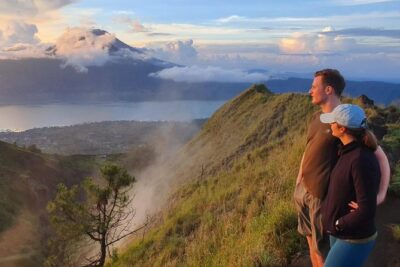
Private Tour Mount Batur Sunrise Trekking and Natural Hot Spring
Read our review →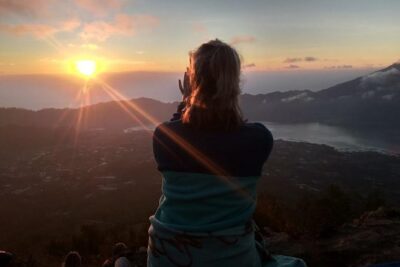
Private Tour : Mount Batur Sunrise Trekking With Private Guide
Read our review →
3-Day Ethical Orangutan Jungle Trek | Bukit Lawang, Sumatra
Read our review →Browse the lists this tour appears in