
Reviewed · FOOD & DRINK
Plant Based Food Tour in Ubud
Five stops, one walk, and a very full afternoon. This three-hour tour takes you through Penestanan, a quiet Ubud neighborhood of rice fields and village paths, while serving a broad sample of Bali’s plant-based cooking. I like the small-group format, limited to 10 people, and I like the range, from Balinese gado-gado and jackfruit rendang to raw lasagna and plant-based carbonara.
The main consideration is pace. You spend about 30 minutes at each of five stops, so this is a tasting tour, not a long meal at any one restaurant. The walk also begins at 11 a.m. in Ubud’s tropical heat, and you should tell the operator about dietary needs when booking.
In This Review
- Key points at a glance
- Walking into Penestanan at 11 a.m.
- Moksa Restaurant begins the tasting
- Pourmoure Coffee brings Bali into the cup
- Seeds of Life makes raw food the surprise
- Zest Restaurant adds bold Balinese flavors
- Plant Bistro closes with plant-based comfort food
- How much food do you receive for $69?
- Who will get the most from this food walk?
- Practical details that affect your day
- Should you book the Penestanan plant-based food tour?
- FAQ
- Where does the tour start?
- Where does the tour end?
- What time does the tour begin?
- How long does the experience last?
- How many people can join?
- Can dietary requirements be accommodated?
- What is the cancellation policy?
Key points at a glance
- Five Penestanan food stops: Visit Moksa Restaurant, Pourmoure Coffee, Seeds of Life, Zest Restaurant, and Plant Bistro.
- A real range of plant-based cooking: Expect Balinese classics, raw food, Italian-style dishes, burgers, sushi, and creative global flavors.
- Coffee from Bali: Taste three coffees and one tea, with beans sourced from organic and permaculture farms.
- Small group, personal feel: The tour accepts a maximum of 10 people, allowing more time for questions and conversation.
- A walking tour with local context: Guides such as Robyn and Ayu connect the food with Penestanan’s village setting and Balinese culture.
- Good value for adventurous eaters: At $69 per person, you receive food and drink tastings at five venues rather than a single restaurant meal.
Walking into Penestanan at 11 a.m.
The tour begins on Jalan Puskesmas in Sayan, Ubud, at 11 a.m. From there, you make your way through Penestanan, an area known for its calm lanes, rice fields, and strong food culture. The route ends near the Blanco Renaissance Museum on Jalan Raya Campuhan.
That start and finish matter. You are not simply being driven from restaurant to restaurant. The walk gives you a chance to see a quieter side of Ubud, away from the main tourist roads. At the same time, you should wear comfortable shoes and come prepared for warmth. The information provided does not state the walking distance or whether transport is available between stops, so I would treat this as a genuine walking experience.
The group size is capped at 10 people. That is small enough for the guide to explain unfamiliar ingredients, answer questions, and keep the group moving without turning the tour into a procession. The social side is also part of the appeal. It can suit solo visitors, couples, friends, and families who like sharing dishes and meeting other food-minded people.
Robyn and Ayu are among the guides associated with the experience. The guiding style is not limited to naming dishes. You can expect attention to the neighborhood, the chefs, Balinese culture, and the reasons behind the food choices. That personal connection is one of the strongest parts of the tour.
More food tours:
- Bali Food Tour: Savor Street Food and Night Market Adventures
★ 5.0 · 46 reviews - Ubud Food and Cultural Tour
★ 5.0 · 12 reviews - Ubud Night Traditional Market Food Tour
★ 5.0 · 11 reviews
Moksa Restaurant begins the tasting
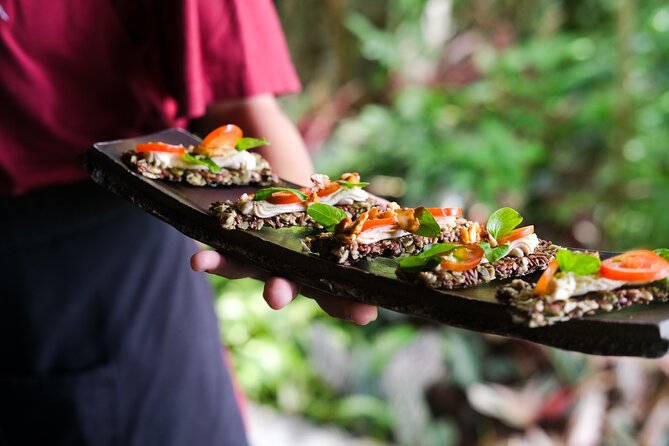
Your first stop is Moksa Restaurant, a farm-to-table plant-based restaurant set in a garden setting. You have around 30 minutes here, which gives you a quick introduction to the tour’s approach: fresh ingredients, careful presentation, and familiar formats made without animal products.
The dishes associated with Moksa include raw lasagna and tempeh satay. The raw lasagna is especially useful for anyone who assumes plant-based food means simple salads or steamed vegetables. It shows how vegetables, nuts, herbs, and other ingredients can be combined into something that feels like a composed restaurant dish.
Tempeh satay connects more directly with Indonesian cooking. Tempeh is a traditional fermented soy product, and satay is one of the country’s best-known food styles. This is a good early stop because it sets up the contrast that runs through the rest of the tour: local ingredients prepared in both Balinese and international styles.
The 30-minute limit is also noticeable here. Moksa is a place where you might want to linger in the garden and order more from the menu, but the tour moves on so you can sample four other venues. Think of each stop as a guided introduction rather than a full restaurant visit.
Pourmoure Coffee brings Bali into the cup
After food, Pourmoure Coffee provides a change of rhythm. The tasting includes three coffees and one tea, with beans sourced directly from farmers using organic and permaculture farming methods.
This is more than a caffeine break. Coffee growing is part of Bali’s agricultural story, and tasting several coffees side by side lets you notice how different beans can have different aromas and flavors. The exact selections may vary, but the format gives you a useful comparison rather than one ordinary cup.
The stop is particularly welcome in the middle of a late-morning walking tour. You have already begun eating, and the coffee keeps the experience from feeling like five similar restaurant visits in a row. If you do not drink coffee, the included tea gives you an alternative, though the available information does not specify the tea selection.
I would not assume this is a full coffee workshop. The tour promises a tasting of three coffees and one tea, not a roasting lesson or a farm visit. Its value is the chance to try Bali-grown coffee in a focused setting and hear more about how the beans are produced.
Seeds of Life makes raw food the surprise
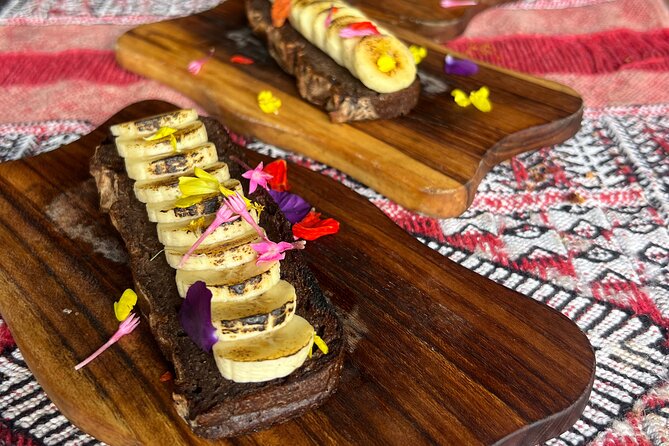
Seeds of Life is the stop most likely to challenge your expectations. It focuses on raw food and uses global flavors in creative combinations. The experience includes a raw or Mexican-style lasagna, depending on the current tasting selection described for the tour.
Raw food can sound restrictive until you see what a skilled kitchen does with it. The point here is not simply that the dish contains no meat, dairy, or cooked ingredients. The point is texture, seasoning, and presentation. The lasagna is often singled out as an unexpected favorite, especially for people who would not normally order raw vegan food.
This stop also helps explain why the tour works for experienced plant-based diners. You are not being shown only basic versions of dishes that you could find anywhere. The restaurants use plant-based cooking as a creative challenge, borrowing ideas from Mexican, Italian, Japanese, and Indonesian food.
There is a possible mismatch in expectations. If you prefer traditional Balinese food at every stop, Seeds of Life may feel less connected to classic local cooking. If you enjoy trying new techniques and unusual combinations, it is likely to be one of the most memorable parts of the route.
More food tours in Ubud:
- Balinese Vegan Cooking Class with Fresh Harvesting & Garden Tour
★ 5.0 · 86 reviews - Jakarta: Volcano, Tea/Rice Fields, Hot Spring, Local Food
★ 4.9 · 515 reviews - Learn to cook Indonesian food at Gili Cooking Classes Trawangan
★ 5.0 · 352 reviews - Small-Group Walking and Food Tour by Night in Yogyakarta
★ 5.0 · 313 reviews
Zest Restaurant adds bold Balinese flavors
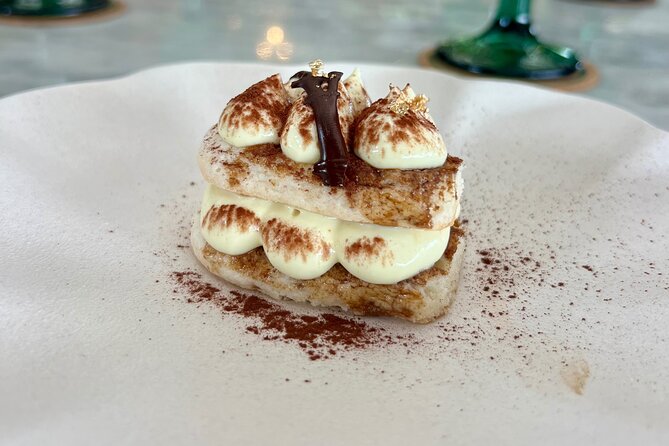
Zest Restaurant is the largest part of the tour’s food story, at least in terms of the range of flavors associated with it. Its approach centers on fresh local ingredients and plant-based versions of recognizable dishes.
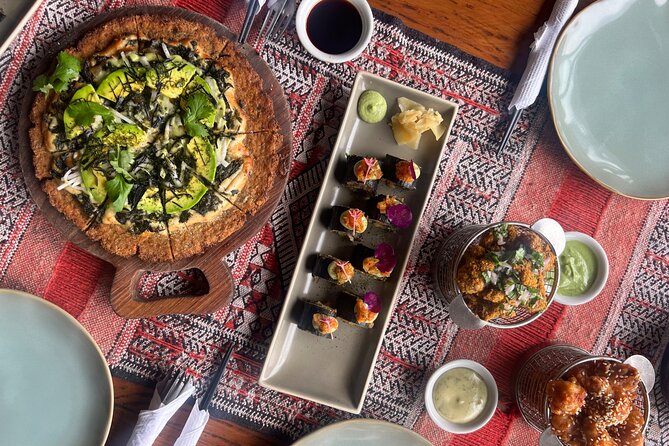
The advertised selection includes jackfruit rendang, plant-based sushi, mini burgers, papaya salad, and a ginger lemon spritz. Gado-gado with peanut sauce also brings a classic Indonesian flavor profile into the tasting. Depending on the exact menu that day, you may not receive every dish listed, but the spread is designed to show how broad plant-based cooking can be.
Jackfruit rendang is an important taste to look for. Rendang is a slow-cooked Indonesian dish traditionally made with meat, coconut milk, spices, and aromatics. Jackfruit changes the texture, but the spice base can still provide the deep, warming character people associate with the original style.
Gado-gado offers another useful comparison. This Indonesian salad usually combines vegetables with a thick peanut sauce, and it is one of the clearest ways to connect a plant-based meal with local food traditions. You are not just eating a substitute. You are tasting a dish rooted in Indonesia’s own cooking.
The ginger lemon spritz helps reset your palate after the heavier flavors. The small burger and sushi portions make the stop playful, while the papaya salad adds freshness and acidity. Zest is a good reminder that plant-based food in Ubud is not limited to one cuisine.
Plant Bistro closes with plant-based comfort food

Plant Bistro is the final food stop, and its signature attraction is plant-based carbonara. A creamy pasta dish is a clever way to end the tour because it feels familiar, filling, and comforting after several more experimental tastings.
The carbonara uses entirely plant-based ingredients, though the specific components are not provided. If you normally associate carbonara with egg, cheese, and cured meat, this gives you a direct comparison with a very different technique. It is also the kind of dish that can appeal to people in a mixed group, including diners who are curious but not committed to a fully plant-based diet.
The tour’s other advertised foods include plant-based sushi, vegan lasagna, and mini burgers. Some of these may appear at different stops or change with the menu. The operator can accommodate vegetarian, vegan, and gluten-free needs, but you need to include your requirements in the special requests section when booking.
Finishing near the Blanco Renaissance Museum is practical. The guide can help you find your way home after the tour, and the location places you near a recognizable part of central Ubud. The tour does not include museum admission, and the experience ends outside rather than continuing into a separate attraction.
How much food do you receive for $69?
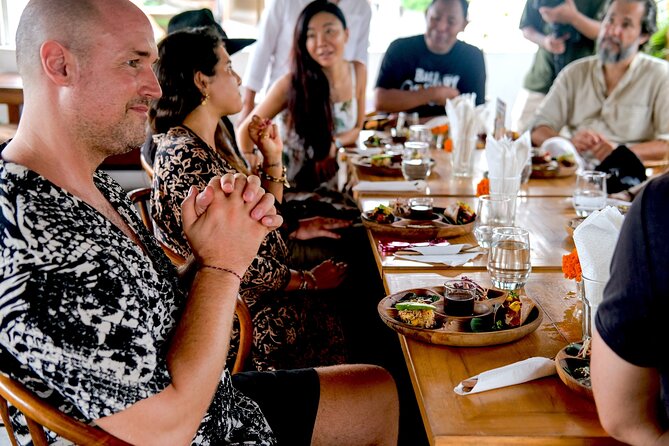
At $69 per person, this is not the cheapest way to eat in Bali. You can find individual plant-based meals in Ubud for much less. The value comes from trying five respected food venues in one organized route, with a guide handling the planning and explaining the dishes.
You also receive more than food. The coffee and tea tasting, the ginger lemon spritz, the walk through Penestanan, and the cultural background all add to the package. If you visited each place separately, you would need to plan the route, decide what to order, and risk eating too much at the first stop.
The price makes the most sense for you if you want variety. It is less compelling if you already know exactly which Ubud restaurant you want to visit or if you prefer to sit down for one substantial meal. You should also remember that five half-hour tastings can add up to a lot of food, even when each serving is small.
The experience is booked, on average, 19 days in advance. That suggests you should not leave it until the last moment if the tour fits your schedule, especially since the group is limited to 10 people.
Who will get the most from this food walk?
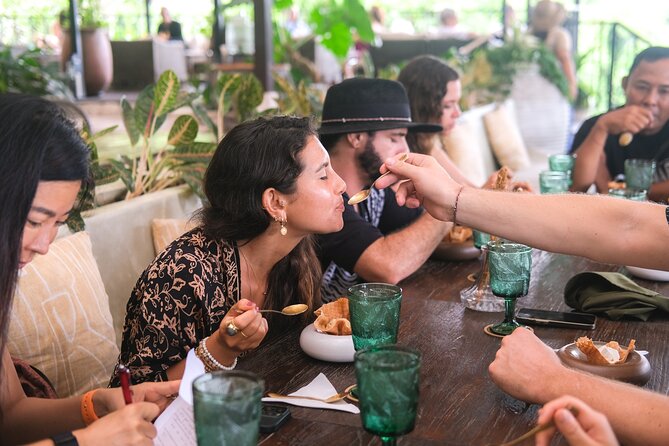
I would recommend this tour to several kinds of visitors:
- Vegetarians and vegans who want more than one safe meal and would like to compare several Ubud kitchens.
- Curious omnivores who want to understand how plant-based chefs handle dishes such as rendang, carbonara, lasagna, and satay.
- Food professionals and serious home cooks looking for ideas in raw food, tempeh, jackfruit, sauces, and spice combinations.
- First-time visitors to Ubud who want a guided introduction to Penestanan as well as its restaurants.
- Small groups of friends or families who enjoy sharing samples and discussing favorite dishes.
- Solo visitors who prefer a social activity with a guide rather than eating alone.
I would be more cautious about recommending it to anyone who wants a quiet, extended lunch. The schedule is active, the group keeps moving, and the tour’s pleasure comes from variety rather than relaxation.
Practical details that affect your day
The tour lasts about three hours and starts at 11 a.m. Confirmation is provided when you book, and the ticket is mobile, so you do not need to print anything.
Wear shoes suited to village paths and rice-field routes. The exact distance, terrain, and shade are not specified, so I would plan for a warm walk and bring water. Since the tour includes several tastings, arriving hungry but not faint is the sensible approach.
Most people can participate. Dietary needs such as vegetarian, vegan, and gluten-free meals can be accommodated when provided in advance. Do not wait until the first restaurant to explain an allergy or restriction. Put it in the booking request so the kitchens have notice.
Free cancellation is available if you cancel at least 24 hours before the 11 a.m. start time. A cancellation or change made less than 24 hours ahead is not refunded, and the cut-off follows local time.
Should you book the Penestanan plant-based food tour?
Book it if you want a guided, social introduction to Ubud’s plant-based food scene, especially if raw lasagna, jackfruit rendang, tempeh satay, Balinese peanut sauce, and plant-based carbonara sound like a good afternoon.
I like the way the tour combines local dishes with international ideas. I also like that it includes coffee, a neighborhood walk, and conversations with guides and chefs rather than treating food as a string of anonymous tastings. Robyn and Ayu bring a personal touch, and the small group gives the experience room to feel friendly.
Skip it if you want one long meal, a strictly traditional Balinese menu, or the lowest possible food cost. For everyone else, the $69 price is fair when you value variety, planning, and context. It is a particularly good choice for a first Ubud visit or for anyone who has already enjoyed Bali’s standard dishes and wants to see what its plant-based kitchens can do.
FAQ
Where does the tour start?
The tour starts at Jalan Puskesmas, Sayan, Kecamatan Ubud, Kabupaten Gianyar, Bali, Indonesia.
Where does the tour end?
It ends at the Blanco Renaissance Museum on Jalan Raya Campuhan in Sayan, Ubud. The guide can help you find your way home afterward.
What time does the tour begin?
The start time is 11 a.m.
How long does the experience last?
The tour lasts approximately three hours.
How many people can join?
The maximum group size is 10 people.
Can dietary requirements be accommodated?
Yes. Vegetarian, vegan, gluten-free, and other dietary needs can be accommodated when you provide the information in the special requests section at booking.
What is the cancellation policy?
You can cancel for a full refund up to 24 hours before the experience starts. Cancellations or changes made less than 24 hours before the start time are not accepted or refunded.
Newest reviews from Ubud
- Explore Rice Fields and Hidden Villages with Ubud E-Bike Tour★ 5.0 · 7 reviews
- Monkey Forest Ubud Half day Tour★ 4.0 · 7 reviews
- Private Tour: Heaven Gate Temple, Tirta Gangga and Blue Lagoon Snorkeling★ 5.0 · 7 reviews
- Ubud Monkey Forest Rice Terrace Temple Waterfall Private Tour★ 5.0 · 7 reviews
- UBUD : Temple and Waterfall All Inclusive Day Tour★ 5.0 · 7 reviews
- Bali – Silver Jewelry Making Class★ 5.0 · 7 reviews
- One way fast Boat between Padangbai and Gili Islands or Lombok★ 5.0 · 7 reviews
- Bali ATV Quad Bike and White Water Rafting – All Inclusive★ 5.0 · 7 reviews
Food & Drink, compared.

Learn to cook Indonesian food at Gili Cooking Classes Trawangan
Read our review →
Bali Private Food Walking Tour With Locals: The 10 Tastings
Read our review →
Chef Bagus Balinese Indonesian Food Cooking Class
Read our review →

Night Walking Tour-Malioboro street food with guide at Yogyakarta
Read our review →
Bali Food Tour: Savor Street Food and Night Market Adventures
Read our review →
Browse the lists this tour appears in