
Reviewed · MOUNT RINJANI TREKS
Rinjani trekking 2 days 1 night
Volcanic views come with a serious workout. This two-day Mount Rinjani trek gives you a guided route through Lombok’s tropical forest to the Senaru Crater Rim, where you camp above Segara Anak Lake and watch the sunset over Bali and the Gili Islands. I like the small group of up to six people, and I like that food, camping gear, and a porter are part of the main package.
The price of $190 per person is fair for a guided overnight hike with meals and camp equipment, but you should read the inclusions carefully. Transport, the national park fee, a headlamp, and walking stick are extra, and the route is much harder than a casual mountain walk. This is a crater-rim trip, not a summit climb, despite some broad wording about watching the sunrise at the summit.
In This Review
- Key points before you book
- What this two-day Rinjani route actually does
- Meeting in Senaru and preparing for the climb
- Day one: forest shade from Senaru to Pos 3
- The final climb to 2,641 meters
- Camping above Segara Anak Lake
- Day two: sunrise, breakfast, and the long return
- What is included, and what still costs extra
- How hard is it for you?
- Group size, guides, and the human side of the trek
- Weather, cancellations, and timing
- Should you book the Senaru Crater Rim trek?
- FAQ
- How long is the Mount Rinjani trek?
- Where does the trek begin?
- Does this tour reach the summit of Mount Rinjani?
- Are meals and water included?
- Is camping equipment provided?
- Are transport and entrance fees included?
- What happens if bad weather cancels the trek?
Key points before you book
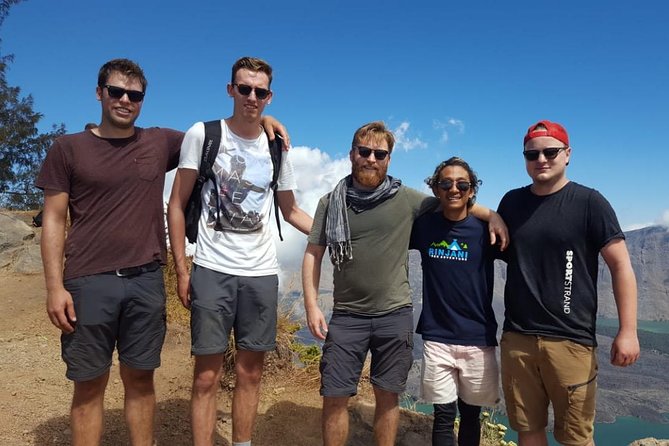
- The destination is Senaru Crater Rim at 2,641 meters, with views of Segara Anak Lake, Gunung Baru Jari, Bali’s Mount Agung, and the Gili Islands.
- The trail begins in dense tropical forest before rising into open grassland and a much steeper upper section.
- Meals, drinking water, a tent, sleeping bag, mattress, toilet tent, and porter support are included.
- The group is limited to six people, which gives the guide a better chance to keep an eye on everyone.
- The return usually reaches Senaru around 1 p.m. on day two, useful if you have onward plans.
- The $190 price does not cover every cost, including the IDR400,000 national park fee and IDR250,000 pre-trek accommodation charge.
What this two-day Rinjani route actually does
Mount Rinjani reaches 3,726 meters, making it Indonesia’s second-highest peak. This trip takes you from Senaru up to the northern crater rim, rather than taking you to the summit itself.
That distinction matters. The tour information uses the words summit and sunrise in its general description, but the detailed schedule says you camp at Senaru Crater Rim and return to Senaru after breakfast. You should book this as a crater-rim hike with an overnight camp, not as a summit attempt.
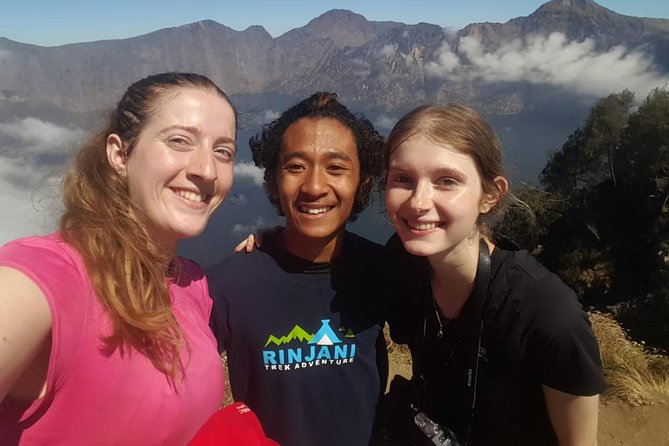
The payoff is still considerable. From the rim at 2,641 meters, you can look across the volcanic crater toward Segara Anak Lake and Gunung Baru Jari, the small volcanic cone inside the crater. On a clear evening, you may also see Mount Agung in Bali and the Gili Islands.
The route is physically demanding. The operator asks for a moderate fitness level, but the repeated uphill sections, altitude gain, steep upper trail, and long return make this more than a simple guided stroll. The good news is that the itinerary includes regular rest breaks, snacks, and a longer lunch stop.
More Rinjani treks:
- Mount Rinjani 2 Days 1 Night Senaru Crater Rim
★ 5.0 · 131 reviews - 3D-2N Explore Mount Rinjani – Summit -Lake and Hotspring
★ 5.0 · 112 reviews - Rinjani trekking 2D 1N RIM
★ 5.0 · 94 reviews
Meeting in Senaru and preparing for the climb
The stated meeting point is Rinjani Trek Adventure on Jl. Pariwisata in Senaru. The activity begins at 7 a.m., and the arrival day includes a briefing about the trekking procedure at your accommodation or through the local office arrangement.
Use that briefing to settle practical matters before your legs are tested. Confirm the route, what the porter is carrying, the meeting time, the extra fees, and how you will return after the trek. This is also the moment to make sure you understand that the stated overnight camp is at Senaru Crater Rim.
The package information gives two different messages about transport. The overview describes pickup and drop-off at Lombok hotels or the airport, while the exclusions say transportation before and after the trek is not included. The safest approach is to budget for transport separately and confirm the arrangement in writing before you arrive.
You also need to account for the IDR400,000 Mount Rinjani entrance fee per person. A separate pre-trek accommodation charge of IDR250,000 per person is listed as well. Those additions do not make the package poor value, but they do change the final cost.
Day one: forest shade from Senaru to Pos 3
After an early breakfast, you register at the Rinjani National Park office in Senaru, starting at about 601 meters. The first section passes through dense tropical forest, which gives you shade and a cooler setting while you settle into the climb.
The early trail is not a free warm-up. You still gain height steadily, and you will want to keep your pace controlled. A guide is especially useful here because a calm, even rhythm is better than rushing the first hour and paying for it later.
The route pauses at Pos 1 and Pos 2 for rest breaks and snacks. These stops divide the day into manageable sections. You can drink, adjust your pack, and check your footing rather than treating the climb as one long push.
At Pos 3, around 2,000 meters, you stop for a longer lunch break. This is a useful point in the day because the forest section is giving way to more open ground, and the hardest visual change is still ahead.
Your lunch and water are included, along with dinner and breakfast. The food is one of the strongest parts of the arrangement because carrying enough food for an overnight mountain trip adds weight and planning. The porter carries food and trekking equipment, leaving you with less bulk than you would manage alone.
That support does not remove the physical challenge. You still need to carry your personal clothing, water for immediate use, and any small items you want during the walk. Pack lightly, since every unnecessary item becomes part of the uphill effort.
The final climb to 2,641 meters
After Pos 3, the forest thins and the route turns into grassland. The scenery opens, but the climb gets steeper. This is where the trek shifts from a steady forest hike to a serious mountain ascent.
The upper section is likely to feel slow. Take the supplied rest and snack stops seriously, and do not compare your pace with anyone else in the group. With a maximum of six people, the guide can keep the group reasonably close, though different fitness levels may still affect the speed.
The guide and porter support received especially strong praise in the supplied feedback. The trek was described as tough but well organized, with the guide staying attentive throughout the climb. One group also had onward transport arranged to Senggigi at the same time, a useful example of the kind of help you should request if you need a connection after Senaru.
The guide is not just there to point at the path. On a route this strenuous, practical help with pacing, food timing, camp arrival, and basic organization can make the difference between a hard but enjoyable day and a miserable one.
More treks in Lombok:
- 2D1N Senaru Crater Rim Trekking
★ 5.0 · 178 reviews - Rinjani Trekking 3D2N Summit
★ 4.5 · 85 reviews - 3D/2N Rinjani trekking summit,lake and hot springs.
★ 5.0 · 85 reviews - Rinjani Trekking 3 Days 2 Nights (Sembalun – Senaru)
★ 5.0 · 84 reviews
Camping above Segara Anak Lake
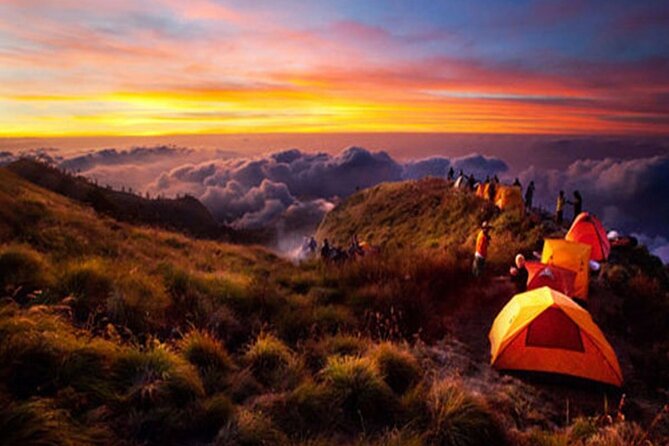
You spend the night at Senaru Crater Rim, at about 2,641 meters. The camping setup includes a tent, sleeping bag, 4-centimeter mattress, and toilet tent.
This is simple mountain camping, not a lodge with walls and hot showers. The mattress gives you some separation from the ground, while the sleeping bag handles the night in a high, exposed location. Bring clothing suited to cool conditions, since the supplied details do not promise heated facilities or indoor shelter.
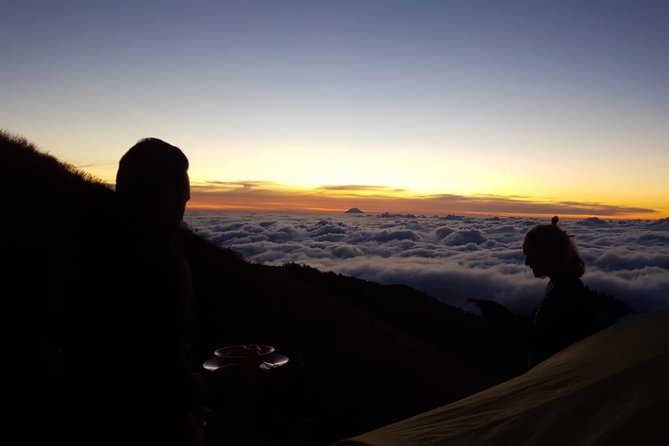
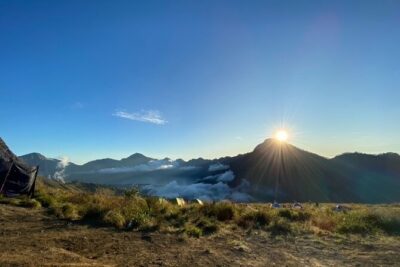
The location is the main event. At sunset, you can look toward Mount Agung in Bali and the Gili Islands, while the crater holds Segara Anak Lake and Gunung Baru Jari below. You also have views toward the summit of Rinjani, even though this itinerary does not take you there.
Weather controls how much you see. On a clear evening, the rim can feel like a natural balcony over the crater. In cloud or poor conditions, the views may be limited, and the operator can cancel the activity if the weather is unsuitable.
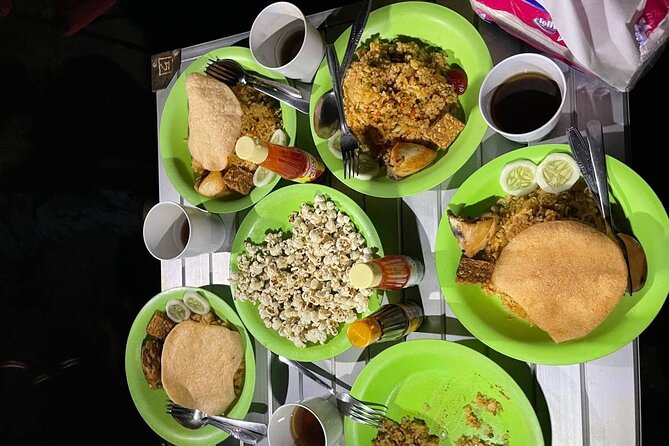
Dinner is included at camp. The combination of a hot meal, a tent, and porter support is a real value at the end of a steep day. The food received particularly warm praise, with one party calling it delicious. Still, you should keep expectations sensible: this is expedition-style support, not restaurant dining.
Day two: sunrise, breakfast, and the long return
The second morning begins with sunrise and a leisurely breakfast at the rim. The views may include the crater, lake, Gunung Baru Jari, Bali, and the Gili Islands, depending on the weather.
This is another point where you should clarify expectations. The detailed plan places you at the Senaru Crater Rim for sunrise, not at Rinjani’s 3,726-meter summit. If reaching the true summit is your main goal, this is not the correct route based on the information provided.
After breakfast, you retrace the trail toward Senaru. Descending sounds easier than climbing, but long downhill sections can be rough on knees and ankles. Loose or uneven ground can also demand careful foot placement, especially when tired.
The return includes several rest and snack breaks, with a longer lunch stop at Pos 2. That pacing is welcome because day two is not merely a short walk back to the village. You still need energy for the descent, and the earlier start and overnight conditions can leave you feeling worn down.
Arrival in Senaru is scheduled for around 1 p.m. From the meeting point, you continue to your next destination. If you have a flight, ferry, or fixed hotel check-in, allow extra time beyond the stated arrival. Mountain schedules can shift with weather, group pace, and trail conditions.
What is included, and what still costs extra
At $190 per person, the package covers the core needs of a two-day guided hike:
- A local guide who speaks your language
- A porter for food and trekking equipment
- Breakfast, lunch, dinner, and water during the trek
- Tent
- Sleeping bag
- 4-centimeter mattress
- Toilet tent
- Access to language support at the company office
That is a useful bundle. Hiring a guide, organizing food, carrying camping gear, and arranging a toilet tent separately would take more time and effort. The small group also helps the price feel reasonable because you are not placed in a large hiking crowd.
You need to add the IDR400,000 national park entrance fee per person. The listed pre-trek accommodation cost is IDR250,000 per person, and transportation is also listed as excluded. A headlamp and walking stick are not included either.
Tips for guides and porters are optional. The supplied feedback gives the team high marks for organization, food, camping equipment, and care during the climb. If you feel the support was strong, a tip is a practical way to recognize it, but it is not a compulsory charge.
Because the transport information conflicts, ask for a complete price before paying. The overview refers to hotel and airport transfers, while the detailed exclusions say those transfers are not included. That single question can prevent an unpleasant surprise.
How hard is it for you?
The operator describes the trip as suitable for people with moderate physical fitness. I would treat that as a minimum, not a promise that the trek will feel moderate.
You face a full uphill day from Senaru to 2,641 meters, then a long descent the next day. The route becomes steeper after the forest, and the two-day schedule leaves little time for recovery before walking back down.
This trip suits you if you already enjoy long walks, regular uphill exercise, or demanding day hikes. It also suits people who want a compact Rinjani experience without committing to a longer route.
You should think twice if you dislike steep climbs, have little recent walking practice, or want a relaxed holiday activity. The high rating reflects strong organization and memorable scenery, but good logistics cannot make a mountain climb flat.
A headlamp is excluded, so plan to bring or hire one. A walking stick is also excluded, though it may help on the steep climb and long descent. Comfortable trekking shoes, warm layers, rain protection, and a small personal pack are sensible choices, but the supplied information does not specify a required equipment list.
Group size, guides, and the human side of the trek
The maximum group size is six. That is small enough to feel personal and gives the guide a better chance to notice when you need a break, food, water, or a slower pace.
The supplied feedback gives the guides and porters much of the credit for making a difficult two-day route manageable. The organization begins with the briefing and continues through transport help, meals, camping, and trail support.
No individual guide names are provided, so you cannot request a particular person based on the available information. You can, however, ask about the guide assigned to your group and confirm the language support before the climb.
Porters carry food and trekking equipment. That is valuable support, but it is worth remembering that portering is physical work. Pack only what you need and follow the operator’s advice about weight.
Weather, cancellations, and timing
Mount Rinjani conditions can affect the trip. The experience requires good weather, and if poor weather forces a cancellation, you are offered another date or a full refund.
You can cancel for a full refund if you do so at least 24 hours before the local start time. Cancellations or changes made less than 24 hours before the start are not refunded or accepted.
The experience is booked, on average, 32 days ahead. That suggests you should not leave planning until the last minute if your Lombok dates are fixed. It also gives you time to confirm the transport question, extra fees, pre-trek accommodation, and whether the crater-rim route matches your goal.
Should you book the Senaru Crater Rim trek?
I would book this tour if you want a demanding but organized overnight hike with a small group, local guide, porter support, included meals, and a striking crater-rim camp. The strongest reasons are the practical setup, attentive guide support, tasty food, and the views from 2,641 meters.
I would not book it if your main aim is to stand on Rinjani’s true summit. The detailed itinerary returns from Senaru Crater Rim and does not include a summit push.
Before booking, ask for the final price with transport, the national park fee, and pre-trek accommodation included or clearly itemized. If you are fit enough for a steep uphill day and a long descent, this offers a strong introduction to Rinjani without the complexity of organizing every part yourself.
FAQ
How long is the Mount Rinjani trek?
The experience lasts approximately two days and one night. You hike to Senaru Crater Rim on day one, camp overnight, and return to Senaru on day two.
Where does the trek begin?
The stated meeting point is Rinjani Trek Adventure on Jl. Pariwisata in Senaru, North Lombok. The activity start time is 7 a.m.
Does this tour reach the summit of Mount Rinjani?
The detailed itinerary takes you to Senaru Crater Rim at 2,641 meters and then back to Senaru. It does not describe a climb to the 3,726-meter summit.
Are meals and water included?
Yes. Breakfast, lunch, dinner, and water are included during the trek.
Is camping equipment provided?
Yes. The package includes a tent, sleeping bag, 4-centimeter mattress, and toilet tent.
Are transport and entrance fees included?
The information is inconsistent about transport, so you should confirm this before booking. The exclusions list transport as not included, along with the IDR400,000 Mount Rinjani entrance fee per person.
What happens if bad weather cancels the trek?
If poor weather causes the experience to be canceled, you are offered a different date or a full refund. You can also cancel at least 24 hours before the start time for a full refund.
More Evenings Out in Lombok
- 2 Days Hike to Summit with full view of Sunrise and Sunset
★ 5.0 · 49 reviews - Trekking Rinjani Mountain Summit 2 Days 1 Night – Em Adventure
★ 5.0 · 42 reviews - Mount Rinjani 2 Days and 1 Night to Senaru Crater Rim
★ 5.0 · 42 reviews - Private 2 Days and 1 Night Summit in Mount Rinjan
★ 5.0 · 35 reviews
More 2-Day Experiences
- Mount Rinjan 2Days Summit Full Sunrise View Point 3726m
★ 5.0 · 96 reviews - Mt. Rinjani 2D1N Senaru Crater Rim
★ 5.0 · 75 reviews - Trekking Mt. Rinjani 2 Days 1 Night Senaru Crater Rim
★ 5.0 · 55 reviews - Mount Rinjani Hiking to summit( 2 Days 1 Night )
★ 5.0 · 50 reviews
Newest reviews from Lombok
- Explore Traditional Villages & to the South Coast★ 5.0 · 7 reviews
- Lombok Private Car Hire with Driver★ 5.0 · 7 reviews
- See The Stuning View Of Selong Hill And Tiu Kelep Waterfall★ 5.0 · 7 reviews
- Day Trip Secret Island West Of Lombok★ 4.5 · 7 reviews
- 3D 2N Mount Rinjani Trekking Tour To Summit And Lake★ 4.5 · 7 reviews
- MODERATE HIKING: 2D/1N Crater Rim Senaru | Rinjani Samalas Tour★ 5.0 · 8 reviews
- Popular Rinjani Trekking Tour Service To Summit For 2 Days Via Sembalun Trail★ 5.0 · 8 reviews
- Mount Rinjani 2D 1N trekking to summit★ 4.5 · 8 reviews
Mount Rinjani Treks, compared.
Mount Rinjani 2 Days 1 Night Senaru Crater Rim
Read our review →
3D-2N Explore Mount Rinjani – Summit -Lake and Hotspring
Read our review →
3D/2N Rinjani trekking summit,lake and hot springs.
Read our review →
Rinjani Trekking 3 Days 2 Nights (Sembalun – Senaru)
Read our review →
Browse the lists this tour appears in