
Reviewed · SURABAYA TOURS
Trowulan Tour Ruin of Majapahit Kingdom from Surabaya
History hides in the countryside. This six to seven hour trip from Surabaya makes Trowulan manageable, pairing scattered temples and a museum with private transport, lunch, entrance fees, and a local guide. I especially like the calm feel of the sites and the chance to learn from guides such as Agus, Pak Agus, Yono, and Djoko, who are praised for explaining the Majapahit period clearly.
I also like the flexible format. You may join a private trip or a small group of up to 15 people, with pickup from a hotel or port. The main drawback is the heat and humidity, along with a practical lunch issue: the restaurant menu may be in Indonesian, and some dining staff speak little English.
In This Review
- Key points before you book
- Why Trowulan is worth the trip from Surabaya
- Getting from Surabaya to a scattered archaeological site
- Wringin Temple, the grand entrance to Majapahit
- Tikus Temple and the story behind its name
- Bajangratu and its carved brickwork
- The Trowulan Museum puts the ruins in context
- Brahu and Gentong, a different temple design
- Lunch is included, but prepare for an Indonesian menu
- The guide can make or break the history lesson
- Heat, timing, and the practical side of the day
- Is the $85 price fair?
- Who should book this Trowulan tour?
- FAQ
- How long does the Trowulan tour from Surabaya last?
- What is the price of the tour?
- Is pickup included?
- Is transportation included?
- What sites does the tour visit?
- Are entrance fees included?
- Is lunch included?
- Is bottled water provided?
- How large can the group be?
- Can I cancel for a full refund?
Key points before you book
- Trowulan’s ruins are spread across several sites, so included private transport saves time and effort.
- Agus and other local guides receive strong praise for making Majapahit history understandable and lively.
- The tour covers five important stops, including Wringin temple, Tikus Temple, Bajangratu, the Trowulan Museum, and Brahu and Gentong.
- Lunch, bottled water, parking, fuel, tickets, and a driver are included in the $85 price.
- The sites can be very quiet, with some temples seeing few or no other visitors.
- Plan for hot weather, even though water is provided and the stops are not extremely long.
Why Trowulan is worth the trip from Surabaya
Trowulan is not a single enclosed archaeological park. The remains of the Majapahit capital are scattered around a broad area, which can make independent sightseeing awkward. You need transport between sites, a sense of direction, and enough background to understand why a brick gate sits in one place while a bathing temple or museum appears somewhere else.
That scattered layout is also part of the appeal. Instead of walking through one polished monument complex, you see fragments of a former royal center in an ordinary countryside setting. The contrast helps you picture how much of the old capital has disappeared, while the surviving brick architecture hints at its scale and importance.
Majapahit was one of Southeast Asia’s major kingdoms, and Trowulan contains some of its most important surviving remains. The tour also connects the monuments with Hindu beliefs, including references to Shiva, Parwati, Brahma, and Durga. I find that useful because the temples are more than attractive brick structures. Their designs and names point to the religious ideas that shaped the kingdom.
At $85 per person, the cost is not simply an entrance ticket and a ride. You are paying for a full half-day from Surabaya, a driver, a professional guide, fuel, parking, lunch, bottled water, and entry to all listed sites. For a solo visitor, the price may feel high compared with visiting one local attraction. For a pair, family, or cruise passenger who wants a focused day without arranging each piece separately, the package offers solid value.
A few more tours worth putting side by side
- Mount Bromo Sunrise Tour from Surabaya or Malang – 1 Day
★ 5.0 · 1,759 reviews - From Surabaya / Malang : Mt Bromo Sunrise – Ijen Blue Fire 3D2N
★ 5.0 · 351 reviews - Surabaya – Mount Bromo – Tumpak Sewu Waterfall – Ijen Bluefire Tour – Bali 4d3n
★ 5.0 · 350 reviews
Getting from Surabaya to a scattered archaeological site
The tour lasts about six to seven hours, including transportation between the sites, lunch, and pickup and return. Hotel and port pickup are offered, which is particularly useful if you are staying in Surabaya or arriving by cruise ship with limited time ashore.
The private vehicle is one of the most useful parts of the arrangement. Trowulan’s monuments are not presented as one compact route, so having a driver means you can concentrate on the guide and the ruins rather than finding each location yourself. Fuel and parking are included, so you do not need to keep track of small transport costs during the day.
The maximum group size is 15, though the experience may be private or arranged as a small group. If you are joining from a cruise ship, you may share the vehicle and guide with other passengers from your ship. Ask about the group arrangement when booking if personal space matters to you.
The guides often make contact through WhatsApp before pickup. Agus, for example, was reported to arrive early and send a message when he reached the meeting point. That sort of simple communication can make an early pickup less stressful.
Wringin Temple, the grand entrance to Majapahit
The first stop is Wringin temple, scheduled for about 45 minutes. It is described as the largest temple in Trowulan and is believed to have served as the main gate to the Majapahit capital.
This is a strong opening stop because it gives you a sense of scale before the smaller structures that follow. A large gateway also helps you think about movement through the old capital. You are not just looking at a temple for its decoration. You are considering who passed through it and how it may have framed access to an important royal center.
Your guide is especially valuable here. Without context, a red-brick monument can look simple, particularly when compared with heavily carved stone temples elsewhere in Indonesia. A guide can explain how the structure fits into Majapahit planning and how the wider site is understood.
The visit lasts 45 minutes, long enough for an explanation and photographs without turning the stop into a long wait. There is little shade mentioned in the tour details, so bring sun protection and use the bottled water provided.
Tikus Temple and the story behind its name
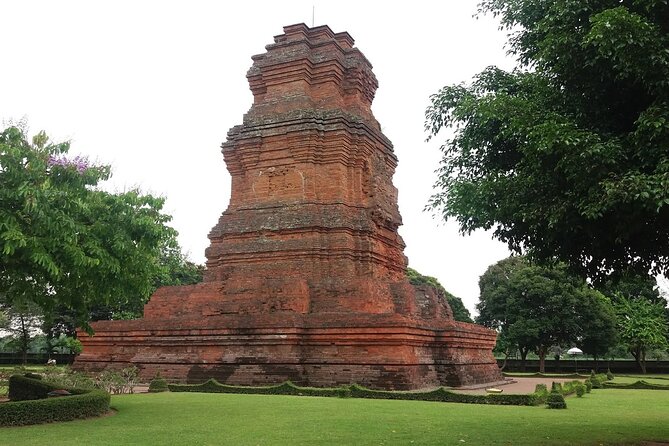
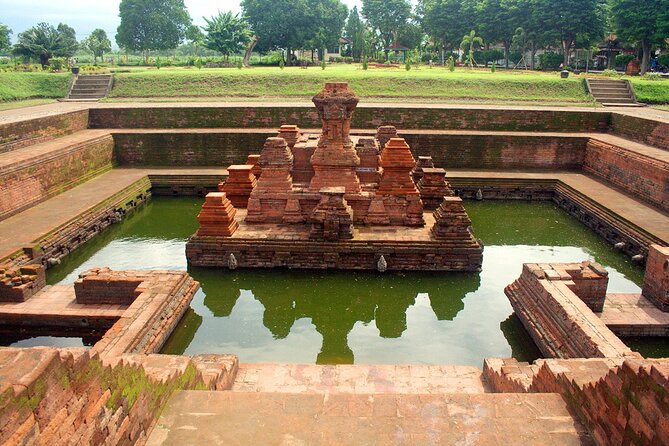
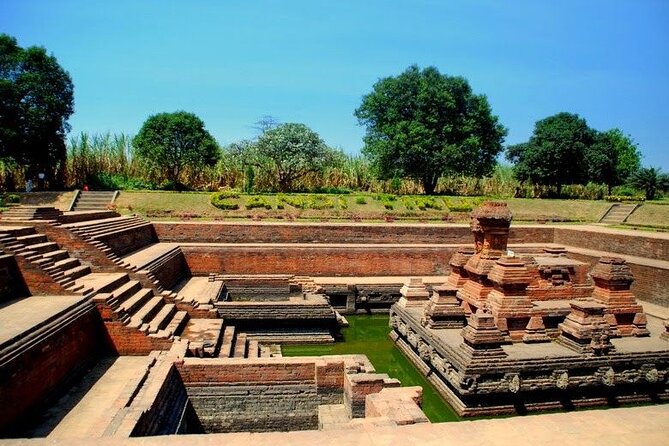
Tikus Temple is another 45-minute stop. Its name comes from the many rat statues found inside. The temple is also associated with worship of Durga, the Hindu goddess of destruction.
That combination makes Tikus one of the more memorable stops. The name catches your attention, while the religious connection gives your guide a chance to explain how Hindu figures and symbols relate to the site. I would listen closely here rather than rushing through photographs, since the details about the statues and the temple’s purpose are what make it more than another brick ruin.
The visit is long enough to ask questions. Guides such as Agus and Yono are praised for answering questions and explaining the Majapahit period with enthusiasm. Their role matters at Tikus because the temple’s meaning may not be obvious from its remaining walls and layout.
Again, expect heat. The tour provides water, but comfortable clothing, a hat, and sunscreen will make the stop easier. The supplied information does not promise extensive shade or indoor facilities at each monument, so treat this as an outdoor archaeological visit.
A completely different kind of day out on the same trip:
- From Surabaya / Malang : Mt Bromo Sunrise – Ijen Blue Fire 2D1N
★ 5.0 · 330 reviews - Active Volcanoes Bromo and Ijen – Start Surabaya 3 Days and 2 Nights
★ 5.0 · 292 reviews - Mount Bromo Sunrise 1 Day Private Tour
★ 5.0 · 210 reviews - 4D3N Bromo Ijen Tumpak Sewu Waterfall Tour from Surabaya/Malang
★ 5.0 · 202 reviews
Bajangratu and its carved brickwork
Candi Bajangratu receives about 30 minutes. This temple is dedicated to Parwati, the consort of Shiva, and is known for its detailed carvings and architecture.
The shorter time here keeps the day moving, but it also means your guide’s explanation is important. Look for the carved details and the way the brickwork creates a formal, carefully designed structure. Bajangratu adds a different mood after the broader gateway at Wringin and the religious associations at Tikus.
Thirty minutes is usually enough to hear the main story, walk around the monument, and take photographs. If you prefer slow architectural study, you may find this stop brief. The tour is designed to introduce several Trowulan sites in one day rather than give you an entire hour at each one.
That broad approach is sensible for a first visit. You get a connected picture of the area instead of seeing one ruin in isolation. I would use the time to ask your guide what is known about the temple’s original function and how much of its decoration survives.
The Trowulan Museum puts the ruins in context
The Trowulan Museum is the indoor portion of the route and lasts about 30 minutes. Its collection includes Majapahit-era sculptures, ceramics, jewelry, and other artifacts.
This stop is especially helpful after several outdoor monuments. The temples show you the surviving structures, while the museum gives you a closer look at objects linked to the period. Ceramics and jewelry can reveal details that are easy to miss when you are standing outside a large brick building.
Thirty minutes is enough for a guided introduction, though it may not satisfy you if you want to read every display carefully. I would ask the guide to point out the objects most useful for understanding daily life, religious practice, and artistic work during the Majapahit era.
The museum also offers a break from the heat. That matters because the day includes several outdoor stops, and the weather can be hot and humid. Even visitors who are less focused on archaeology may appreciate having an indoor pause before the final temple.
Brahu and Gentong, a different temple design
The final stop is Candi Brahu dan Gentong, planned for about 30 minutes. Brahu is linked with Brahma, the Hindu god of creation, and is noted for its unusual stepped pyramid form.
After seeing gateways and more vertically detailed structures, this design gives the itinerary a useful change of pace. The connection with Brahma also continues the tour’s attention to Hindu religion. By this stage, you have heard about Durga, Parwati, Shiva, and Brahma, so the stops begin to form a wider religious picture instead of feeling like unrelated monuments.
The short visit works well as a final look at Trowulan’s architectural variety. You will have seen several different forms, heard explanations of their religious links, and visited the museum. If you want an exhaustive survey of every ruin in the area, this tour will not cover everything. It is a carefully selected introduction.
Lunch is included, but prepare for an Indonesian menu
Lunch is part of the price, which removes one more task from a busy day. The food has been described as good, but the restaurant menu may be in Indonesian, and the dining staff may speak little or no English.
That is not a major problem if you are comfortable trying local food or asking your guide for help. Still, I would tell the operator about dietary needs when booking, since the supplied information does not explain the menu or special-diet options.
The guides do not necessarily eat with you. That can feel slightly awkward if you expect the guide to explain every dish, but it also gives the guide and driver a normal break. If you need help ordering, ask before they step away.
Bottled water is supplied for each person. Bring extra spending money only if you want additional drinks or purchases, since the included items cover the listed lunch and water but do not specify extras.
The guide can make or break the history lesson
The most praised part of this experience is the guiding. Agus is described as friendly, cheerful, professional, and highly familiar with Trowulan and the Majapahit kingdom. Pak Agus is praised for answering questions in detail, while Yono is noted for clear English and strong teaching skills. Djoko is also praised for making the museum and temple visits enjoyable.
Guide assignments can vary, so you may not receive one of these exact people. Still, the pattern is encouraging: the tour depends on local explanation rather than a generic audio script. That matters at Trowulan, where the ruins do not always explain themselves.
I like the reported combination of warmth and subject knowledge. A good guide should help you understand what is known, what is believed, and what remains uncertain. You can also ask questions about Hindu worship, the role of the temples, and how historians connect separate ruins to the old capital.
The guide may speak with enthusiasm for much of the day, so this suits you best if you enjoy history and asking questions. If you prefer to explore silently and at your own pace, a private booking gives you more flexibility, but the guided format remains the main reason to choose this experience.
Heat, timing, and the practical side of the day
The tour is manageable for most people, and the activity information says most travelers can participate. That does not remove the need to prepare for outdoor conditions. Several stops involve walking around exposed temple grounds, and the day can be hot and humid.
I would wear light clothing, sturdy shoes, and sun protection. Keep the provided water close, especially during the 45-minute visits at Wringin and Tikus. The itinerary gives specific stop lengths, but the total time also includes road travel and lunch, so you should keep the rest of your Surabaya schedule fairly open.
The 6 to 7 hour duration works well for a dedicated day trip. It is long enough to reach the archaeological area and see five major stops without making the outing an all-day marathon. Pickup and drop-off make the experience easier for cruise passengers and anyone who does not want to arrange local transport.
The activity has a current rating of 5 out of 5 from 25 ratings, with 100 percent recommending it. That is a strong record, but the recurring practical cautions still matter: the weather can be tiring, and lunch may require patience with language.
Is the $85 price fair?
I see the price as reasonable if you value convenience and historical interpretation. The $85 includes private transport with fuel and a driver, a professional guide, lunch, bottled water, parking, fuel surcharge, and entrance tickets to every listed site.
If you are already arranging a car and driver in Surabaya, you may be able to compare the cost against a self-planned day. But you would still need to organize the route, pay each entry fee, find lunch, and supply the historical context yourself. Trowulan’s scattered layout makes the guided package more useful than the headline price might first suggest.
The value is strongest for cruise passengers, couples, families, and small groups. Group discounts may improve the cost for larger bookings. Solo visitors should weigh the per-person price against the convenience of door-to-door transport and a dedicated guide.
Free cancellation is available if you cancel at least 24 hours before the start time. Changes or cancellations inside that window are not accepted for a refund, so keep the local cutoff time in mind.
Who should book this Trowulan tour?
I would choose this tour if you want to understand the Majapahit ruins rather than simply photograph them. The guide-led format, museum visit, and connections to Hindu religion give the day substance, while the included transport solves the hardest practical problem.
It is particularly suitable for history fans, cruise passengers, and anyone staying in Surabaya without a confident plan for reaching Trowulan. The quiet temple grounds are another plus if you prefer archaeological sites without large crowds.
I would hesitate only if you dislike hot outdoor sightseeing, need a highly flexible meal arrangement, or want to spend a long time at one monument. For most people, though, the combination of five sites, museum artifacts, transport, lunch, and strong guide support makes this a worthwhile side trip.
FAQ
How long does the Trowulan tour from Surabaya last?
The tour lasts approximately six to seven hours, including transport, sightseeing, and lunch.
What is the price of the tour?
The listed price is $85 per person. Group discounts are offered.
Is pickup included?
Yes. Pickup and drop-off are offered from hotels or the port in Surabaya.
Is transportation included?
Yes. Private transportation with fuel and a driver is included, along with parking fees and the fuel surcharge.
What sites does the tour visit?
The route includes Wringin temple, Tikus Temple, Candi Bajangratu, the Trowulan Museum, and Candi Brahu dan Gentong.
Are entrance fees included?
Yes. Entrance fees to all the sites visited are included.
Is lunch included?
Yes. Lunch is included in the tour price.
Is bottled water provided?
Yes. Each person receives bottled water.
How large can the group be?
The activity has a maximum group size of 15 people. Private and small-group options are available.
Can I cancel for a full refund?
Yes, if you cancel at least 24 hours before the experience start time. Cancellations or changes made less than 24 hours in advance are not refunded.
Newest reviews from Surabaya
- East Java Tours with Bromo Photography, Ijen Blue Fire and Waterfall★ 5.0 · 7 reviews
- 4D3N Ijen Crater,Papuma Beach, Tumpak Sewu Waterfal & Mount Bromo★ 4.5 · 11 reviews
- Mount Bromo Sunrise Shared Guided Tour from Surabaya★ 4.5 · 13 reviews
- Probolinggo City Tour For Cruise Passengers★ 4.0 · 13 reviews
- Bromo sunrise tour – start Surabaya // 1 day★ 5.0 · 14 reviews
- Majapahit Heritage Archaelogy tour via surabaya★ 4.5 · 16 reviews
- Private Bromo Sunrise Tour (All included)★ 5.0 · 19 reviews
- Explore volcano Bromo – start Surabaya // 2 days 1 night★ 5.0 · 20 reviews
Surabaya Tours, compared.
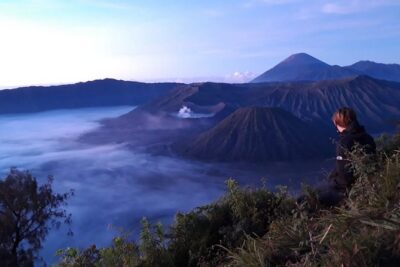
Mount Bromo Sunrise Tour from Surabaya or Malang – 1 Day
Read our review →
From Surabaya / Malang : Mt Bromo Sunrise – Ijen Blue Fire 3D2N
Read our review →
Mount Bromo – Tumpak Sewu Waterfall – Ijen Bluefire Tour – Bali 4d3n
Read our review →
From Surabaya / Malang : Mt Bromo Sunrise – Ijen Blue Fire 2D1N
Read our review →
Active Volcanoes Bromo and Ijen – Start Surabaya 3 Days and 2 Nights
Read our review →

4D3N Bromo Ijen Tumpak Sewu Waterfall Tour from Surabaya/Malang
Read our review →
Mount Bromo Private Sunrise Day Tour – From Surabaya or Malang
Read our review →Browse the lists this tour appears in