
Reviewed · RICE TERRACE TOURS
Ubud: Downhill Cycling with Volcano, Rice Terraces and Meal
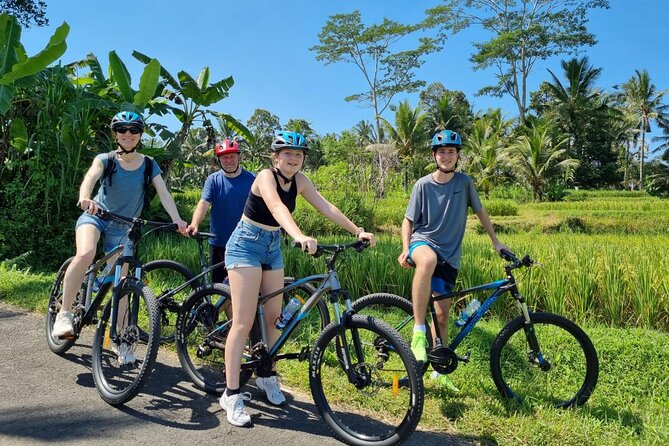
Bali looks better from a bicycle. This six-hour outing carries you from the Kintamani volcano area down quiet roads toward Ubud, with views of Mount Batur, the caldera, Lake Batur, rice terraces, villages, and family compounds. I like the mostly downhill route and the way the stops bring ordinary Balinese life into view. The main consideration is the long drive from Ubud, plus a lunch buffet that may not always arrive piping hot.
The small maximum group of four makes the ride feel personal, and guides such as Dika, Agus, August, and Eddy have earned praise for their humor, patience, and clear explanations. I also like that the price includes transport, bicycle equipment, water, lunch, and insurance. Still, downhill does not mean effort-free: you must be comfortable steering and braking for roughly 18 kilometers, and Bali’s rain can change the feel of the day quickly.
In This Review
- What makes this cycling day special
- From Ubud to Mount Batur before the ride
- What the 18-kilometer downhill route feels like
- Manukaya and the stops that explain Bali
- The local school
- A Balinese family compound
- Temples and family shrines
- Farms, jackfruit, and rice terraces
- Lunch in Banjar Laplapan
- Guides make or break the experience
- Pickup, price, and what you really get
- Who should book this ride?
- Should you book Ubud’s downhill cycling tour?
- FAQ
- Where does the cycling tour take place?
- How long does the experience last?
- What time does pickup begin?
- How far is the bicycle ride?
- What can I see before and during the ride?
- Is lunch included?
- How many people can join the tour?
- Is insurance included?
What makes this cycling day special
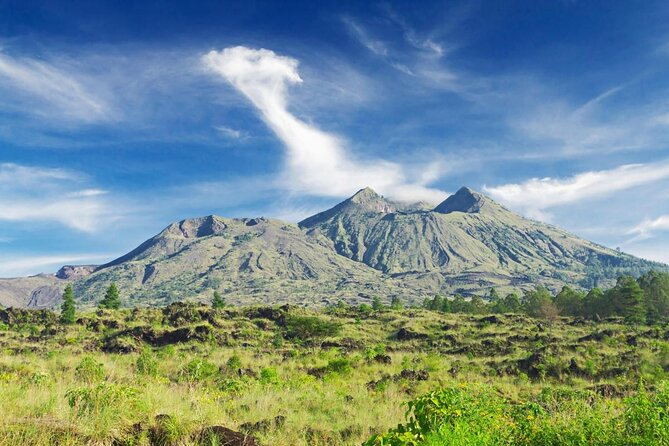
- Start above Ubud at Mount Batur: Take in the volcano, caldera, and lake before getting on the bike.
- About 18 kilometers on back roads: The route is reported as roughly 95 percent downhill, with little pedaling for much of the ride.
- Small groups of up to four: You get more time to ask questions, stop for photos, and set a comfortable pace.
- Real village stops: Visit a local school, family compound, temple, farms, and rice fields.
- Lunch is part of the deal: Finish with an Indonesian meal, often served buffet-style.
- Good value at $36.66: Hotel pickup in the Ubud area, an air-conditioned vehicle, gear, water, lunch, and insurance are included.
From Ubud to Mount Batur before the ride
Your day begins with pickup at about 8:30 a.m. from a hotel in the Ubud area. The drive to the Kintamani volcano region takes around an hour, so the cycling is only part of the experience. You spend a good portion of the morning looking out from the vehicle, getting higher and cooler before the ride begins.
That drive matters. Ubud’s center is packed with traffic, shops, restaurants, and scooters. The cycling route offers a sharp change of pace, but you need to be comfortable with the fact that this is not a quick local ride starting in town. You are going to the highlands first, then rolling down toward the countryside.
Some departures include a stop at a coffee and herb plantation on the way. This can be interesting if you want to learn about local products, but it may feel like a sales-oriented pause if you would rather reach the volcano and bicycle sooner. One practical advantage is that the vehicle is air-conditioned, which makes the transfer more comfortable in Bali’s heat.
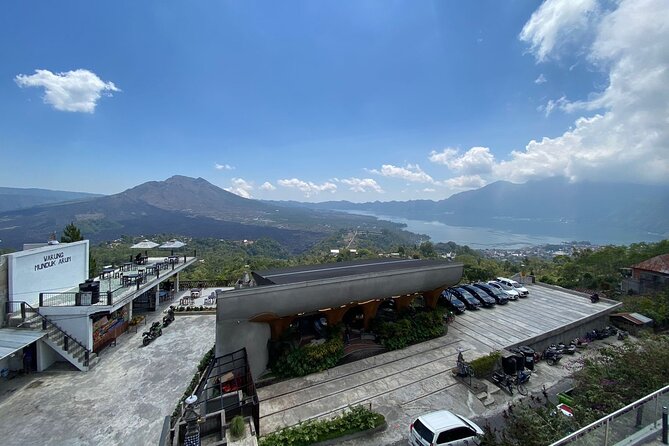
At Mount Batur, you get about 15 minutes to look over the volcano, caldera, and lake. It is a short viewing stop, not a hike or a full volcano visit. Think of it as your orientation point: you see the high country first, then spend the rest of the day following the road down through farmland and villages.
More Cycling Tours in Ubud
- Electric Cycling Tour of Ubud with Free Hotel Transfer and Lunch
★ 5.0 · 1,397 reviews - Half-Day Ubud Electric Cycling Tour to Tirta Empul Water Temple
★ 5.0 · 315 reviews - Electric Bike Tour in Ubud
★ 5.0 · 281 reviews
What the 18-kilometer downhill route feels like
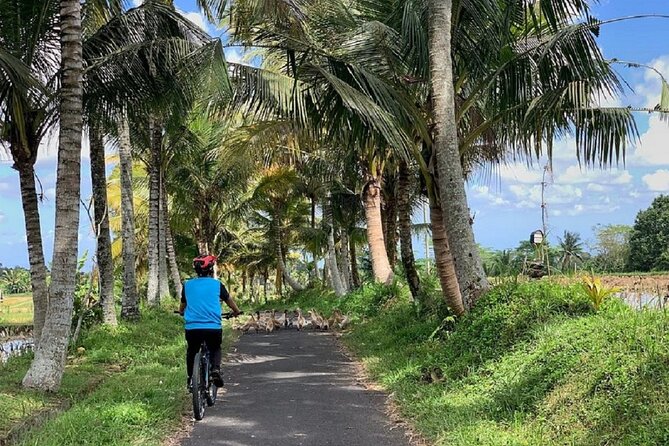
The ride is described as about 18 kilometers and roughly 95 percent downhill. That makes it appealing to families and people who do not want a strenuous mountain bike workout. Several families with children aged 12 and 14 found the gentle pace manageable, and one account describes the route as suitable for any fitness level.
I would still avoid treating downhill as a synonym for effortless. You need to control your speed, watch the road, and use the brakes properly. One useful detail is that the bikes have been praised for good brakes, which matters a lot on a descending route. The cycling equipment is included, and guides stay with you so you do not need to work out the route yourself.
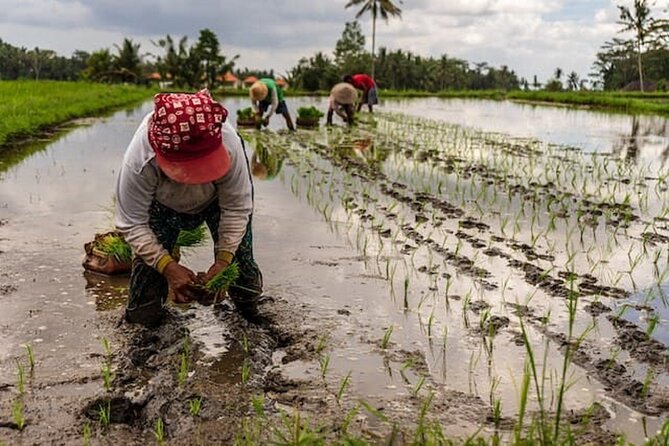
Much of the ride uses back roads rather than the busiest tourist corridors. You pass farms, paddy fields, local homes, and village lanes that are difficult to see from a car. The pace includes regular stops, so this is not a race from the mountain to lunch.
The best part is the changing view. Near Mount Batur, you have open volcanic scenery. Lower down, the setting becomes more intimate, with cultivated fields, traditional compounds, temples, and roads connecting village life. You get a more useful picture of Bali than you would from a lookout point alone.
Rain is the wild card. One group was caught in heavy rain and still enjoyed the day because the guide and driver adapted. Even so, wet roads can make braking and balance harder. Bring clothes you are comfortable getting damp in, and remember that sun block is not included. A small amount of preparation will make the ride easier.
Manukaya and the stops that explain Bali
The main village portion takes around two and a half hours. This is where the tour earns its cultural value. You are not simply cycling past scenery. You stop at places that show how daily life is organized.
The local school
The school visit gives you a look at Balinese education and classroom life. This is a brief encounter within the longer village section, but it adds context to the children and families you see along the route. Guides have been praised for explaining education, family life, and local customs in clear English.
For families, this can be one of the most useful stops. Children often connect more easily with a classroom than with a formal cultural display. It also gives adults a chance to ask practical questions about how community life works.
More rice terrace walks:
- Ubud: Monkey Forest, Jungle Swing, Rice Terrace, and Water Temple
★ 5.0 · 7,160 reviews - Full-Day Tour to Water Temples and UNESCO Rice Terraces in Bali
★ 5.0 · 2,539 reviews - Ubud eBikes Tour to Tegallalang Rice Terrace
★ 5.0 · 507 reviews - Ubud Top Attractions: Waterfalls, Temples and Rice Terraces
★ 5.0 · 460 reviews
A Balinese family compound
The family compound offers a look at domestic life and the way a traditional household space is arranged. This is more personal than photographing a temple gate from the road. You can learn how the home, family, and religious parts of the compound fit together.
The quality of this stop depends partly on the guide. Dika, Eddy, Agus, August, and Dedy have all been praised for explaining local customs with warmth and humor. A patient guide also makes a difference when you want to stop for photos or need a slower pace.
Temples and family shrines
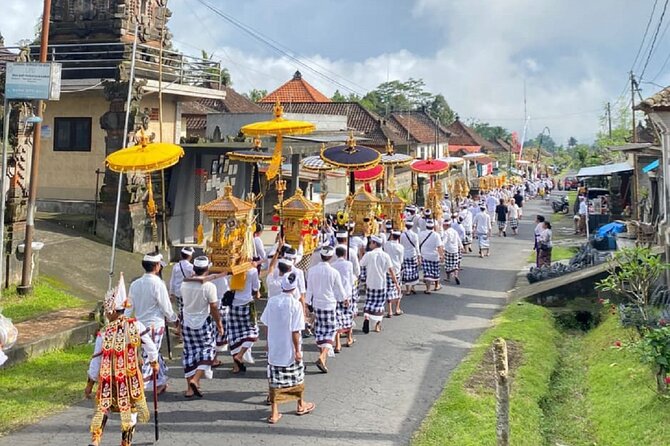
The route includes a temple stop, and one particularly memorable account describes visiting a family temple. Another group happened to see a traditional public cremation. The cremation was not presented as a guaranteed part of the tour, so do not book expecting it, but it shows how closely the route can bring you to living Balinese tradition.
Treat religious sites with respect. Listen to your guide about where to stand, what to photograph, and how to dress or behave. The value here is not ticking off another attraction. It is seeing religion as part of everyday village life.
Farms, jackfruit, and rice terraces
The road passes local farms and rice fields, with guides pointing out details you might otherwise miss. A giant jackfruit made a strong impression on one visitor, which sounds amusing until you remember how much local food production is woven into village life.
The rice terraces are a major visual reward. You see the fields from the road, rather than from a single viewpoint, and the bicycle lets you stop at a slower rhythm. Some sections may be listed as heritage rice fields. The exact appearance changes with planting and harvest cycles, but the combination of narrow roads, paddies, and village buildings is the heart of the ride.
Lunch in Banjar Laplapan
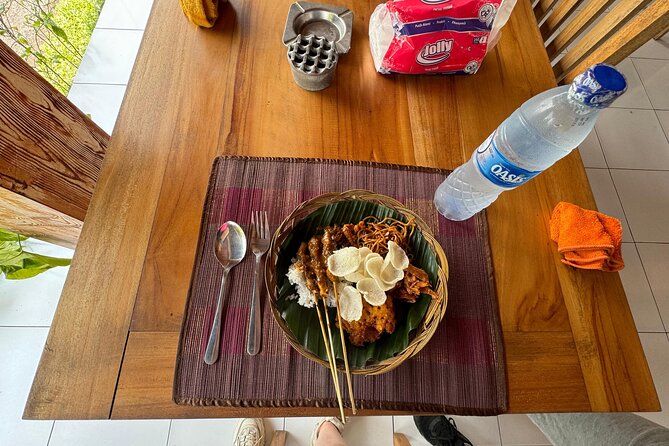
The final stop is in Banjar Laplapan, where lunch takes about an hour. The meal is included, and it is usually described as a generous Indonesian buffet with several choices. For a morning that begins early and includes a long ride, finishing with food rather than another transfer is a sensible arrangement.
The food receives strong praise overall. One family specifically noted that a coeliac dietary need was accommodated, though you should communicate any dietary requirement before the tour and confirm what can be provided. Another person found the buffet tasty but lukewarm. That is the one recurring caution worth keeping in mind: the lunch is convenient and generally well-liked, but buffet temperature may vary.
Alcohol is not included. Bottled water is included, but sun block, souvenirs, and personal purchases are your responsibility. I would bring extra water if you prefer to drink often, along with sun protection and a change of clothes for the possibility of rain.
Guides make or break the experience
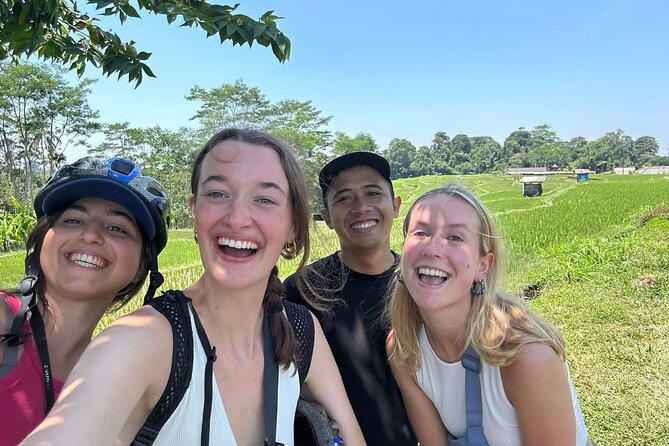
The route itself is attractive, but the guide is what turns a pleasant bicycle ride into a useful introduction to Bali. The strongest praise goes to guides who explain culture without turning the stops into a lecture. Dika is described as funny, easy to understand, patient, and willing to let people take their time with photos. Eddy has been praised for his explanations of education, family, and Balinese culture.
August and Agus also receive repeated praise for keeping the pace comfortable and making the ride work for families. Dedy is noted for showing less touristy places, and Augustin is described as kind and reassuring to people who were nervous about the descent.
The English-speaking guide also solves a practical problem. You do not need to read village directions or decide which lane to take. You can focus on the road, the views, and the explanations. With only four people maximum, there should be more room for questions than on a large coach excursion.
Pickup, price, and what you really get
At $36.66 per person, this is strong value if you want a full half-day rather than bicycle hire alone. The price covers hotel pickup in the Ubud area, an air-conditioned vehicle, a professional English-speaking guide, cycling equipment, bottled water, lunch, and personal insurance.
The insurance covers up to IDR 2,500,000 for participants aged 5 to 65. That age limit is important, especially for older adults and families booking for children. The tour says most people can participate, but no specific medical or fitness screening is described.
The maximum group size of four is another reason the price works. You are paying for transport and a guided route, but also for a more personal day. That is especially useful if you want cultural explanations, frequent photo stops, or help adjusting the pace.
The tradeoff is time spent in the vehicle. The trip lasts about six hours, but the drive from Ubud to the volcano takes roughly an hour, and some itineraries may include the coffee plantation stop. If you want nonstop cycling, this is not the right product. If you want a guided route with scenery, village access, transport, and lunch bundled together, it is a sensible buy.
Free cancellation is available if you cancel at least 24 hours before the 8:30 a.m. start time. Changes or cancellations inside that window are not accepted for a refund.
Who should book this ride?
I would recommend it to families, couples, and first-time visitors who want to see rural Bali without arranging several separate trips. The mostly downhill route helps if you are not a keen cyclist, and the stops give children and adults something to talk about besides scenery.
It also suits you if you prefer small-group outings. Four people is small enough for a relaxed conversation with the guide and enough flexibility for photos. The experience is especially useful for anyone tired of Ubud’s central traffic and eager to see farms, rice fields, temples, and homes at a human pace.
You should think twice if you dislike braking on descents, are outside the stated insurance age range, or want a serious cycling challenge. The route is designed to be accessible and gentle, not athletic. Heavy rain can also affect the ride, even though the team has shown flexibility when weather turns poor.
Should you book Ubud’s downhill cycling tour?
Book it if you want an easy ride with real cultural stops. The volcano views, rice terraces, back roads, school, family compound, temple, and included meal create a fuller day than a simple scenic bike trip. The guides receive unusually strong praise for making the information lively and for caring about the pace.
The best reason to choose this tour is the combination of access and value. You get beyond Ubud’s busy core, see parts of Bali that are hard to reach by car, and have transport, gear, water, lunch, and insurance handled for you. Just allow for the long transfer, bring sun protection and rain-ready clothing, and keep your expectations realistic about a buffet lunch.
FAQ
Where does the cycling tour take place?
The day begins in the Mount Batur and Kintamani volcano area, then continues downhill through the countryside toward village areas including Manukaya and Banjar Laplapan.
How long does the experience last?
The tour lasts approximately six hours.
What time does pickup begin?
The stated start time is 8:30 a.m. Pickup is offered from hotels in the Ubud area.
How far is the bicycle ride?
The route is described in the tour details and participant accounts as approximately 18 kilometers, with around 95 percent of the ride downhill.
What can I see before and during the ride?
At Mount Batur, you can view the volcano, caldera, and lake. During the ride, you pass farms, villages, rice fields, temples, a local school, and a Balinese family compound.
Is lunch included?
Yes. Lunch is included and is served at the final stop in Banjar Laplapan. Alcoholic beverages are not included.
How many people can join the tour?
The maximum group size is four people.
Is insurance included?
Yes. Personal insurance is included for participants aged 5 to 65, with coverage of up to IDR 2,500,000.
Newest reviews from Ubud
- Explore Rice Fields and Hidden Villages with Ubud E-Bike Tour★ 5.0 · 7 reviews
- Monkey Forest Ubud Half day Tour★ 4.0 · 7 reviews
- Private Tour: Heaven Gate Temple, Tirta Gangga and Blue Lagoon Snorkeling★ 5.0 · 7 reviews
- Ubud Monkey Forest Rice Terrace Temple Waterfall Private Tour★ 5.0 · 7 reviews
- UBUD : Temple and Waterfall All Inclusive Day Tour★ 5.0 · 7 reviews
- Bali – Silver Jewelry Making Class★ 5.0 · 7 reviews
- One way fast Boat between Padangbai and Gili Islands or Lombok★ 5.0 · 7 reviews
- Bali ATV Quad Bike and White Water Rafting – All Inclusive★ 5.0 · 7 reviews
Rice Terrace Tours, compared.

Monkey Forest, Jungle Swing, Rice Terrace, and Water Temple
Read our review →Full-Day Tour to Water Temples and UNESCO Rice Terraces in Bali
Read our review →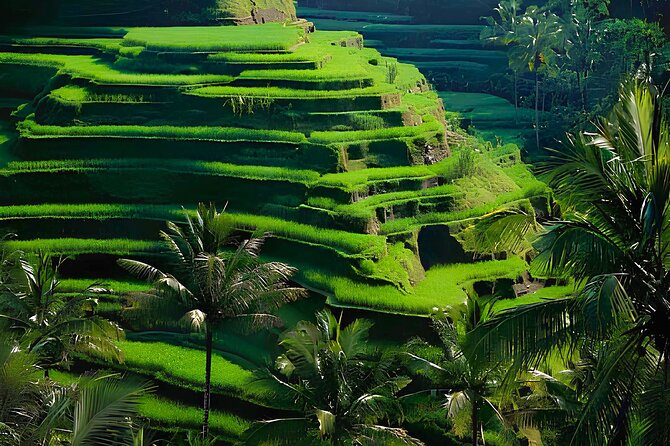
Monkey Forest, Water Temple, Rice Terrace, Waterfall
Read our review →
Active Volcano, Rice Field, Hot Spring, Fruit market, Tea Plantation with Lunch
Read our review →
Ubud Top Attractions: Waterfalls, Temples and Rice Terraces
Read our review →Ubud Tour With Sacred Monkey Forest Sanctuary – Waterfall – Rice Terrace
Read our review →
Tetebatu Walking Tour – Rice Terraces, Waterfall & Monkey Forest
Read our review →Browse the lists this tour appears in