Reviewed · UBUD TOURS
Bali Rural Village Bike
Ride beyond Ubud’s busy streets. This five-hour private outing takes you through rice fields and village lanes, with stops at a Balinese temple, a traditional family compound, and Tukad Cepung Waterfall. I especially like the small-group format, which lets your guide adjust the pace, and the strong cultural focus, led by guides such as Ketut and Wayan.
The ride also offers good value at $41 per person if lunch is included as described in the tour overview. One important catch: the detailed inclusion list says lunch is not included, so you should confirm that point before booking. You’ll also want moderate fitness, suitable shoes, and dry clothes for the waterfall stop.
In This Review
- Key things to know before you book
- Why this bike ride feels different from a standard Ubud tour
- Starting near Tukad Cepung Waterfall
- Cycling through rice paddies and village lanes
- A temple visit with useful cultural explanation
- Inside a traditional Balinese compound
- Tukad Cepung Waterfall and the chance to swim
- A possible local school visit
- Lunch, bottled water, and what the $41 price covers
- Guide quality and the private-tour advantage
- What to bring and how to prepare
- Who should book this rural Bali outing?
- Should you book the Bali Rural Village Bike Tour?
- FAQ
- How long does the Bali Rural Village Bike Tour last?
- How much does the tour cost?
- Where does the tour start and finish?
- Are bicycles and helmets provided?
- Is lunch included?
- What should I bring?
- Can I cancel for a full refund?
Key things to know before you book
- Mostly gentle cycling: The route is described as nearly all downhill, making it less demanding than many cycling excursions, though you still need moderate physical fitness.
- Tukad Cepung Waterfall stop: You can take photographs, relax, and swim, so pack a towel and a change of clothes.
- Private guiding: Only your group takes part, giving you more say over the pace and time spent at cultural stops.
- Real village life: Expect rice paddies, a temple, a traditional compound, and possibly a local school if classes are in session.
- Local guides add context: Ketut is praised for explaining Balinese ceremonies, religion, customs, and village life in clear detail.
- Check the lunch detail: The overview says a Balinese lunch is included, but the inclusion section says lunch is not included.
Why this bike ride feels different from a standard Ubud tour
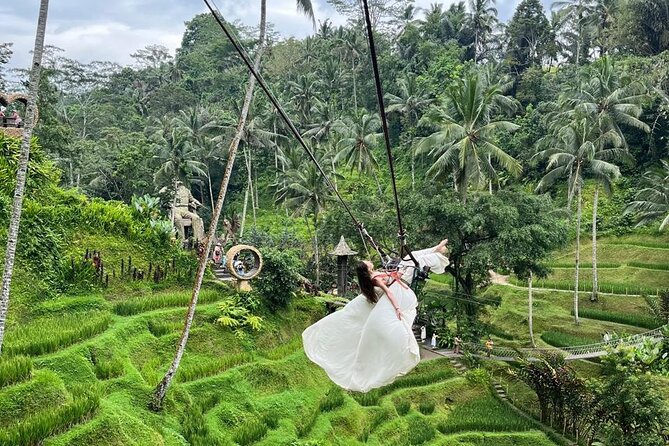
Many Ubud excursions keep you close to shops, restaurants, and famous temples. This one points you toward the quieter countryside around Bangli, where the attraction is the daily rhythm of village life rather than a long list of major sights.
You pedal past rice paddies, stop at places tied to Balinese culture, and spend time outdoors. That combination makes the tour more than a simple downhill ride. You get a look at how homes, temples, schools, farms, and religious customs fit together.
I like this approach because Bali’s rural areas are best understood slowly. From a vehicle, you may see a field and a few houses. On a bicycle, you have time to notice the paths between the paddies, the layout of a traditional compound, and the small details your guide points out along the way.
The private setup is useful here. You are not locked into the pace of a large group, and your guide can spend longer explaining a ceremony or give you time for photographs. This matters especially at the temple and village compound, where a short stop without explanation could feel like sightseeing through a window.
A few more tours worth putting side by side
- All-Inclusive Ubud Private Tour
★ 5.0 · 14,344 reviews - Best of Ubud Full-Day Tour with Jungle Swing
★ 5.0 · 8,571 reviews - Ubud: Monkey Forest, Jungle Swing, Rice Terrace, and Water Temple
★ 5.0 · 7,160 reviews
Starting near Tukad Cepung Waterfall
The formal meeting point is Central Parkir Waterfall Tukad Cepung on Jl. Tembuku in Tembuku, Bangli. The tour ends back at that same meeting point.
That location is important when planning your day. It is not a central Ubud departure point in the information provided, even though one account describes a hotel pickup in Ubud at around 8 a.m. Treat that pickup as something to confirm directly with Bali Fascination Tour rather than an automatic part of the booking.
The drive from Ubud to the starting area was described as taking about an hour in one account. If you are arranging your own way there, allow extra time and confirm the exact meeting instructions before setting off. The listed location is specific, but rural Bali addresses can still require careful navigation.
The start point also gives the outing a practical shape. You begin near the waterfall area, cycle through the surrounding countryside, and return to the original meeting point after lunch and the final stops. Ask where the bicycles are issued and how the route is arranged on your chosen date.
Cycling through rice paddies and village lanes
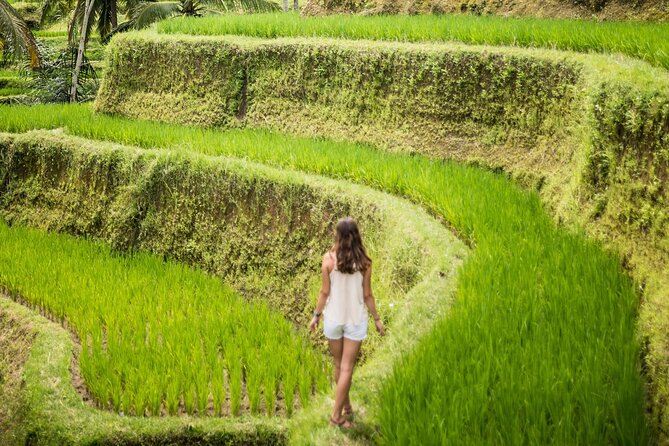
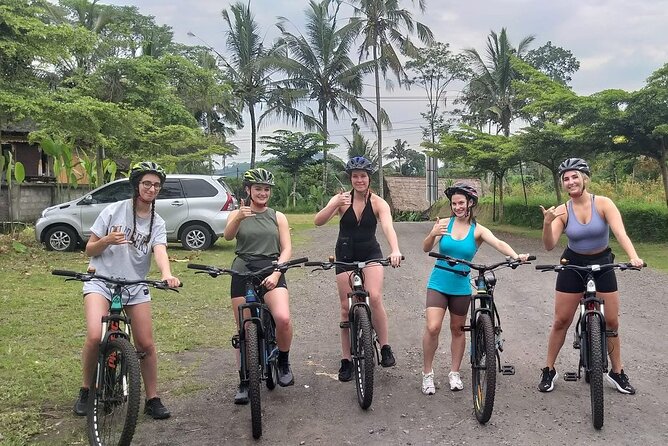
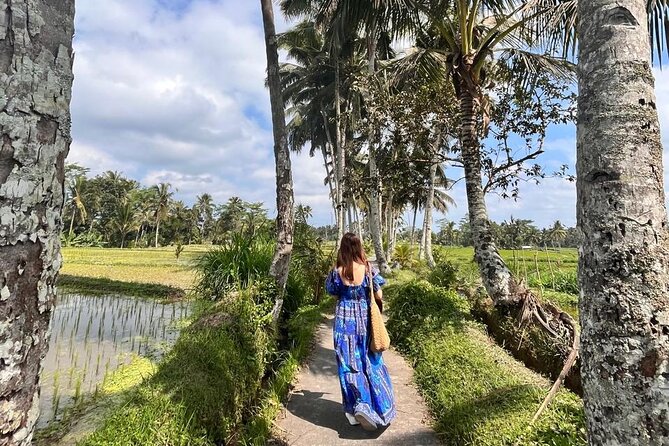
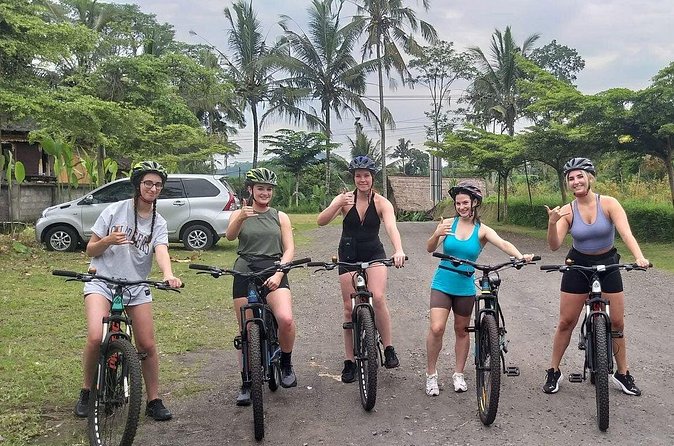
The cycling section is the heart of the morning. You ride through green rice fields and small villages, with a guide keeping you on the correct route and explaining what you see.
This is not presented as a technical mountain-bike trip. The route is described as suitable for all skill levels and nearly all downhill, which helps explain why it has been considered one of the less taxing bike tours by some participants. Still, downhill riding is not effortless. You need to control your speed, stay alert, and be comfortable riding a bicycle on changing rural surfaces.
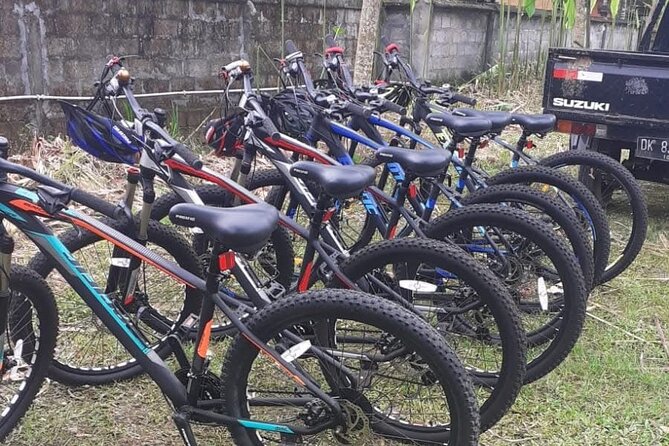
Bicycles and helmets are supplied. One person had a problem with the brakes, so I would check your bicycle before setting off. Test both brakes, adjust the seat, and make sure the helmet fits securely. That takes only a minute and is worthwhile on any organized bike ride.
The route may be especially appealing if you want movement without spending a full day on a strenuous excursion. You get fresh air and countryside views, but the cultural stops break up the riding. The private format also means you can tell the guide if you need a slower pace.
Do not expect constant photo stops simply because the scenery is attractive. One account wished for more opportunities to stop for pictures. If photography matters to you, ask the guide early in the ride to pause at suitable viewpoints rather than waiting for the formal stops.
A temple visit with useful cultural explanation
The temple stop brings the spiritual side of village life into the day. Balinese temples are not just old buildings to photograph. They are active places connected with ceremonies, offerings, family traditions, and community life.
Ketut receives particular praise for explaining ceremonies, religion, customs, and the meaning behind local practices. That guidance can make a major difference. Without context, a temple visit may be pleasant but brief. With a good explanation, you begin to understand why people move through the space in a certain way and how religious life shapes the village.
You should approach this stop respectfully. Dress appropriately, follow your guide’s instructions, and remember that the temple is a place of worship, not simply a scenic stop. The supplied information does not list a specific dress code, so ask the operator what is expected on your date.
The temple portion may be one of the strongest reasons to choose this trip over a basic countryside ride. You are not only pedaling through rural scenery. You are being introduced to customs by a local guide who can answer questions as they arise.
A completely different kind of day out on the same trip:
- Best of Ubud 1-Day Private Tour
★ 5.0 · 4,451 reviews - Bali: Ubud Palace Legong Dance Show Ticket
★ 4.4 · 3,979 reviews - Uluwatu Sunset, Kecak Dance, and Dinner Jimbaran Beach
★ 5.0 · 3,681 reviews - Tanah Lot and North Bali Tour: Scenic Journey
★ 5.0 · 3,620 reviews
Inside a traditional Balinese compound
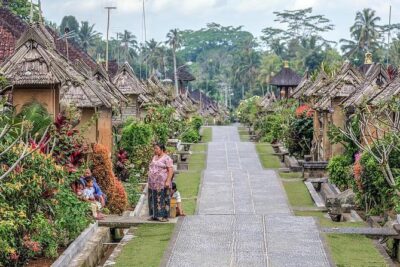
The visit to a traditional Balinese house or compound gives you a closer look at local architecture. Rather than seeing only an exterior wall or gate, you learn how the compound is arranged and what its design says about Balinese family and religious life.
The tour information also refers to a visit to a compound connected with a high priest. That detail adds interest, though the exact person and timing should be confirmed when you book. The value of this stop lies in the explanation: architecture becomes a window into customs, family structure, and everyday routines.
This is the sort of place where your questions can make the visit better. Ask how the buildings are used, who lives in the compound, and how the layout relates to religious practice. Guides Ketut and Wayan are both praised for making cultural subjects understandable, so use the private setting to ask rather than simply take photographs.
The visit may not suit someone looking only for fast cycling and dramatic scenery. It takes time away from the bike route, but that is precisely what gives the outing its cultural character.
Tukad Cepung Waterfall and the chance to swim
The waterfall is the most dramatic natural stop. You can take photographs, relax, and go for a swim if conditions allow and you choose to do so.
Bring the items specifically recommended for this trip: a change of clothes, a bath towel, slippers, sunscreen, and mosquito spray. Cash is also suggested. These are not decorative packing tips. Wet clothing can make the ride or return journey uncomfortable, and the approach to a waterfall is better handled in footwear with a secure grip than in ordinary sandals.
The waterfall has been described as breathtaking, and it is clearly a high point of the outing. At the same time, the stop may involve walking or uneven footing, since waterfalls generally require leaving the bicycle area and reaching the water on foot. The tour calls for moderate physical fitness, so do not treat the swimming option as the only measure of difficulty.
If you prefer not to swim, you can use the stop for photographs and a rest. The trip does not require you to enter the water. Just remember that the waterfall is not an isolated photo backdrop within an otherwise passive tour. You should be ready for an active outdoor stop.
A possible local school visit
If school is in session, the route may include a visit to a local school. This offers a glimpse of ordinary daily life and the chance to interact with Balinese students.
The conditional wording matters. A school visit is not guaranteed, and you should not book this tour solely for that stop. It depends on the school schedule and circumstances on the day.
If it does happen, treat it as a cultural exchange rather than a staged performance. Follow the guide’s instructions about photography and interaction, and be respectful of the students’ time. The value is in seeing part of village life that is not usually included in a standard sightseeing circuit.
Lunch, bottled water, and what the $41 price covers
The tour costs $41 per person. For a private five-hour outing with bicycles, helmets, guiding, a waterfall entrance fee, a donation, and bottled water, that is a fair price, particularly if the advertised Balinese lunch is included.
The lunch detail is inconsistent. The main description says a Balinese lunch is included, and several accounts describe a traditional lunch as a strong part of the day, including one meal served with a view over rice fields. However, the detailed inclusion list specifically says lunch is not included.
You should get a clear answer before paying. Ask whether lunch is included in the $41 price, where it is served, and whether drinks beyond the listed bottle of mineral water cost extra. This is the one detail most likely to affect your value calculation.
One mineral water bottle is listed for every participant. You should still bring your own refill if you prefer to drink more while cycling, although the supplied information does not promise additional water.
If lunch is included, the price becomes especially attractive because the outing combines activity, guiding, cultural visits, natural scenery, and a meal. If lunch is not included, the price remains reasonable, but you should budget separately and confirm how much time is set aside for eating.
Guide quality and the private-tour advantage
The guides are central to the quality of this experience. Ketut is repeatedly praised for explaining Balinese religion, ceremonies, purification customs, and local heritage. Wayan is also named as part of a memorable cycling team.
That emphasis on explanation is encouraging, because a rural ride can otherwise become a pleasant but shallow sightseeing loop. Here, the guide is meant to connect the rice fields, homes, temple, waterfall, and school to the wider life of the community.
A private tour is best for couples, families with older children, friends, or anyone who prefers not to pedal in a large group. You can set a pace that suits your group and spend more time at the stops that interest you.
It is less ideal for a person seeking an intense athletic ride. The focus is on culture and countryside, and the route is described as largely downhill. You should also think carefully if you are bringing a baby, since the tour is specifically not recommended for babies.
What to bring and how to prepare
Pack lightly, but bring the items that match the route:
- A helmet is provided, but you may want to bring personal cycling gloves if you normally use them.
- Bring a change of clothes and a bath towel for the waterfall.
- Wear secure shoes or slippers suitable for wet ground.
- Use sunscreen and mosquito spray.
- Carry cash.
- Check your bicycle brakes and seat before departure.
- Bring questions about Balinese architecture, religion, and village life.
The tour requires moderate physical fitness. The mostly downhill profile may reduce the strain, but you still need to cycle for part of the day, handle the bicycle safely, and manage the waterfall stop.
Weather also matters. The operator may cancel the activity in poor weather and offer another date or a full refund. For your own planning, avoid placing this tour on the last possible day of your Bali visit if the schedule is tight.
Free cancellation is available if you cancel at least 24 hours before the start time. Changes or cancellations made inside that window are not accepted for a refund.
Who should book this rural Bali outing?
I would choose this tour if you want a half-day outside Ubud that combines easygoing cycling with genuine cultural stops. It fits someone who likes rice fields, local architecture, village customs, and a waterfall more than shopping or a packed schedule of famous attractions.
It also suits active visitors who do not want a punishing ride. The private format, supplied equipment, and guide-led route keep the day approachable, while the temple and compound visits give it more substance than a scenic bicycle loop.
I would hesitate if you want guaranteed hotel pickup, a guaranteed school visit, or a hard-driving athletic challenge. I would also confirm the lunch arrangement before booking, since the supplied details disagree.
Should you book the Bali Rural Village Bike Tour?
Book it if you want to see rural Bali at a slower speed and value a guide who explains what you are seeing. The combination of rice paddies, a village temple, a traditional compound, Tukad Cepung Waterfall, and possible school visit gives you a broad look at countryside life in about five hours.
Before confirming, settle three practical points: pickup from Ubud, the lunch cost, and the bicycle condition. Once those are clear, the $41 price offers solid value for a private, active, culture-focused day, especially for couples or small groups who want flexibility.
FAQ
How long does the Bali Rural Village Bike Tour last?
The activity lasts approximately five hours.
How much does the tour cost?
The listed price is $41 per person.
Where does the tour start and finish?
It starts at Central Parkir Waterfall Tukad Cepung on Jl. Tembuku, Tembuku, Bangli, Bali. The activity ends back at the same meeting point.
Are bicycles and helmets provided?
Yes. Loaner bicycles and helmets are provided.
Is lunch included?
The tour information is inconsistent. The overview says a Balinese lunch is included, while the detailed inclusion list says lunch is not included. Confirm this with Bali Fascination Tour before booking.
What should I bring?
Bring a change of clothes, a bath towel, slippers, sunscreen, mosquito spray, and cash. These items are useful because the tour includes a waterfall visit with an optional swim.
Can I cancel for a full refund?
Yes, if you cancel at least 24 hours before the experience start time. Cancellations or changes made less than 24 hours in advance are not refunded or accepted. If poor weather causes the operator to cancel, you will be offered another date or a full refund.
Newest reviews from Ubud
- Explore Rice Fields and Hidden Villages with Ubud E-Bike Tour★ 5.0 · 7 reviews
- Monkey Forest Ubud Half day Tour★ 4.0 · 7 reviews
- Private Tour: Heaven Gate Temple, Tirta Gangga and Blue Lagoon Snorkeling★ 5.0 · 7 reviews
- Ubud Monkey Forest Rice Terrace Temple Waterfall Private Tour★ 5.0 · 7 reviews
- UBUD : Temple and Waterfall All Inclusive Day Tour★ 5.0 · 7 reviews
- Bali – Silver Jewelry Making Class★ 5.0 · 7 reviews
- One way fast Boat between Padangbai and Gili Islands or Lombok★ 5.0 · 7 reviews
- Bali ATV Quad Bike and White Water Rafting – All Inclusive★ 5.0 · 7 reviews
Ubud Tours, compared.

Monkey Forest, Jungle Swing, Rice Terrace, and Water Temple
Read our review →

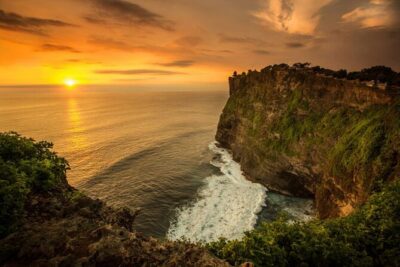
Uluwatu Sunset, Kecak Dance, and Dinner Jimbaran Beach
Read our review →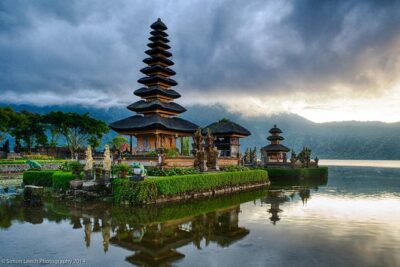
Tanah Lot and North Bali Tour: Scenic Journey
Read our review →