
Reviewed · TEMPLE TOURS
Bali Spiritual Shamanic-Palm Reading, Temple Healing Tour
Sacred water, old stone, and a personal ritual make this Ubud day different. I like the private format, which lets your group move at its own pace, and I like that the experience joins temple visits with living Balinese practice rather than offering only sightseeing. The main drawback is its spiritual focus: you need an open mind, and the water ritual requires a swimsuit, towel, and dry clothes.
The day lasts about six to eight hours and includes hotel pickup and return, temple admission, a priest donation, a guide, bottled water, and temple items such as a sarong and offering. At $75 per person, the price is fair for a private outing with several paid elements included, though lunch costs extra and the exact healer option should be confirmed before you go.
In This Review
- Key points at a glance
- Why this Ubud experience feels different
- Tirta Empul: three hours at the sacred springs
- Goa Gajah and the old stone entrance
- Meeting the healer in a local setting
- The value of a private six to eight hour day
- Is $75 a fair price?
- Who should book this spiritual tour?
- Practical advice for a smoother day
- My call: book it for meaning, not speed
- FAQ
- Where does the experience start?
- Where does the experience end?
- Is hotel pickup included?
- How long does the tour last?
- What is included in the price?
- Is lunch included?
- What should I bring?
- What choices are available for the healer session?
- Can I cancel for a full refund?
Key points at a glance
- Tirta Empul is the heart of the day: You take part in a water purification ritual at one of Bali’s best-known water temples, with a priest and temple offering included.
- Goa Gajah adds a strong cultural counterpoint: The Elephant Cave gives you two hours among an old temple site associated with Bali’s early Hindu traditions.
- Your final ritual is personal: You can choose a mantra healing treatment, a traditional palm reading, or possibly both, depending on the option arranged.
- Private touring changes the pace: Only your group takes part, so you have more room for questions and personal reflection than on a large group excursion.
- Come prepared for water: Bring a swimsuit, towel, and changing clothes. This is practical advice, not a minor footnote.
- Guide quality matters here: Ade, Gede, Gusty, and Dek Kembar Bagus are names praised for kindness, positive energy, English, cultural explanation, and help with photographs.
Why this Ubud experience feels different
Many Ubud outings are built around scenery, cafés, rice fields, and shopping. This one asks you to slow down and take part in ceremonies connected to Balinese Hindu life.
That difference is important. You are not simply standing outside a temple while a guide points out carvings. At Tirta Empul, the day includes a cleansing ritual with a priest. At the end, you meet a local healer for a mantra treatment or palm reading. These activities are personal and symbolic, so the value depends less on checking off sights and more on how comfortable you are with ritual.
I like that the experience gives you context before asking you to participate. The guide explains the nature of Balinese shamanism, and the temple visit includes a sarong and offering. Those touches help you approach the ritual with some cultural care instead of treating it like a quick photo stop.
Still, keep your expectations grounded. A palm reading or mantra healing is not a substitute for medical, psychological, or financial advice. Think of it as a cultural and spiritual experience, not a guaranteed answer to life’s problems.
More temple visits in Ubud:
- Ubud: Monkey Forest, Jungle Swing, Rice Terrace, and Water Temple
★ 5.0 · 7,160 reviews - Full-Day Tour to Water Temples and UNESCO Rice Terraces in Bali
★ 5.0 · 2,539 reviews - Bali Instagram: Gate of Heaven Temple Tour
★ 5.0 · 737 reviews
Tirta Empul: three hours at the sacred springs
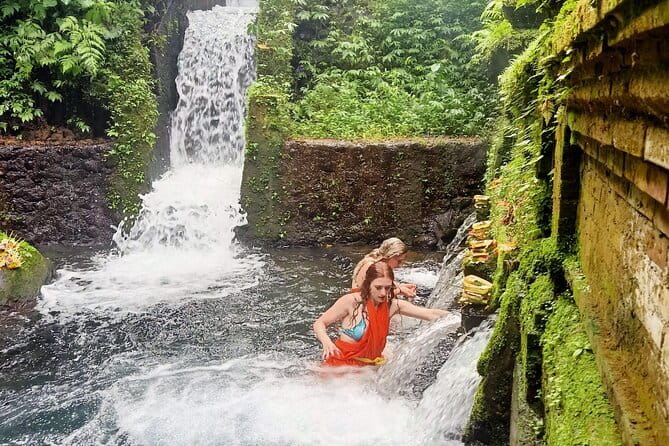
Tirta Empul receives the largest share of the day, about three hours, and for good reason. This is where the spiritual cleansing takes place.
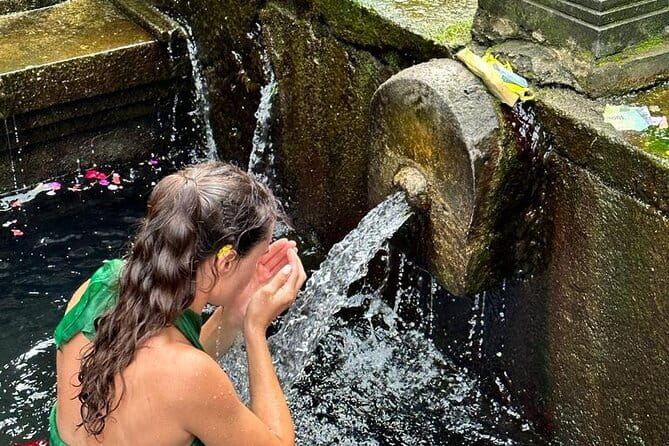
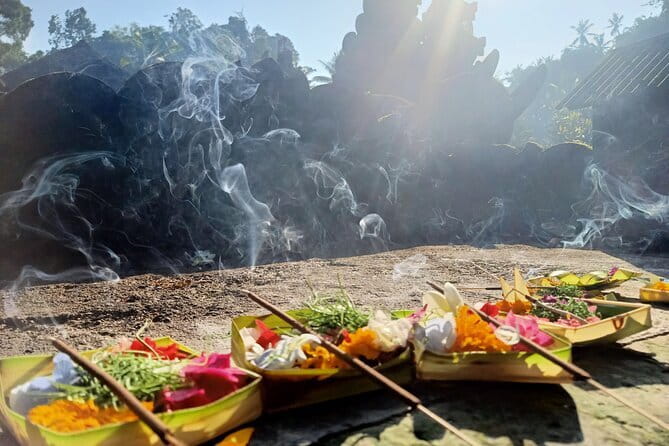
The tour includes the temple entrance, a donation for the priest, a sarong, and a canang or offering. You can expect the guide to help you understand what is happening and how to approach the ritual respectfully. The water purification involves entering the sacred springs and moving through the cleansing process with the priest’s guidance.
The physical preparation matters. Bring a swimsuit, towel, and a full change of clothing. Do not assume that ordinary sightseeing clothes will work for the entire day. You will want something dry afterward, especially if the rest of your outing continues to Goa Gajah and a healer’s home.
The water ritual is the most active part of the experience. It gives the tour a clear structure: you arrive, learn about the temple, prepare with the proper temple clothing and offering, then take part in the cleansing. That is more memorable than simply looking at a spring from behind a barrier.
You should also understand the difference between observing a Balinese ceremony and taking part in one arranged for visitors. The ritual is presented as a meaningful spiritual practice, but you remain an outsider to the culture. Listen carefully to the guide and priest, follow instructions, and avoid treating the process as a performance.
The three-hour timing allows room for explanation and preparation, but it also means this is not a quick stop. If you prefer a fast-paced day with many attractions, Tirta Empul may feel long. If you want time to ask questions and let the ritual unfold without rushing, the length works in your favor.
Goa Gajah and the old stone entrance
The second stop is Goa Gajah, also called Elephant Cave, with about two hours set aside for the visit. The site is associated with Bali’s early Hindu heritage and is described in the tour information as dating to the 11th century.
Goa Gajah gives the day a useful change of mood. Tirta Empul centers on water, cleansing, and participation. Goa Gajah shifts your attention to stone, temple design, and the older layers of Balinese religious culture.
The name can create the wrong picture. You should not expect an elephant park or a large cave system. The attraction is the temple site and its carved entrance, along with the sense of age and ceremony around it.
Two hours is enough to explore without turning the stop into a rushed photograph. Your guide can connect what you see here with the broader spiritual ideas introduced earlier in the day. That connection is one reason the tour works better as a private experience than as a simple transfer between attractions.
The drawback is that the itinerary gives you limited time for unrelated sightseeing. You will not be fitting in a long list of Ubud’s other major stops. Goa Gajah is here to support the spiritual theme, not to provide a broad tour of every historic site near town.
Meeting the healer in a local setting

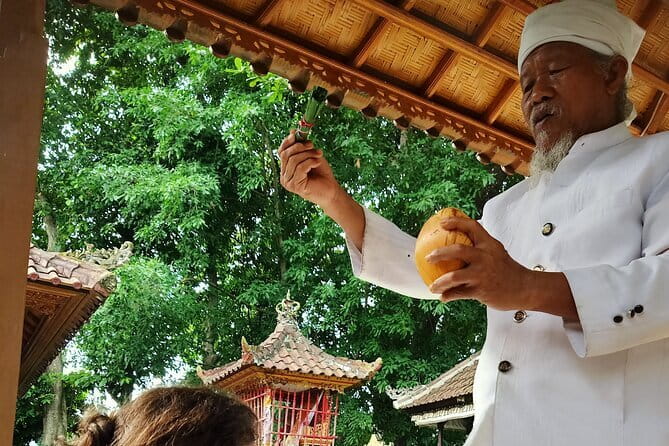
The final two-hour stop takes place in the Ubud Gianyar area at a local place, where you meet the healer. This is where you select from the available options: a mantra healing treatment, a traditional palm reading, or possibly both.
The palm reading is a first-time experience for many people, and it can be an intriguing way to hear a local interpretation of your character or direction in life. The mantra session offers a different kind of encounter, centered on spoken spiritual practice rather than reading the lines of your hand.
The information provided for the experience says you should choose from the options offered. I would clarify your preference when booking or before the day begins. The wording allows for different arrangements, and you do not want to arrive expecting both sessions if only one has been scheduled.
This part can feel more intimate than a standard cultural attraction. You are not sitting in a theater watching a demonstration. You are meeting a person in a local setting and receiving a treatment or reading directed at you.
That intimacy can also make the experience feel intense. Go in with clear boundaries. You can listen, ask questions, and enjoy the symbolism without accepting every prediction as fact. The best approach is curious but sensible.
Several guide names connected with this experience receive especially warm praise. Ade is described as kind and well informed about the day’s activities. Gede is praised for making a family healing day feel special and for being accommodating. Gusty receives strong approval for the full combination of water purification and shamanic meeting. Dek Kembar Bagus is praised for positive energy, English, explanations, and taking good photographs.
Guide assignments can vary, so you should not assume you will receive a particular person. Still, these comments point to what matters most on this tour: a guide who can explain the rituals clearly, handle the practical details, and give you space during a personal session.
A few more tours worth putting side by side
- All-Inclusive Ubud Private Tour
★ 5.0 · 14,344 reviews - Best of Ubud Full-Day Tour with Jungle Swing
★ 5.0 · 8,571 reviews - Best of Ubud 1-Day Private Tour
★ 5.0 · 4,451 reviews - Bali: Ubud Palace Legong Dance Show Ticket
★ 4.4 · 3,979 reviews
The value of a private six to eight hour day
The private setup is one of the strongest reasons to consider this experience. Your group is the only group taking part, which gives you more control over conversation and timing.
If you have questions about Balinese shamanism, you can ask them directly rather than waiting for a guide to address a whole bus. If a ritual feels meaningful, you have time to process it. If you need a short pause or help with clothing and temple customs, the guide can focus on your group.
Private touring is especially useful for families, couples, and friends who want a shared spiritual experience without strangers listening to every personal question. It also suits people who are new to temple etiquette and want more direct help.
The tradeoff is simple: private touring usually gives you a more personal day, but it does not turn the schedule into an entirely flexible custom tour. The published plan still centers on Tirta Empul, Goa Gajah, and the healer. Ask ahead if you want to adjust the order or add another stop.
Pickup is offered, and the activity begins at Ubud Palace on Jalan Raya Ubud No. 8. The experience ends back at the meeting point. The information also says hotel pickup and return are included, so confirm the exact pickup arrangement for your accommodation when you book.
The tour runs about six to eight hours. That is a substantial part of your day, but the pace is spread across three main stops rather than a long list of brief visits. Bring water, though a bottle is included, and plan to buy lunch separately. Lunch is not included and is estimated at about $10.
Is $75 a fair price?
At $75 per person, the price makes sense if you value the private vehicle, guide, entrance fees, priest donation, temple clothing, offering, water, and healer visit as one package.
You are paying for more than admission to Tirta Empul and Goa Gajah. The main value lies in having someone arrange the ritual elements and explain how to approach them. Without that help, it would be easy to visit a water temple without understanding the customs or to miss the meaning behind the offering.
The private nature also improves the value for a small group. A couple or family can spread the cost across an experience designed only for them. For a solo participant, $75 may feel less like a bargain, since the private format benefits a group more strongly.
Remember the extra lunch cost and the need to bring your own swim gear and towel. The tour includes a bottle of water, but not every personal item you may need for a full day.
The high satisfaction attached to this experience centers on the guides, the water purification, the personal healing session, and the cultural access. If those are the reasons you want to go, the price is reasonable. If you mainly want famous sights and scenic photographs, you may find better value in a standard Ubud sightseeing day.
Who should book this spiritual tour?
I would recommend it to you if you are curious about Balinese Hindu practices and comfortable taking part in a ritual led by a priest. It also suits couples and families looking for a shared experience that feels more personal than a regular temple visit.
You will probably get the most from it if you can stay open-minded without surrendering your judgment. The tour invites you to consider ideas about cleansing, mantras, palm reading, and shamanic practice. You do not need to treat every spiritual claim as literal to appreciate the cultural setting.
The day may not suit you if you dislike getting wet, feel uneasy with personal readings, or prefer a tightly packed sightseeing schedule. The water ritual is central, not an optional side activity, and the healer session is a major part of the final stop.
It is also worth considering your comfort with religious spaces. You are entering temples and taking part in a ritual, so respectful clothing and behavior matter. A sarong and temple offering are included, but your attitude is just as important.
Practical advice for a smoother day
Book with enough notice if your dates are fixed. This experience is booked on average 14 days ahead, which suggests that planning two weeks in advance is sensible during a busy visit to Bali.
Confirm which healer option you want. The choices include mantra treatment and palm reading, with the possibility of both, but the exact arrangement should be clear before the tour starts.
Pack these items:
- Swimsuit
- Towel
- Full change of clothes
- Money for lunch, around $10
- Comfortable clothing suitable for temple visits
The experience is offered with a mobile ticket, and confirmation is received at the time of booking. It is near public transportation, though pickup and return are also offered.
Most people can participate, according to the activity information. If you have a concern about joining the water ritual or moving around a temple site, ask the provider before booking rather than assuming the details.
The cancellation terms are friendly if your plans change early. You can cancel up to 24 hours before the local start time for a full refund. Changes or cancellations inside that 24-hour window are not accepted for a refund.
My call: book it for meaning, not speed
I would book this tour if you want a private day built around Balinese spiritual practice rather than a checklist of Ubud attractions. Tirta Empul gives you the main ritual, Goa Gajah adds historical depth, and the healer session makes the day personal.
The strongest reasons to choose it are the private group format, included temple arrangements, helpful guide support, and the chance to take part rather than only observe. The strongest reasons to hesitate are the spiritual subject matter, the extra lunch cost, and the need to bring proper swim gear.
Choose the mantra treatment if spoken ritual interests you. Choose the palm reading if you want a personal conversation about your path. If the option to do both is available and you are comfortable with a longer personal session, it may make the final stop especially memorable.
This is a good choice for an open-minded couple, family, or small group. It is not the right pick for a hurried sightseeing day. Give it time, arrive prepared, and let the experience be what it is: a guided introduction to Bali’s sacred water, temple customs, and local healing traditions.
FAQ
Where does the experience start?
The listed meeting point is Ubud Palace at Jalan Raya Ubud No. 8, Ubud, Kecamatan Ubud, Kabupaten Gianyar, Bali 80571, Indonesia.
Where does the experience end?
The activity ends back at the meeting point.
Is hotel pickup included?
Yes. Pickup and return to your hotel are included, though you should confirm the exact pickup arrangement for your accommodation.
How long does the tour last?
The experience lasts approximately six to eight hours.
What is included in the price?
The price includes the priest donation, entrance fees, hotel pickup and return, a live guide, bottled water, a sarong, and a canang or temple offering.
Is lunch included?
No. Lunch is not included and costs around $10.
What should I bring?
Bring changing clothes, a swimsuit, and a towel because the itinerary includes water purification at Tirta Empul.
What choices are available for the healer session?
The available options include a mantra healing treatment or a traditional palm reading. The tour information also allows for the possibility of choosing both, so confirm the exact option when booking.
Can I cancel for a full refund?
Yes. You can cancel at least 24 hours before the experience start time for a full refund. Cancellations or changes made less than 24 hours in advance are not accepted for a refund.
Newest reviews from Ubud
- Explore Rice Fields and Hidden Villages with Ubud E-Bike Tour★ 5.0 · 7 reviews
- Monkey Forest Ubud Half day Tour★ 4.0 · 7 reviews
- Private Tour: Heaven Gate Temple, Tirta Gangga and Blue Lagoon Snorkeling★ 5.0 · 7 reviews
- Ubud Monkey Forest Rice Terrace Temple Waterfall Private Tour★ 5.0 · 7 reviews
- UBUD : Temple and Waterfall All Inclusive Day Tour★ 5.0 · 7 reviews
- Bali – Silver Jewelry Making Class★ 5.0 · 7 reviews
- One way fast Boat between Padangbai and Gili Islands or Lombok★ 5.0 · 7 reviews
- Bali ATV Quad Bike and White Water Rafting – All Inclusive★ 5.0 · 7 reviews
Temple Tours, compared.

Monkey Forest, Jungle Swing, Rice Terrace, and Water Temple
Read our review →Full-Day Tour to Water Temples and UNESCO Rice Terraces in Bali
Read our review →Private Uluwatu Temple and Kecak Fire Dance Evening Tour in Jimbaran Bay
Read our review →
Borobudur Temple Climb To The Top & Prambanan Temple – 1 day tour
Read our review →
Monkey Forest, Water Temple, Rice Terrace, Waterfall
Read our review →
Ubud Tour with Monkey Forest Waterfalls Temples and More
Read our review →
Uluwatu Temple Entry and Kecak Fire Dance Ticket
Read our review →Browse the lists this tour appears in