
Reviewed · TRADITIONAL VILLAGE TOURS
Bali Traditional Village Experience
Taro opens a quieter side of Bali. This private village visit takes you about 12 miles north of Ubud for a family-compound tour, Balinese morning tea, offering-making, and a traditional holy-water blessing. I like the personal setting and the chance to take part in simple Hindu customs, not just watch them. I also like that private transfers from your Ubud-area address are included. The main consideration is timing: the experience lasts about two hours, although it is described as a half-day outing, and the sacred site charges a small cash entrance fee or donation.
This is a gentle, hands-on introduction to Balinese village life. You will make Canang Sari offerings, sample Bali cookies, and learn how a family compound works. The cleansing ritual is optional, but you need clothes that may get wet if you choose to take part.
In This Review
- Key points to know before you book
- Why Taro offers a different side of Bali
- The ride from Ubud to Taro
- Inside the traditional family compound
- Making Canang Sari by hand
- The sacred water temple and Hindu blessing
- What the $35 price really covers
- Who will enjoy this village visit most
- Practical preparation for the two-hour visit
- My recommendation for booking
- FAQ
- Where does the Bali Traditional Village Experience take place?
- How long does the experience last?
- Is transportation from Ubud included?
- Is this a private activity?
- What will I do at the family compound?
- Do I make a Balinese offering?
- Is the holy-water cleansing ritual required?
- What costs are not included?
Key points to know before you book
- Taro village sits about 12 miles north of Ubud, giving you a look at a more traditional setting away from central Ubud’s busy streets.
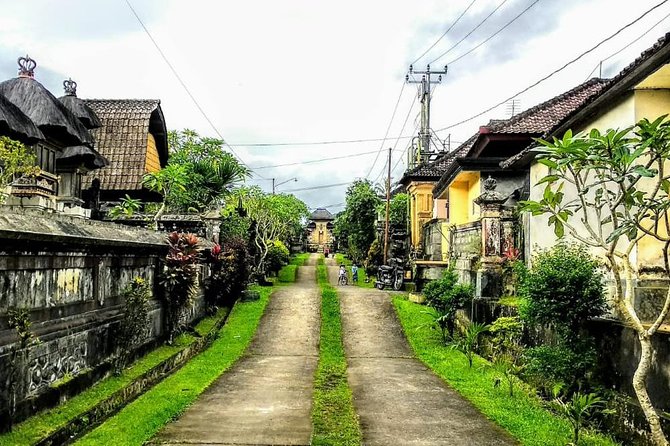
- The family compound is the heart of the visit, with an explanation of where family members live and how the family temple is used.
- You make your own Canang Sari offerings, then use them during the Hindu blessing at the holy-water temple.
- A sarong and sash are supplied and required for entering the sacred site.
- Private transfers are included from the Ubud area, while the temple entrance fee or donation is extra and paid in cash.
- The $35 price is strong for a private outing, especially if you value personal instruction and included transport more than a long itinerary.
Why Taro offers a different side of Bali
Ubud is full of dance shows, art shops, cafés, and tour buses. Taro gives you something quieter and more personal. The village is known as a traditional Balinese community, and this experience focuses on daily customs rather than a list of major sights.
That distinction matters. You are not simply walking past a temple while someone points at it. You visit a family compound, hear how it is arranged, make offerings with your own hands, and carry those offerings to a holy-water site. The activities are modest, but that is their strength. They help you understand how religion fits into ordinary family life.
The visit is private, so only your group takes part. That makes it easier to ask questions and set a comfortable pace. It also gives the family-compound visit a more natural feel than a large group tour, where the guide has to repeat the same explanation for twenty people.
The experience is advertised as a half-day visit but gives an approximate duration of two hours. You should plan around the shorter stated duration unless your host confirms otherwise. Your actual time may also depend on pickup arrangements, the transfer from Ubud, and how long you spend at the holy-water temple.
More village tours:
- Trunyan Cemetery, Hot Spring, Penglipuran Village, and Waterfall Tour
★ 5.0 · 65 reviews - Bali Full-Day Traditional Village Sightseeing Trip All Inclusive
★ 5.0 · 3,069 reviews - Full Day Kintamani Volcano View and Ubud Village Tour
★ 5.0 · 183 reviews
The ride from Ubud to Taro
Your day begins with pickup by private driver from an address in the Ubud area. This is one of the most useful parts of the package. Taro is roughly 18 kilometers north of Ubud, so you avoid arranging a taxi, negotiating a return fare, or trying to find a rural meeting point on your own.
The listed meeting point is Delodsema Traditional Village on Tegallalang Road in Taro. The activity ends back at the meeting point, although the included two-way transfer means the main arrangement is pickup and return from your Ubud-area address. Confirm the exact pickup details when you book, especially if your accommodation sits outside the usual Ubud zone.
The drive is not the main attraction, but it shifts the mood. You leave behind central Ubud’s busy visitor areas and head toward a village setting. I would not choose this outing for grand scenery or a packed sightseeing schedule. I would choose it because the transfer gets you to a local family setting without transport hassle.
Since the activity is private, you will not be waiting for a large busload of people at every stop. That is useful if you are traveling with family, a couple, or a small group with different energy levels.
Inside the traditional family compound
The family compound is the central stop. Your local host takes you around the property and explains where the different family members live. You also learn about the family temple, an important part of Balinese Hindu household life.
This is where the experience gains its human scale. A temple viewed from the outside can be beautiful, but a compound visit helps you understand how homes, family members, and worship connect. The emphasis is on the place as a living home, not as a staged attraction built only for sightseeing.
You should dress and behave with respect. This is a family space and a religious setting, so modest clothing is sensible even before the sarong is provided. The supplied sarong and sash are specifically used for the sacred portion of the visit, but respectful clothing remains a good idea throughout.
The host also offers traditional Balinese morning tea with the family. The included refreshments are coffee or tea and Bali cookies. Expect a small local snack rather than a full meal. Lunch is not included, so plan to eat before or after the activity if you need something substantial.
I like this part because the food is not treated as a separate restaurant stop. Sitting for tea in the compound connects the snack with the family setting. You get a brief pause to talk, look around, and ask about what you have just seen.
Making Canang Sari by hand
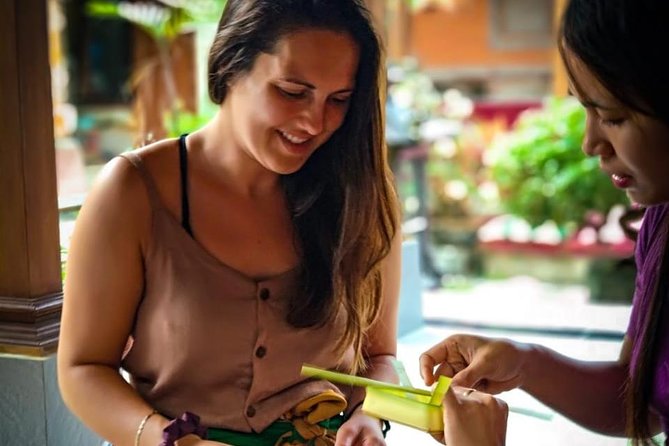
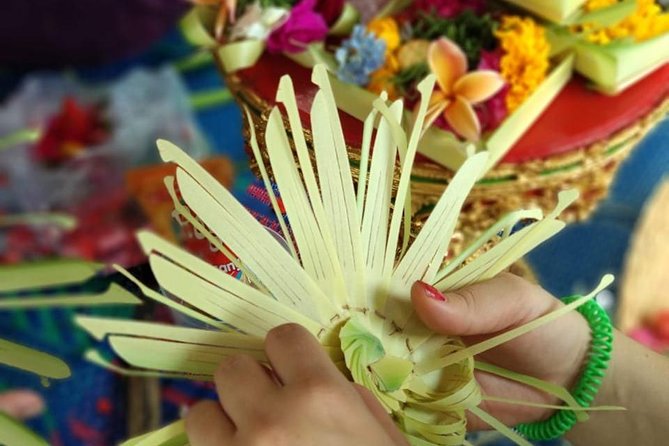
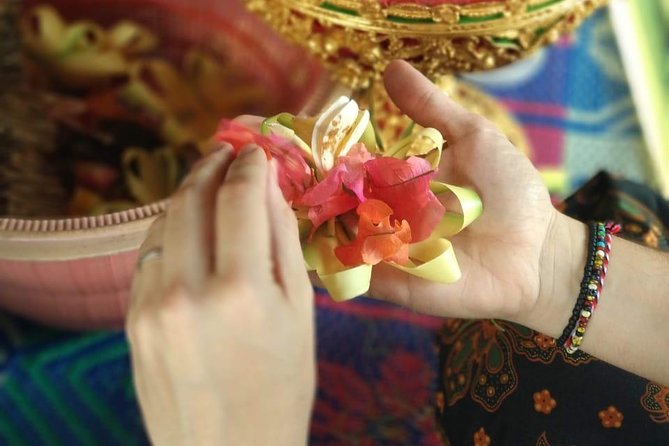
After the compound tour and tea, you learn how to make Canang Sari, the small Balinese Hindu offerings commonly placed in temples and other sacred spaces. The activity gives you a practical way to understand Balinese Hinduism.
You are not expected to know the process in advance. The host teaches you how to assemble the offering, and the items you make are later used in your blessing ceremony. That gives the craft a clear purpose. You are not making a souvenir to carry home. You are preparing an offering for the religious ritual that follows.
A short craft lesson can be more memorable than a long explanation because you have to pay attention to the materials, arrangement, and meaning. It also gives children and hands-on learners something to do. If you prefer a purely sightseeing tour, this portion may feel slow, but it is central to the experience.
The available information refers to making Canang Sari and a review excerpt also mentions learning to make two different offerings, though the full details of the second offering are not provided. I would treat the offering lesson as the confirmed feature and ask your host if you want to know exactly which additional offering may be included.
A few more tours worth putting side by side
- All-Inclusive Ubud Private Tour
★ 5.0 · 14,344 reviews - Best of Ubud Full-Day Tour with Jungle Swing
★ 5.0 · 8,571 reviews - Ubud: Monkey Forest, Jungle Swing, Rice Terrace, and Water Temple
★ 5.0 · 7,160 reviews - Best of Ubud 1-Day Private Tour
★ 5.0 · 4,451 reviews
The sacred water temple and Hindu blessing
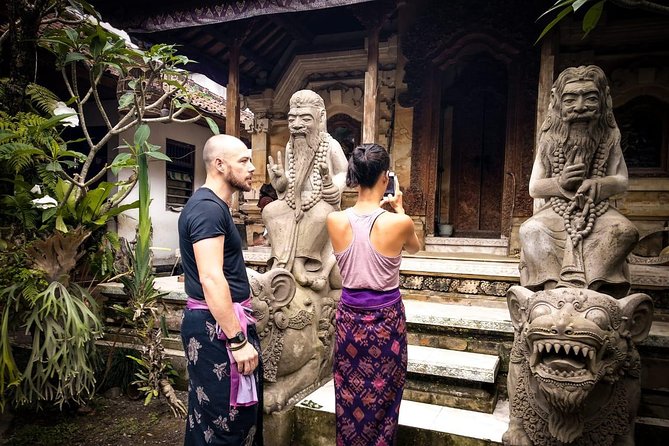
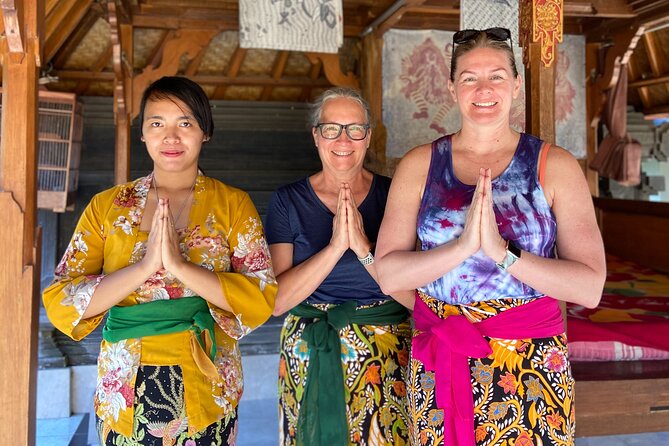
The next stop is a sacred holy-water site. Here, you can change into swimwear or clothing that may get wet if you choose to take part in the cleansing ritual. You are dressed in a sarong and sash, both required for entering the site.
The offerings you made earlier are used during the blessing. You then receive a Hindu blessing with holy water. This creates a natural flow through the visit: first you learn about the family and its customs, then you make an offering, and finally you take part in a religious ceremony.
The cleansing ritual is optional. You can decide how involved you want to be, but you should prepare properly if you plan to enter the water. Bring or wear clothing that can get wet, and do not assume your regular sightseeing outfit will be comfortable afterward.
The temple charges an entrance ticket or donation that is not included in the $35 price. The exact amount is not stated, so carry Indonesian cash. This is a small but important budget detail. It is also worth remembering that this is a religious site, not a water park or a photo stop. Follow the host’s instructions and treat the ceremony seriously.
For many people, this will be the most meaningful part of the experience. The blessing is not presented as a performance for an audience. You participate in a custom with the offering you made earlier, which gives the ritual more personal context.
What the $35 price really covers
At $35 per person, this experience offers reasonable value, especially for a private outing. The price includes the local host, private two-way transfers from the Ubud area, coffee or tea, Bali cookies, and use of a sarong. You also receive instruction in making offerings and a guided visit to a family compound and holy-water site.
Transport is the key value. A cheaper-looking village visit can become less attractive once you add a private car, rural navigation, and return travel. Here, those basics are arranged for you.
The price is less compelling if you want a long tour packed with several major attractions. The experience lasts approximately two hours, and the central activities are conversation, a compound visit, a simple craft, and a blessing. You are paying for access and personal contact, not a large number of stops.
Lunch is not included. The sacred-site entrance ticket or donation is also extra. Add those costs before comparing this with another Ubud activity.
The private format improves the value for families and small groups. You can ask questions without competing with a crowd, and you have more room to make the offering at your own pace. Solo visitors may still appreciate the setting, though the per-person price may feel higher than a group excursion.
Who will enjoy this village visit most
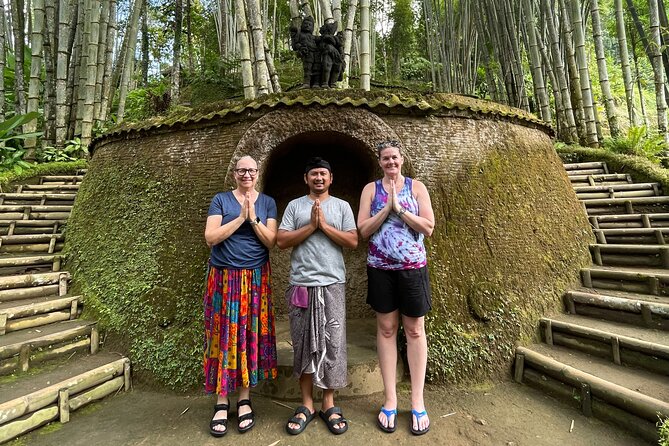
I would recommend this experience to you if you want a respectful introduction to Balinese Hindu customs and prefer local contact over a crowded sightseeing circuit. It suits couples, families, and small private groups particularly well.
It is also a good match if you enjoy learning through participation. Making an offering, wearing a sarong, drinking tea in a family compound, and receiving a blessing give you several ways to take part.
Families should find the craft element approachable, and the private format makes it easier to keep the visit comfortable for different ages. Still, the activity includes a religious ceremony, so children should be prepared to listen and behave respectfully.
You may want a different tour if your priority is a full meal, extensive temple sightseeing, a long village walk, or a full-day itinerary. This is a compact cultural visit. It offers a few meaningful activities rather than a packed schedule.
It may also not suit you if you do not want to enter a religious setting or take part in a blessing. The ritual is optional, but the visit is built around Balinese Hindu practice, so it is not an incidental feature.
Practical preparation for the two-hour visit
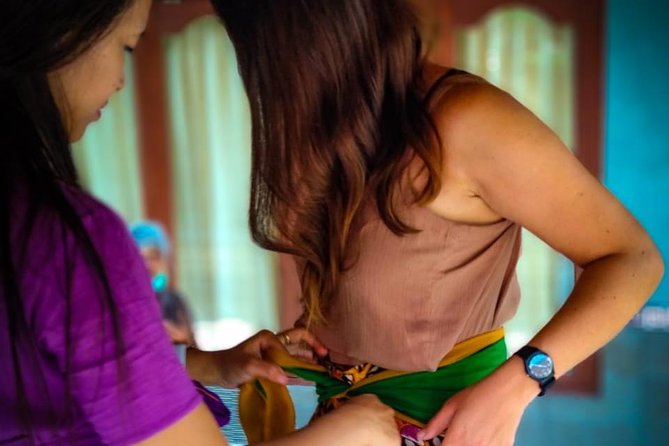
Wear comfortable clothes that are respectful for a family compound and temple. If you plan to join the cleansing ritual, choose swimwear or clothing that may get wet. The host provides a sarong and sash for the sacred site.
Carry cash in Indonesian rupiah for the temple entrance fee or donation. Your morning tea, coffee, Bali cookies, and sarong are included, but lunch is not.
Your mobile ticket provides a convenient way to keep the booking details available. Confirmation is received at booking, and free cancellation is available if you cancel at least 24 hours before the scheduled start time. Changes or cancellations made inside that window are not accepted for a refund.
The activity is private, and most people can participate. If you have a specific mobility, health, or religious concern, ask the provider before booking because the available details do not describe every physical aspect of the compound or temple.
You can also combine the outing with a cooking class, coconut-oil class, silver class, or evening fireflies experience. Those are additional options rather than confirmed parts of this two-hour visit, so ask about timing and price before adding one.
My recommendation for booking
Book the Taro Traditional Village Experience if you want a short, personal look at Balinese family life and Hindu customs. The strongest features are the private setting, the family-compound visit, the hands-on offering lesson, and the fact that your own offering is used in the later blessing.
The $35 price is fair because it includes private Ubud-area transport and a local cultural experience without the usual planning work. Just budget for the temple donation, bring clothing that can get wet if you want the cleansing ritual, and remember that lunch is not included.
I would skip it only if you want a major sightseeing day or a full meal-based food tour. For a compact cultural stop that feels more personal than a standard temple visit, Taro is a thoughtful choice.
FAQ
Where does the Bali Traditional Village Experience take place?
It takes place in Taro village, about 12 miles or 18 kilometers north of Ubud, at Delodsema Traditional Village on Tegallalang Road.
How long does the experience last?
The approximate duration is two hours, although the experience is also described as a half-day private visit.
Is transportation from Ubud included?
Yes. Two-way private transfers are included from an address in the Ubud area.
Is this a private activity?
Yes. Only your group participates in the activity.
What will I do at the family compound?
You will tour the traditional family compound, learn where family members live, hear about the family temple, enjoy traditional morning tea, and sample Bali cookies.
Do I make a Balinese offering?
Yes. You will be taught how to make Canang Sari, a Balinese Hindu offering. The offering is used during the blessing ceremony.
Is the holy-water cleansing ritual required?
No. You can choose whether to take part in the cleansing ritual. If you participate, wear swimwear or clothing that may get wet.
What costs are not included?
The entrance ticket or donation at the holy-water temple and lunch are not included. Coffee or tea, Bali cookies, and a Balinese sarong are included.
Newest reviews from Ubud
- Explore Rice Fields and Hidden Villages with Ubud E-Bike Tour★ 5.0 · 7 reviews
- Monkey Forest Ubud Half day Tour★ 4.0 · 7 reviews
- Private Tour: Heaven Gate Temple, Tirta Gangga and Blue Lagoon Snorkeling★ 5.0 · 7 reviews
- Ubud Monkey Forest Rice Terrace Temple Waterfall Private Tour★ 5.0 · 7 reviews
- UBUD : Temple and Waterfall All Inclusive Day Tour★ 5.0 · 7 reviews
- Bali – Silver Jewelry Making Class★ 5.0 · 7 reviews
- One way fast Boat between Padangbai and Gili Islands or Lombok★ 5.0 · 7 reviews
- Bali ATV Quad Bike and White Water Rafting – All Inclusive★ 5.0 · 7 reviews
Traditional Village Tours, compared.
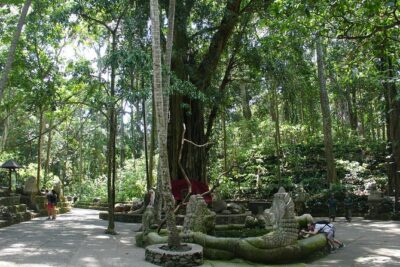
Bali Full-Day Traditional Village Sightseeing Trip All Inclusive
Read our review →
Full Day Kintamani Volcano View and Ubud Village Tour
Read our review →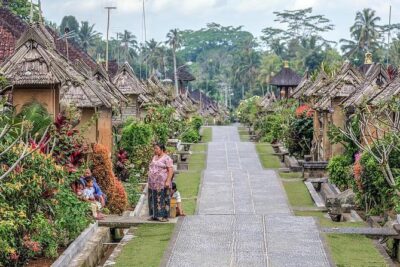
Trunyan Cemetery, Hot Spring, Penglipuran Village, and Waterfall Tour
Read our review →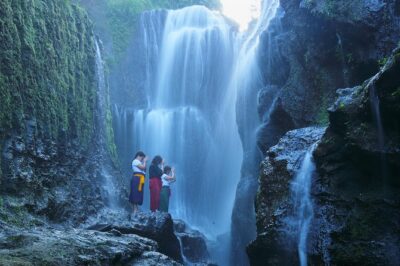
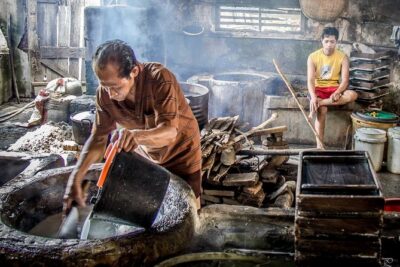
Borobudur: Village Tour with Pottery and Tofu Making
Read our review →
Pure Bali Village Experience, Cooking & Jamu Class+VIP Transfer
Read our review →
Lombok Private Tour Waterfall And Traditional Village Including Beach
Read our review →
Bali ATV Ride On the Beach, Rice Field and Village Tour 2 Hour
Read our review →Browse the lists this tour appears in