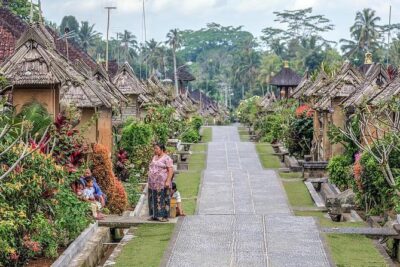
Reviewed · UBUD TOURS
coconut wine and coffee safary tour
Coffee begins the afternoon, coconut wine steals it. This 3.5-hour private tour from Ubud pairs coffee and tea tasting at Uma Pakel Agro Tourism with a walk through rice fields near Bresela, where a local farmer harvests coconut wine from the top of a tree. I like the private guide service and the easy hotel pickup, which save you from finding a meeting point or sharing the afternoon with a large group.
I also like the contrast between the two stops. The first explains a careful, traditional coffee process and offers many samples, while the second brings you into a working farming area and local community. The main drawback is the walk to the coconut wine stop. Soft, waterlogged ground can make the rice-field route awkward, and you should be reasonably agile.
In This Review
- Five things to know before you book
- Why this short Ubud tour works well
- Uma Pakel Agro Tourism: coffee, tea, and the handmade process
- Bresela rice fields: seeing coconut wine gathered from a tree
- What the private guide adds
- Pickup, timing, and the afternoon schedule
- Is $69 good value?
- Who should book this experience?
- Practical advice for a smoother afternoon
- Should you book the Ubud coconut wine and coffee safari?
- FAQ
- What time does the tour start?
- How long does the tour last?
- Is hotel pickup available?
- Is this a private tour?
- What will I see at the coconut wine stop?
- Can I cancel for a refund?
Five things to know before you book
- A private afternoon tour: Only your group takes part, with pickup and drop-off arranged from your Ubud hotel.
- Two very different stops: You get a structured coffee and tea tasting, followed by a more rustic coconut wine visit.
- Freshly harvested tuak: At Bresela, you may see a local farmer collecting coconut wine high in a coconut tree.
- A short format: The tour lasts about 3 hours and 30 minutes, beginning at 3:00 pm.
- Bring practical footwear: The rice-field walk may be soft and wet, so sandals or shoes with a secure grip are wiser than smooth-soled footwear.
Why this short Ubud tour works well
Ubud offers plenty of food, drink, and farm visits, but this outing gives you two distinctly Balinese products in one compact afternoon. Coffee is presented as a crafted product, with attention to the manual process. Coconut wine, known locally as tuak, is tied more directly to farm work and village life.
I find that contrast useful. At the coffee stop, you can ask questions, watch the preparation, and compare different drinks. At the rice fields, the setting matters as much as the tasting. You are not simply sitting at a bar with a polished menu. You are heading into a farming area to see how the drink is gathered from the tree.
The private format makes the $69 price easier to understand. You are paying more than you would for a basic tasting, but the fee includes a personal guide, hotel pickup and drop-off, admission at Uma Pakel Agro Tourism, and a planned visit to both locations. For a couple or small group that values convenience, it offers reasonable value.
This is also a good choice if you have limited time in Ubud. The start time of 3:00 pm leaves your morning and early afternoon open. You can use it as a focused half-day outing rather than giving up an entire day to a distant attraction.
More coffee stops:
- Mount Batur Sunrise Trekking (Private, Breakfast and Visiting coffee plantation)
★ 5.0 · 27 reviews - Volcano, Hot Spring, Tea Factory, rice fields and Coffee Tour
★ 5.0 · 25 reviews - Lokasari: Coffee Plantation Tour, Herbal Tea & Pure Honey
★ 4.7 · 16 reviews
Uma Pakel Agro Tourism: coffee, tea, and the handmade process
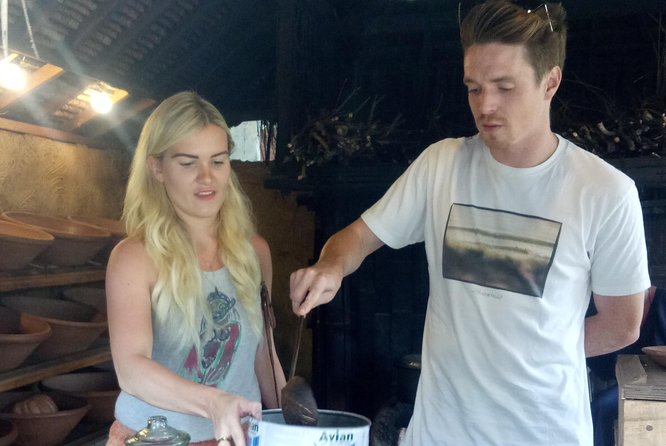
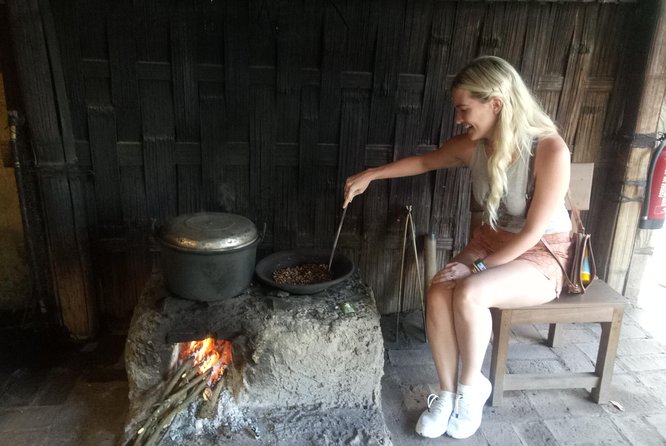
The first stop lasts about two hours, so it is the more detailed part of the afternoon. At Uma Pakel Agro Tourism, you learn how coffee is processed by hand in a traditional way. The tour presents the coffee as one of the world’s most expensive varieties, and the guide explains the work involved in producing it.
The useful point here is not simply the claim about price. You get to see that coffee production involves more than roasting beans and pouring hot water. The process is shown in detail, with the guide helping you understand how the product moves from raw material to drink.
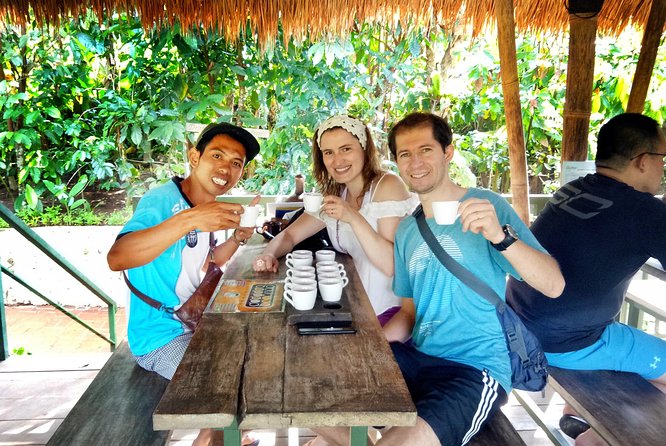
You then taste a selection of coffees and teas in a setting surrounded by thick jungle. One tasting account described three complimentary coffees, with additional drinks available for purchase. The exact selection can vary, but you should expect a sampling session rather than one single cup.
I like the chance to compare flavors side by side. If you are not a serious coffee drinker, the tea samples make the stop more accessible. If you are curious about Balinese ingredients and preparation methods, this is the part of the tour where you receive the clearest explanation.
The setting also helps. You are not tasting coffee in a city café with traffic outside. The surrounding greenery gives the stop a calmer feel, and the guide can focus on your questions because the tour is private.
Oka has guided this portion of the tour and has been praised for his friendly manner and clear explanations of local culture. Other guides named by past customers include Wayan and Keris, so your guide may differ. The important practical benefit is the one-on-one attention, not a guaranteed particular guide.
There is one point to keep in mind. Coffee plantations and agro-tourism sites often include opportunities to buy coffee, tea, or other products. The tasting itself gives you a chance to decide what you enjoy before spending extra money. You should not feel obliged to buy anything, but the option is part of the stop.
Bresela rice fields: seeing coconut wine gathered from a tree
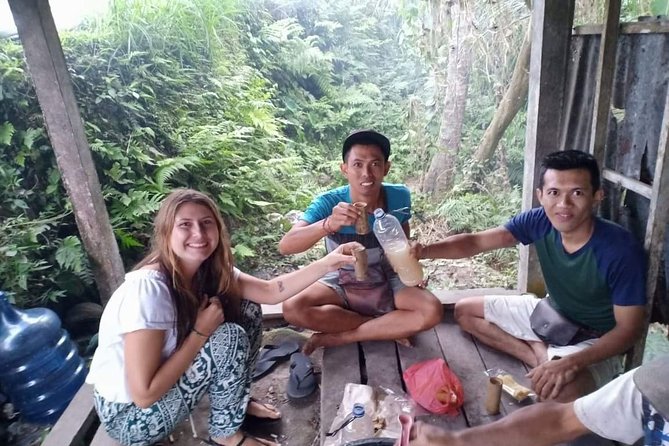
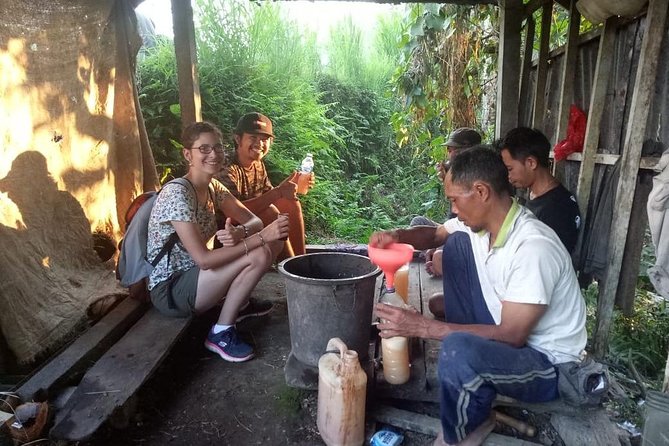
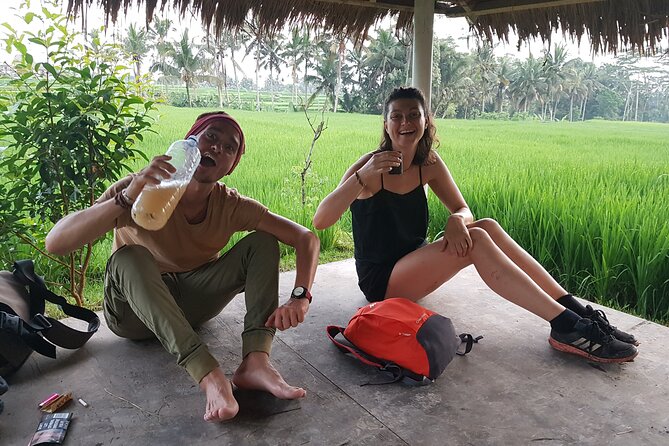
The second stop lasts about one hour and feels less polished and more connected to everyday farm work. In Bresela, you visit a local bar set among rice fields and share time with members of the local community and farmers.
The special moment is the explanation of how Balinese coconut wine is made. A local farmer climbs to the top of a coconut tree and harvests the tuak. Seeing the collection process gives the drink a human scale. You can connect the liquid in your glass with the labor of the person who gathered it.
This is the part I would choose for anyone who wants a less standard Ubud outing. Coffee tasting is easy to find in Bali. Watching coconut wine being collected by a farmer in the middle of a rice-growing area is far less routine.
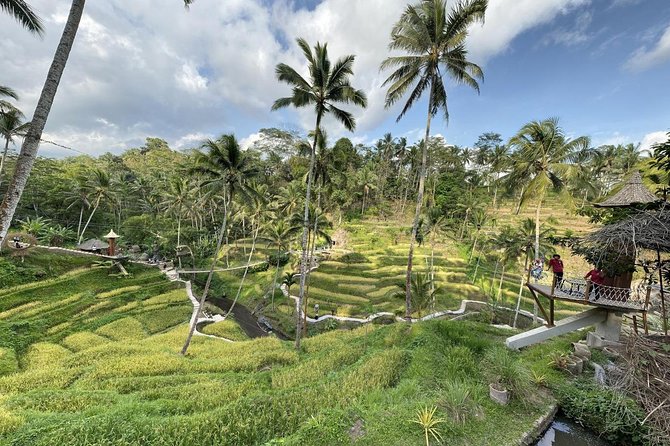
Getting there requires a short walk through the fields. One important warning: the ground may be soft and waterlogged. If you have back, knee, balance, or mobility concerns, ask about the walking conditions before booking. The information provided says most people can participate, but that does not mean the route will feel easy for everyone.
Wear footwear that stays firmly on your feet. Avoid smooth sandals if the ground is wet, and consider bringing insect spray. A past visitor specifically advised bringing plenty of it for the peaceful walk through the rice-farming village.
The rustic setting is part of the appeal, but it also means you should not expect a paved path or a formal tasting room. You may encounter mud, uneven ground, and changing field conditions. That trade-off is worth it for many people, but it is best to know about it before you arrive.
What the private guide adds
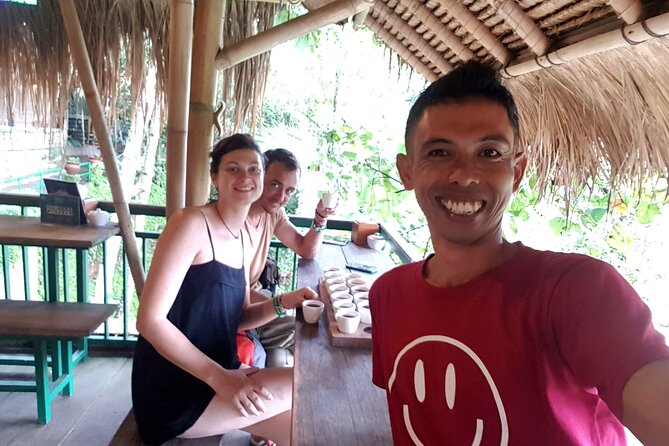
A private tour can sometimes mean little more than a private vehicle. Here, the guide is central to the experience because both stops depend on explanation and context.
At Uma Pakel, your guide can walk you through the coffee-making process and help you understand what you are tasting. At Bresela, the guide can explain the connection between the farmer, the coconut tree, and the finished drink. You also have the freedom to ask questions without worrying about holding up a large group.
The guides associated with this tour have been praised for being cheerful, professional, helpful, and easy to communicate with. Keris and his brother, for example, arranged a car instead of motorbikes when a passenger had a back problem. That kind of flexibility matters, although you should still explain any mobility or transport concern when you book.
Because only your group participates, the pace can feel more personal. You might spend longer on the coffee process, ask about local customs, or take more time in the rice fields. The total duration remains about 3.5 hours, so this is not an open-ended village visit, but the private arrangement gives you more control than a standard group outing.
A completely different kind of day out on the same trip:
- All-Inclusive Ubud Private Tour
★ 5.0 · 14,344 reviews - Best of Ubud Full-Day Tour with Jungle Swing
★ 5.0 · 8,571 reviews - Ubud: Monkey Forest, Jungle Swing, Rice Terrace, and Water Temple
★ 5.0 · 7,160 reviews - Best of Ubud 1-Day Private Tour
★ 5.0 · 4,451 reviews
Pickup, timing, and the afternoon schedule

The tour begins at 3:00 pm, with hotel pickup offered. That is one of its strongest practical features. Ubud traffic can make meeting points frustrating, especially if you are unfamiliar with the town or staying outside the central streets.
Hotel pickup also makes the afternoon simpler if you have already spent the day sightseeing. You do not need to navigate to Uma Pakel on your own, and the drop-off means you can return to your accommodation without arranging another ride.
The schedule is divided into approximately two hours at the coffee stop and one hour in Bresela. Since the coconut wine visit includes a walk through rice fields, the order and timing may be affected by local conditions. You should treat the 3.5-hour length as an estimate rather than a stopwatch guarantee.
The tour requires good weather. If poor weather forces cancellation, you are offered another date or a full refund. For your own planning, avoid placing an important evening commitment too close to the stated finish time.
Is $69 good value?
At $69, this is not the cheapest way to drink coffee in Bali. You can find inexpensive cafés throughout Ubud. The value comes from the combination of transport, a private guide, two different stops, tastings, and access to a farming experience that would be difficult to arrange on your own.
I think the price works best for two or more people sharing the private outing. It also suits anyone who would rather pay for convenience than bargain for separate rides and organize visits independently.
The first stop includes admission, while the Bresela visit has no admission charge. You should also remember that additional coffee or tea purchases may be offered after the tasting. Those extras are optional, so include them in your budget only if you plan to take products home.
The tour offers more value if you care about context. If your only goal is to drink coffee, $69 may feel high. If you want to understand a traditional preparation method, taste several drinks, meet a local farming community, and see coconut wine collected from a tree, the fee is more defensible.
Who should book this experience?
I would recommend it to couples, families with older children, and small groups who want a private activity that does not consume an entire day. Coffee fans will appreciate the first stop, while curious eaters and people interested in village traditions will likely find the coconut wine visit more memorable.
It is also well suited to visitors staying in Ubud who want to get beyond cafés and temples for a few hours. The rice-field walk adds a physical element without turning the outing into a full hiking trip.
You should think twice if you dislike tasting alcoholic drinks, have difficulty walking on muddy or uneven ground, or need a fully paved route. The coconut wine portion is the least predictable part of the tour, and it is the reason this outing feels special as well as the reason it may not suit everyone.
The private format can help if your group has different interests. One person can ask detailed questions about coffee while another focuses on the village setting and local drinks. You are not locked into the pace of a busload of people.
Practical advice for a smoother afternoon
Wear light clothing and secure shoes. The coffee stop is easy to pair with ordinary sightseeing clothes, but the rice-field section calls for footwear that can handle soft ground.
Bring insect spray, especially for the walk through the farming area. It is also sensible to carry water, though the tasting stops provide drinks.
Tell the operator about any back or mobility issue when booking. The company has arranged a car rather than motorbikes for a passenger with a back problem, but advance communication gives the team a better chance to make suitable arrangements.
Keep your schedule flexible after the tour. The stated duration is approximately 3 hours and 30 minutes, and traffic or weather may affect the timing.
Cancellation is free up to 24 hours before the 3:00 pm start for a full refund. Changes or cancellations inside 24 hours are not refunded, and bad-weather cancellations offer either a new date or a full refund.
Should you book the Ubud coconut wine and coffee safari?
Book it if you want a personal, locally focused afternoon rather than another standard café stop. The coffee tasting is pleasant and informative, but the coconut wine visit is the real reason to choose this tour. Watching a farmer harvest tuak from a coconut tree, then walking through the rice fields to taste it, gives the outing its character.
Skip it if you need easy, paved access or have no interest in alcoholic drinks. For everyone else, the $69 cost is reasonable when you value private transport, guide attention, and a short route into Ubud’s rural surroundings.
FAQ
What time does the tour start?
The tour starts at 3:00 pm.
How long does the tour last?
It lasts approximately 3 hours and 30 minutes.
Is hotel pickup available?
Yes. Hotel pickup and drop-off are offered, so you do not need to find a separate meeting point.
Is this a private tour?
Yes. Only your group participates in the activity.
What will I see at the coconut wine stop?
At Bresela, you visit a local bar in the rice fields, meet members of the local community and farmers, and see how coconut wine is made. A local farmer may demonstrate harvesting tuak from the top of a coconut tree.
Can I cancel for a refund?
You can cancel at least 24 hours before the start time for a full refund. Cancellations or changes made less than 24 hours before the tour are not refunded. If poor weather causes the operator to cancel, you are offered another date or a full refund.
Newest reviews from Ubud
- Explore Rice Fields and Hidden Villages with Ubud E-Bike Tour★ 5.0 · 7 reviews
- Monkey Forest Ubud Half day Tour★ 4.0 · 7 reviews
- Private Tour: Heaven Gate Temple, Tirta Gangga and Blue Lagoon Snorkeling★ 5.0 · 7 reviews
- Ubud Monkey Forest Rice Terrace Temple Waterfall Private Tour★ 5.0 · 7 reviews
- UBUD : Temple and Waterfall All Inclusive Day Tour★ 5.0 · 7 reviews
- Bali – Silver Jewelry Making Class★ 5.0 · 7 reviews
- One way fast Boat between Padangbai and Gili Islands or Lombok★ 5.0 · 7 reviews
- Bali ATV Quad Bike and White Water Rafting – All Inclusive★ 5.0 · 7 reviews
Ubud Tours, compared.


Monkey Forest, Jungle Swing, Rice Terrace, and Water Temple
Read our review →


Uluwatu Sunset, Kecak Dance, and Dinner Jimbaran Beach
Read our review →
Tanah Lot and North Bali Tour: Scenic Journey
Read our review →