
Reviewed · WALKING TOURS
Queen of the East (Old Batavia) Walking Tour
Old Batavia rewards a slow, curious walk. I like the private English-speaking guide, who can shape the three-hour visit around your interests, and I like that entrance fees, water, a pocket map, and a batik cloth fan are included. The route links Jakarta’s old harbour with its colonial center, giving you a useful introduction to Kota Tua rather than a quick photo stop.
The main drawback is the amount of walking. You cover roughly 4 to 4.5 kilometers in warm, humid weather, and one long stretch from the harbour may feel thin on sights. A 3 out of 5 assessment specifically praised the port and Jakarta Museum portions but suggested that the maritime museum and the long walk back could receive less time.
In This Review
- Key points about the Queen of the East walk
- Seeing Jakarta through Old Batavia’s port
- Following the old city wall near the Eastern Warehouse
- Crossing nearly 400 years of history at Kota Intan Bridge
- Reading the colonial plan around Toko Merah
- Entering Fatahillah Museum and its underground dungeon
- What the $67.66 price really covers
- Timing, weather, and practical comfort
- Who will enjoy this Old Batavia route most
- Should you book the Queen of the East tour?
- FAQ
- How long does the Queen of the East tour last?
- Where does the tour begin?
- Where does the tour end?
- How far do you walk?
- Is the tour private?
- Is an English speaking guide included?
- Are entrance fees included?
- Does the tour operate on Mondays?
- What should I wear and bring?
- Are meals and hotel transportation included?
Key points about the Queen of the East walk
- Start at Museum Bahari: Begin inside an old VOC spice warehouse, then look toward Sunda Kelapa Harbour from the Controlle building.
- Walk through colonial remains: See a surviving section of Batavia’s old city wall and warehouses tied to the Dutch East India Company.
- Cross Kota Intan Bridge: Pass over a nearly 400-year-old wooden drawbridge, one of the route’s most distinctive stops.
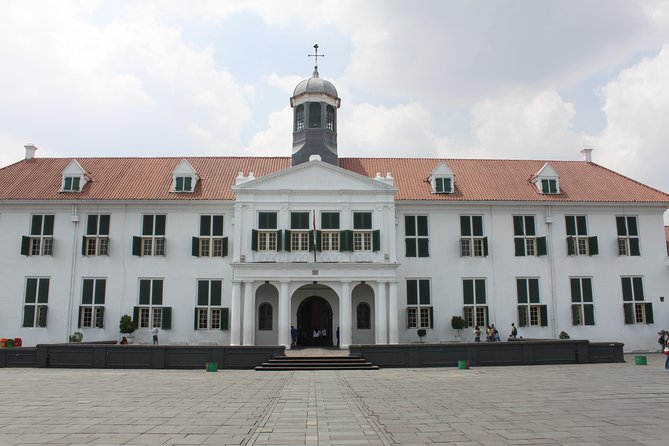
- Finish at Fatahillah Museum: Explore a major collection of 17th to 19th century antiques and visit its underground dungeon.
- Private from one to 15 people: Your group has the guide to itself, a useful advantage for questions, photography, and pacing.
- Plan for Jakarta weather: Wear comfortable shoes and bring an umbrella, especially from October through April.
Seeing Jakarta through Old Batavia’s port
The tour begins at Museum Bahari, also called the Maritime Museum, on Jalan Pakin. This is not the central Fatahillah Square area, so the meeting point matters. You start near Sunda Kelapa Harbour, where Jakarta’s maritime past makes more sense than it does among the later colonial buildings farther west.
The museum occupies a former VOC warehouse used for spices and other supplies. That setting gives the first stop a practical connection to Batavia’s trading system. You are not simply looking at objects behind glass. You are standing inside a building made for the commerce that helped make the city important to the Dutch East India Company.
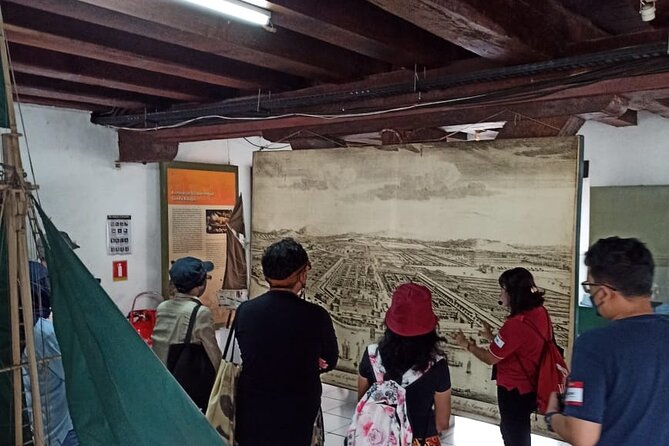
The scheduled visit lasts about 50 minutes and includes admission. One especially useful part is the view of Sunda Kelapa Harbour from the old Controlle building. From above, you can connect the warehouse, the water, and the movement of goods. I would pay attention here to the guide’s explanation of how the port supported Batavia’s role as a Dutch base in Asia.
There is a fair criticism to consider. The maritime museum may not hold your attention as strongly as the later stops, especially if your main interest is architecture and city history. If you have already visited maritime museums elsewhere, tell your guide early. Since this is a private tour, you have a better chance of adjusting the emphasis instead of following a fixed group pace.
The harbour stop also sets the tone for the whole walk. Old Batavia is not just a collection of attractive façades. Its streets, walls, warehouses, waterways, and bridges point to a working colonial city built around trade, control, and storage.
More walking tours:
- Jakarta Walking Tour with Public Transportation Visiting Sites
★ 5.0 · 14 reviews - Tetebatu Walking Tour – Rice Terraces, Waterfall & Monkey Forest
★ 5.0 · 349 reviews - Small-Group Walking and Food Tour by Night in Yogyakarta
★ 5.0 · 313 reviews
Following the old city wall near the Eastern Warehouse
After the maritime museum, the route continues toward a surviving section of Batavia’s old city wall. This is a short stop of about 15 minutes, with no separate admission charge.
Do not expect a complete fortification or a large monument. What makes this section useful is its connection to the wider plan of the city. A remaining wall can help you picture the edge of colonial Batavia and the security concerns surrounding a major port and company headquarters.
This is also one of the places where the guide adds real value. A wall fragment alone can look modest. With an explanation of the Eastern Warehouse, the VOC trading system, and the way the city was laid out, it becomes part of a larger story.
The route between the harbour and the central old town is where you should manage your expectations. A 3 out of 5 assessment noted that the walk back from the port had a long stretch with little of note to see or discuss. That is important because the tour sells itself as both sightseeing and exercise. You receive the walking experience, but not every minute offers a major landmark.
I would treat this section as connective tissue rather than a highlight. Wear shoes that can handle uneven pavement and avoid scheduling another demanding activity immediately afterward. The walk is not extreme, but Jakarta’s heat and humidity can make a moderate distance feel longer.
Crossing nearly 400 years of history at Kota Intan Bridge
Kota Intan Bridge is one of the route’s most memorable pieces of street history. The tour passes over a wooden drawbridge believed to be nearly 400 years old, giving you a rare chance to see an old piece of Batavia’s transport system in its original setting.
The stop lasts around 15 minutes and includes admission. It is short, but the bridge gives the walk a welcome change of scale. You move from warehouses and wall remains to a structure that once controlled movement across the water.
This is a good place for photographs, though you should keep your expectations realistic. The attraction is the age and function of the bridge, not a long museum visit or a major viewing platform. Ask the guide to explain how the bridge fitted into the canals and colonial street plan. That context helps you understand why old Batavia developed around water and controlled crossings.
Because the tour is private, you can pause for pictures without holding up a large group. That is a small benefit, but it matters on a walking route with several compact stops. If your group includes children, this is also a natural point to keep the visit lively. The old bridge offers something physical to see after the more explanatory museum sections.
Reading the colonial plan around Toko Merah
Between the bridge and the main museum, you walk through the old Dutch colonial urban plan. The route includes period architecture from the 17th and 18th centuries and passes Toko Merah, known as the old Governor General’s mansion.
The value here comes from looking at the area as a planned city rather than a row of isolated buildings. Your guide can point out how the buildings, streets, warehouses, and waterways worked together. You will also get a better sense of the power structure behind Batavia, with grand residences placed close to the commercial and administrative center.
Toko Merah is an especially useful visual marker. Its presence helps shift the story from shipping and storage to government and status. Even if you are not an architecture specialist, the contrast between a company warehouse and an official mansion gives the route a clear rhythm.
The supplied schedule does not give this section a separate time allotment, so the pace may depend on your guide and the group’s interests. I would use the private format to ask specific questions about Dutch planning, the VOC, and how the old colonial center relates to modern Jakarta.
This part of the walk may be more satisfying for people who like city design than for those seeking a long list of interior visits. Several buildings are viewed from the street, and the experience depends on the guide’s storytelling. That is another reason to arrive with a few questions ready.
A few more tours worth putting side by side
- Jakarta: Volcano, Tea/Rice Fields, Hot Spring, Local Food
★ 4.9 · 515 reviews - Active Volcano, Rice Field, Hot Spring, Fruit market, Tea Plantation with Lunch
★ 5.0 · 513 reviews - Private Full-Day Guided Tour: Explore Jakarta’s Top Highlights
★ 5.0 · 338 reviews - Jakarta Half-Day Guided Tour with a Private Fun Local Host
★ 5.0 · 292 reviews
Entering Fatahillah Museum and its underground dungeon
The final major stop is Jakarta History Museum, commonly called Fatahillah Museum, on Taman Fatahillah. The visit lasts about 40 minutes and includes admission.
The museum occupies the grand building that gives the square its visual focus. Inside, you can see antiques from the 17th to 19th centuries, linking the objects to the streets and buildings you have just walked through. After starting with the port, you finish with the administrative heart of Old Batavia.
The underground dungeon adds a darker edge to the visit. It is not a lighthearted attraction, but it helps show the harsher side of colonial rule. I would listen closely to the guide here, since the importance of the space is not only its physical appearance. The dungeon connects the museum to systems of law, punishment, and authority.
This is the strongest finish for the tour because it brings together the main themes: trade, government, architecture, and control. One assessment singled out the Jakarta Museum as one of the better parts of the experience, and I can understand why. It offers more substance than a short exterior photo stop.
The tour ends at the museum, not back at the maritime museum. That one way design saves you from retracing the full route. It also means you should plan your onward transport from Taman Fatahillah rather than assuming the guide will return you to your starting point.
What the $67.66 price really covers
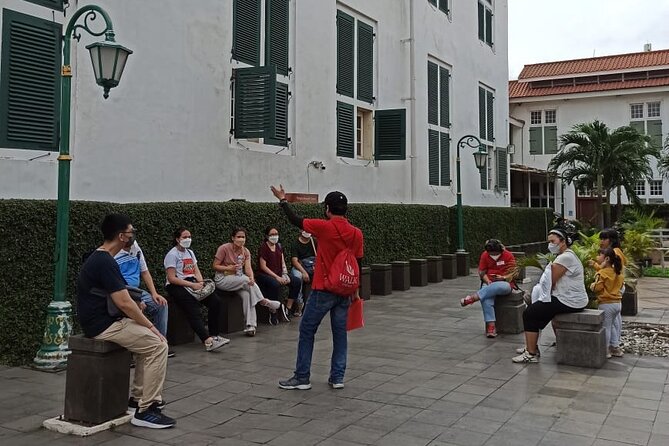
At $67.66 per person, this is not the cheapest way to look around Kota Tua. The price makes more sense if you value a private guide, included admission, and a structured route between separate historic sites.
Your fee covers an English-speaking guide, entrance fees, mineral water, a pocket map, and a batik cloth fan. Those inclusions reduce the small costs that can otherwise add up during a city walk. The private format is the main value point. A solo visitor or couple pays more per person than a large group would, but you receive a more personal experience.
The tour accepts one to 15 people, and group discounts are available. For a family or group of friends, the price may compare well with booking several separate admissions and arranging your own explanation of the area. Children from 3 to 12 years old pay the same fare as adults, which makes the cost less attractive for families with several young children.
Meals are not included. Hotel pickup and drop off are also not included, and neither are tips, travel insurance, or optional activities. I would budget separately for getting to the Museum Bahari meeting point and away from Fatahillah Museum at the end.
The experience is best value for someone who wants context. If you only want quick pictures of the bridge and square, you can explore parts of Kota Tua for less. If you want the harbour, VOC warehouses, wall remains, bridge, colonial plan, and main museum connected by one explanation, the price is easier to justify.
Timing, weather, and practical comfort
The walk takes about three hours, though your actual pace may vary. You cover roughly 4 to 4.5 kilometers, so comfortable shoes are essential. Jakarta stays warm and humid, and the open sections of the route can be tiring even when the distance looks manageable on paper.
Bring an umbrella. It is especially important from October through April, when rain can interrupt an otherwise pleasant walk. The tour operates in sunny or rainy conditions, so you should dress for both. Light, comfortable clothing is the sensible choice.
There is no tour on Monday because the museums are closed. Pick another day if the museum interiors are important to you. The tour is near public transportation, but hotel pickup and drop off are not part of the service, so allow time to reach the starting point on Jalan Pakin.
Confirmation normally arrives at booking. If you book within five days of the visit, confirmation can take up to 48 hours and remains subject to availability. The booking is non refundable and cannot be changed, so check your date carefully before paying.
Most people can take part, but the distance and heat deserve honest consideration. I would not choose this walk if you need frequent seated breaks or strongly dislike walking in humid weather. The private format may help with pacing, but it does not remove the distance.
Who will enjoy this Old Batavia route most
I would recommend this tour to a first time Jakarta visitor who wants a clear introduction to Kota Tua. It gives you the main historical anchors in a single morning or afternoon and explains how the port, warehouses, walls, bridge, residences, and museum fit together.
It also suits people who prefer asking questions rather than listening to a standard group script. A private guide can spend more time on the VOC, colonial urban planning, architecture, or museum objects, depending on what interests you.
Families can benefit from the short, varied stops. The harbour, old wall, bridge, and dungeon break up the walking. Still, the adult and child price is the same for ages 3 to 12, and the heat may test younger children.
Architecture fans will find the route more rewarding than visitors looking only for indoor collections. You see colonial buildings and urban design in place, not only in a museum display. History-minded visitors should appreciate the movement from trade to administration and punishment.
I would be more cautious if you have limited time and want only the strongest sights. The long connection from the port can feel less rewarding, and the maritime museum may not be essential for every visitor. In that case, you could spend more time around Fatahillah Square and the Jakarta History Museum.
Should you book the Queen of the East tour?
Book it if you want a private, guide-led introduction to Old Batavia and you are happy to walk several kilometers in Jakarta’s heat. The best parts are the Sunda Kelapa Harbour viewpoint, Kota Intan Bridge, the colonial center around Toko Merah, and the Fatahillah Museum with its dungeon.
Think twice if you dislike long urban walks or want every minute packed with major sights. Ask your guide to keep the maritime museum concise if it is not your priority, and use the private format to protect time for the harbour, bridge, and Fatahillah Museum.
For a small group, the included admissions and private attention improve the value. For a solo visitor or family with several children, the price requires more thought. I would book this as a history and city walk, not as a quick attraction tour.
FAQ
How long does the Queen of the East tour last?
The tour lasts approximately three hours.
Where does the tour begin?
It begins at Museum Bahari, also called the Maritime Museum, at Jl. Pakin No. 2 in North Jakarta.
Where does the tour end?
The tour ends at Jakarta History Museum, also called Fatahillah Museum, at Taman Fatahillah.
How far do you walk?
The total walking distance is approximately 4 to 4.5 kilometers.
Is the tour private?
Yes. Only your group participates, with a minimum and maximum group size of one to 15 people.
Is an English speaking guide included?
Yes. An English-speaking guide is included.
Are entrance fees included?
Yes. Entrance fees for the specified visits are included in the price.
Does the tour operate on Mondays?
No. There is no tour on Monday because the museums are closed.
What should I wear and bring?
Wear comfortable clothes and walking shoes. Bring an umbrella, especially during the rainy season from October through April.
Are meals and hotel transportation included?
No. Meals, travel insurance, guide tips, and hotel pickup and drop off are not included.
Newest reviews from Jakarta
- CGK – Private Airport Transfer Service★ 5.0 · 7 reviews
- Bandung Private Tour Mountain Volcano and Hotspring ( Overland )★ 5.0 · 7 reviews
- Highlights of Jakarta City : Half-Day Tour All around Jakarta★ 5.0 · 8 reviews
- City Tour Jakarta with Private Guide★ 5.0 · 8 reviews
- Half Day Jakarta Private Tour in two highlight place★ 5.0 · 9 reviews
- Fullday 10 hours rent a car in Jakarta city with toll & parking★ 4.0 · 9 reviews
- 8 Hours Jakarta Private City Tour – (All Tourist Attractions)★ 4.0 · 9 reviews
- Jakarta Scooter Lessons and Motorcycle Lessons★ 5.0 · 9 reviews
Walking Tours, compared.

Tetebatu Walking Tour – Rice Terraces, Waterfall & Monkey Forest
Read our review →
Bali Private Food Walking Tour With Locals: The 10 Tastings
Read our review →
Sidemen Trekking: A Walk from a Different Perspective
Read our review →
Ubud yoga, rice terrace walk and floating Breakfast tour
Read our review →
Ubud Countryside Tour: Campuhan Ridge Walk and Rice Terrace
Read our review →
Night Walking Tour-Malioboro street food with guide at Yogyakarta
Read our review →Browse the lists this tour appears in