
Reviewed · WALKING TOURS
Sidemen Trekking: A Walk from a Different Perspective
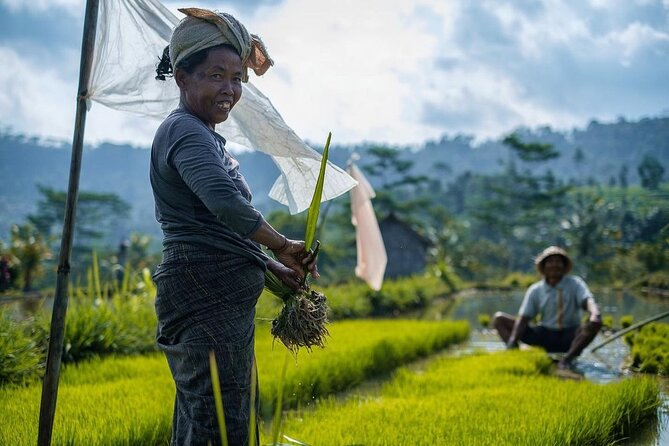
Rice fields are best seen on foot. This Sidemen walk gives you close views of working rice paddies and a useful look at village life, while guides such as Adi, Darya, Daria, and Wayan explain farming, Balinese Hindu customs, and local traditions. I like the small-group feel and the chance to use narrow paths that are hard to find alone. The main drawback is that this is an easy countryside walk, not a strenuous hike, and some rice-field paths are narrow, slippery, or uneven.
The route takes about two hours, costs $13.75 per person, and ends several kilometers from the starting point. You receive bottled water, but not hotel transport, meals, or tips. With a 99 percent recommendation rate and a 5 out of 5 score from 94 ratings, the experience clearly works best for people who want rural Bali rather than beach clubs and city traffic.
In This Review
- Key things to know before walking Sidemen
- Why Sidemen feels different from southern Bali
- Starting at Pasar Sidemen before the fields
- Following the irrigation route into rural Sidemen
- Rice terraces, crops, and the work behind the view
- Temples, village customs, and everyday Bali
- What the two-hour pace is really like
- Ending at Warung Ume Anyar
- Is $13.75 good value?
- Who should book this Sidemen walk?
- Should you book Sidemen Trekking?
- FAQ
- Where does the Sidemen trekking tour start?
- Where does the walk finish?
- How long does the experience take?
- Is hotel pickup included?
- Is Grab available after the trek?
- What should I bring?
- Is the walk suitable for all fitness levels?
Key things to know before walking Sidemen
- The walk begins at Pasar Sidemen: Meet at the shop marked Upa Boga inside Sidemen Traditional Market.
- The route follows working irrigation paths: Expect narrow, raised sections beside rice paddies, with occasional mud and slippery footing.
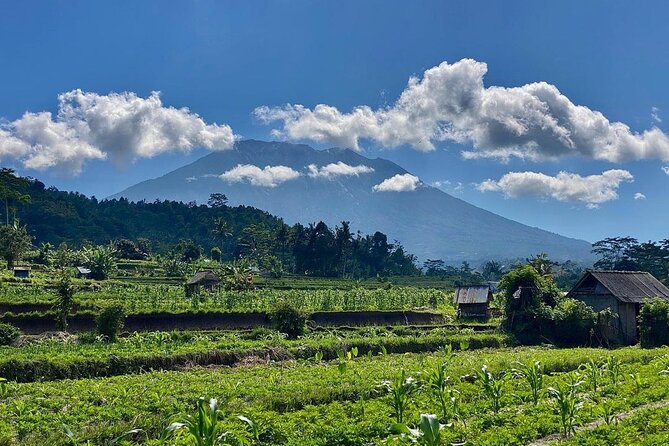
- Mount Agung provides the main view: The volcano appears beyond the terraces when conditions are clear.
- Local guides add the real value: Adi, Darya, Daria, Wayan, and other guides explain rice growing, village customs, religion, crops, and daily work.
- The finish point is a practical stopping place: The walk ends at Warung Ume Anyar, where you can have a drink or meal.
- Plan your ride home early: Grab cars are limited in the area, and prearranged transport is the sensible choice.
Why Sidemen feels different from southern Bali
Sidemen sits in eastern Bali, away from the hotel strips and nightlife areas around Kuta, Legian, and Seminyak. The appeal here is not a famous monument or a polished attraction. It is the ordinary setting: farm paths, village streets, temples, irrigation channels, market activity, and people working in the fields.
That difference matters. You are not simply stopping at a viewpoint to photograph terraces from above. You are walking through the system that makes them work. Water moves through channels, farmers tend crops, and the rice fields sit beside homes and religious sites. The countryside becomes easier to understand when you see it at walking pace.
The tour is also a useful choice if you want context rather than scenery alone. Guides explain how rice is grown and processed, how crops change with the season, and how flowers and other plants may be used in local offerings or cooking. One December visit included recently harvested fields and new crops being planted, a reminder that the fields do not look the same all year.
More Walking Tours in Ubud
- Ubud Guided Walking Tour
★ 5.0 · 79 reviews - Ubud Countryside Tour: Campuhan Ridge Walk and Rice Terrace
★ 5.0 · 72 reviews - Hikaria: Bali’s First Immersive Night Walk
★ 5.0 · 16 reviews
Starting at Pasar Sidemen before the fields
The meeting point is Pasar Sidemen, the traditional market on Jalan Sidemen. Look for the shop with the sign Upa Boga. This detail is worth saving on your phone because a traditional market can have several entrances and plenty of activity around it.
If you are staying in Sidemen, arrange your ride through your hotel. The operator does not recommend Grab for getting to the start because some hotels allow Grab drivers to drop people off but not collect them. That can leave you walking farther than expected or trying to find a different ride at the last minute.
The market itself offers an optional extra. It opens from 5:00 AM to 10:00 AM, so a morning booking lets you look around before the walk. This is most useful for people who enjoy seeing produce and daily routines rather than rushing straight to the trail. Do not assume the market visit is part of every departure, since the walk itself has a scheduled meeting time.
Following the irrigation route into rural Sidemen
From the market, the group heads through the village and toward the rice paddies. The route is not a neatly marked hiking trail. Instead, it uses paths followed by farmers, sections beside irrigation channels, village roads, and crossings that make the walk feel connected to daily life.
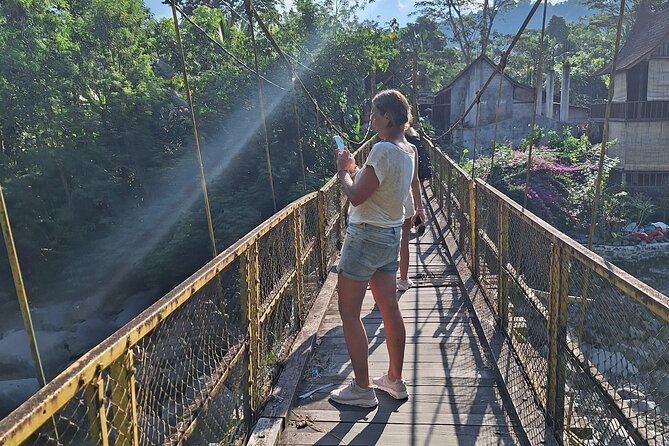
One memorable feature is a hanging wooden bridge suitable for motorbikes and people. It is a practical local crossing, not a purpose-built attraction, so take your time and follow the guide’s directions. The route then continues toward Mount Agung, with the volcano providing a dramatic reference point beyond the terraces when the sky is clear.
The walk rises and falls along roads and field edges. Several people describe it as easy in terms of effort, but that should not be confused with completely effortless. In the paddies, you may need good balance, especially on narrow raised paths beside waterways. Some sections can be slippery after rain, and muddy shoes are a real possibility.
This is why the required footwear matters. Hiking shoes or sturdy walking shoes are a better choice than sandals with smooth soles. Bring a sun hat, sunscreen, and sunglasses, and use the bottled water provided as you go.
Rice terraces, crops, and the work behind the view

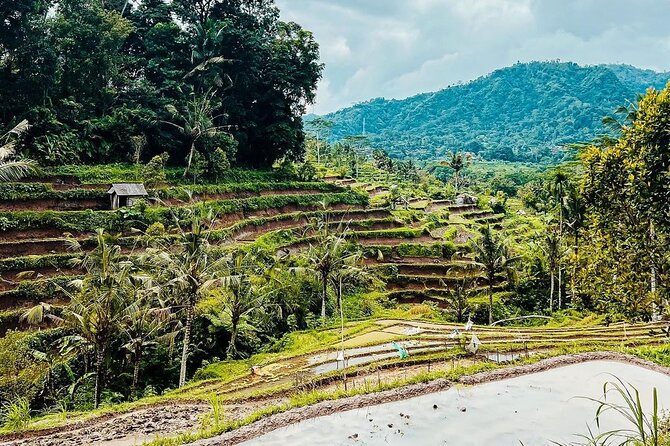
The rice fields are the heart of the experience. You see them from several angles, including viewpoints across the terraces and paths that pass directly through the farming area. The route can include more than rice, with peppers and other crops appearing along the way.
A good guide turns these details into a readable story. You may learn how rice is cultivated, how water is shared through irrigation, and how seasonal planting affects what you see. The farming discussion also links to food, since crops can be used in local cooking. This gives the walk more purpose than simply collecting photographs.
The fields are not guaranteed to be bright green. During some periods, rice has already been harvested or new plants are being established. That may mean fewer postcard-style terraces, but it gives you a more accurate view of farming as a working cycle. If your main goal is a particular shade of green, ask about conditions when booking. If you want to understand the process, seasonal change is part of the attraction.
Pay attention to your footing rather than looking through your camera the whole time. The elevated paths can be narrow, and the best view may arrive just when you need to watch your next step. This is a walk where sturdy shoes and a free hand are more useful than a large amount of camera equipment.
More treks in Ubud:
- Mount Batur Sunrise Hike and Natural Hot Spring Option
★ 5.0 · 1,927 reviews - Mount Batur Sunrise Hike with Breakfast
★ 5.0 · 1,757 reviews - Mount Batur Sunrise Trekking Private All Inclusive
★ 5.0 · 906 reviews - Private Mount Batur Sunrise Trekking Tour
★ 5.0 · 634 reviews
Temples, village customs, and everyday Bali
The route passes through the village and by a temple used for prayer by local residents. This is not presented as a grand temple tour, and that is part of its value. You see religious practice in the same setting where people live and farm.
Guides explain how Balinese Hindu beliefs connect with everyday routines, offerings, community life, and village customs. Several guides are praised for making the conversation relaxed and interactive. Adi is often described as funny and easygoing, while Darya and Daria are noted for clear explanations and a good sense of the area. Wayan is also praised for sharing village culture in a considerate way.
The best guides know the people and paths around them. That can make the walk feel less like a fixed sightseeing circuit and more like an introduction to a real community. You may pass local workers, see flowers prepared for offerings, and hear about farming practices that have changed over time.
This cultural side requires a little respect from you. Keep your voice down near temples, follow instructions about where to walk, and ask before photographing people. The purpose is to observe village life without treating it like a stage set.
What the two-hour pace is really like

The advertised duration is about two hours, though the practical guidance asks you to allow two to two and a half hours. That extra margin is sensible because the route includes explanations, photo stops, uneven ground, and the time needed to gather the group.
The walk has a maximum of 10 people. That is small enough for questions and easier movement along narrow paths, though the pace can still depend on the group. Guides typically stop to explain farming, answer questions, and point out details that you might miss alone.
One useful expectation to set is that this is not a serious fitness challenge. A person looking for a demanding hike will probably find it too gentle. The route is better described as an easy but sometimes agile walk, with modest climbs and descents. Your lungs may be fine while your ankles and balance do the real work.
Older visitors or anyone unsteady on narrow paths should think carefully before booking. The issue is less about endurance and more about balance, sure footing, and comfort on raised terrace edges. The walk may suit you if you are reasonably fit and can manage uneven ground, but it is not ideal if you need broad, flat walkways throughout.
Ending at Warung Ume Anyar
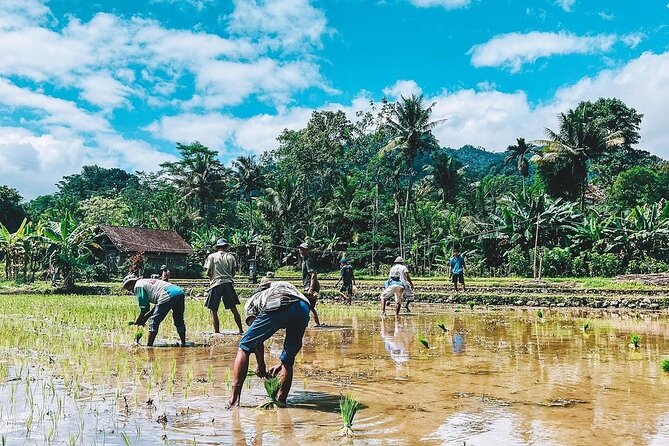
The trek finishes at Warung Ume Anyar Restaurant in Ogang Village. This is a useful ending because you can sit down for a meal or drink instead of being dropped beside an anonymous roadside.
A meal is not included, so bring money if you want to stay there. The finish point also gives you a clear place to meet your driver. Arrange pickup before setting out and ask the driver to arrive roughly two to two and a half hours after the start.
Do not rely on finding a car instantly. Grab is available in the area, but there are only a few drivers, and some may ask for offline or additional payment. A prearranged driver is the less stressful option, especially if you have a flight, another tour, or a dinner reservation.
If you need to return to the starting point, you can walk along the main road. The distance is about 3 kilometers, or 30 to 40 minutes. That is a fallback, not necessarily the most pleasant plan after walking through fields, so transport remains preferable.
Is $13.75 good value?
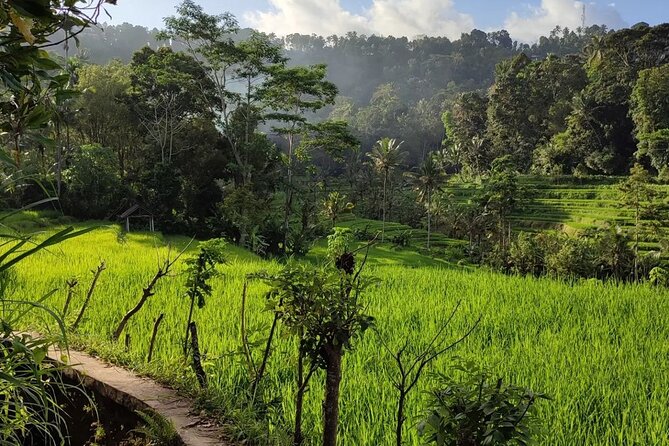
At $13.75 per person, this is inexpensive for a two-hour guided experience. Bottled water is included, and the small-group limit gives you a better chance to ask questions than you would have on a large coach outing.
The strongest value comes from the guide rather than from equipment or formal facilities. You are paying for access to local routes, explanations of farming and religion, help crossing unfamiliar sections, and a finish point that is easy to identify. Without a guide, you could see rice fields, but you might miss how the irrigation works or why certain crops and flowers matter.
The price does not cover hotel pickup, drop-off, food, or tips. If you are based outside Sidemen, transport can cost more than the walk itself, so include that in your budget. The location is listed under Ubud, but the actual meeting point is in Sidemen, Karangasem. Confirm your travel time before booking rather than assuming this is a central Ubud activity.
Free cancellation is available if you cancel at least 24 hours before the start time. Changes or cancellations inside that window are not refunded, and poor weather may lead to a new date or a full refund.
Who should book this Sidemen walk?
I would choose this tour if you want an introduction to eastern Bali that combines scenery with practical local detail. It suits couples, solo visitors, and small groups who enjoy asking questions and taking photographs without needing a hard hike.
It is also a good fit if you have limited time in Sidemen. Two hours gives you a focused look at the village, fields, irrigation, temple life, and Mount Agung views. A morning departure pairs especially well with the traditional market, which closes by 10:00 AM.
You should think twice if you dislike uneven paths, mud, narrow crossings, or walking in full sun. You should also skip it if you are expecting a marked mountain trail or a strenuous trek. The name suggests hiking, but the actual experience is a relaxed rural walk with moments that demand care.
Should you book Sidemen Trekking?
Book it if you want to see Bali beyond resort roads and staged photo stops. The combination of rice farming, village paths, temple customs, Mount Agung views, and friendly local guides gives the experience substance for very little money.
Before you pay, arrange transport to Pasar Sidemen and pickup from Warung Ume Anyar. Wear proper shoes, allow two and a half hours, and accept that the fields may be muddy or recently harvested. If those conditions sound like part of the fun, this is a smart, low-cost way to meet Sidemen at ground level.
FAQ
Where does the Sidemen trekking tour start?
The tour starts at Pasar Sidemen, or Sidemen Traditional Market, on Jalan Sidemen in Sidemen, Karangasem. Meet at the shop with the sign Upa Boga.
Where does the walk finish?
The trek ends at Warung Ume Anyar Restaurant in Ogang Village. You can stop there for a drink or meal after the walk.
How long does the experience take?
The walk takes approximately two hours. You should allow two to two and a half hours in total because of stops, explanations, and the pace of the group.
Is hotel pickup included?
No. Hotel pickup and drop-off are not included. If you are staying in Sidemen, arrange transport through your hotel, and arrange a driver to collect you from Warung Ume Anyar.
Is Grab available after the trek?
Grab is available, but only a few drivers operate in the area. Some may request offline payment or an additional payment, so booking a driver in advance is recommended.
What should I bring?
Bring a sun hat, hiking boots or sturdy walking shoes, sunscreen, and sunglasses. Bottled water is included.
Is the walk suitable for all fitness levels?
You should have a moderate level of physical fitness and be comfortable with uneven ground. The walk is not strenuous, but narrow raised paths, waterways, slippery sections, and occasional mud require good balance.
More Walking Tours
- Tetebatu Walking Tour – Rice Terraces, Waterfall & Monkey Forest
★ 5.0 · 349 reviews - Small-Group Walking and Food Tour by Night in Yogyakarta
★ 5.0 · 313 reviews - Bali Private Food Walking Tour With Locals: The 10 Tastings
★ 5.0 · 243 reviews - Ubud yoga, rice terrace walk and floating Breakfast tour
★ 5.0 · 85 reviews
Newest reviews from Ubud
- Explore Rice Fields and Hidden Villages with Ubud E-Bike Tour★ 5.0 · 7 reviews
- Monkey Forest Ubud Half day Tour★ 4.0 · 7 reviews
- Private Tour: Heaven Gate Temple, Tirta Gangga and Blue Lagoon Snorkeling★ 5.0 · 7 reviews
- Ubud Monkey Forest Rice Terrace Temple Waterfall Private Tour★ 5.0 · 7 reviews
- UBUD : Temple and Waterfall All Inclusive Day Tour★ 5.0 · 7 reviews
- Bali – Silver Jewelry Making Class★ 5.0 · 7 reviews
- One way fast Boat between Padangbai and Gili Islands or Lombok★ 5.0 · 7 reviews
- Bali ATV Quad Bike and White Water Rafting – All Inclusive★ 5.0 · 7 reviews
Walking Tours, compared.
Tetebatu Walking Tour – Rice Terraces, Waterfall & Monkey Forest
Read our review →
Bali Private Food Walking Tour With Locals: The 10 Tastings
Read our review →
Ubud yoga, rice terrace walk and floating Breakfast tour
Read our review →
Ubud Countryside Tour: Campuhan Ridge Walk and Rice Terrace
Read our review →
Night Walking Tour-Malioboro street food with guide at Yogyakarta
Read our review →Ubud Tour : Jungle Swing – Campuhan Ridge Walk – Tegenungan Waterfall
Read our review →Browse the lists this tour appears in