
Reviewed · RICE TERRACE TOURS
Sidemen Trekking Through Rice Terraces and Villages
Rice fields tell Bali’s story. This short Sidemen trek takes you beyond postcard views and into working paddies, village lanes, temples, and the Subak irrigation system. I like the close contact with daily farm life, and I like the chance to walk with a local guide such as Wayan, whose family grows rice in the area. The main drawback is timing: if fields have recently been harvested, the famous green terraces may look much plainer.
The tour costs about $9.80 per person, a very low price for a private outing with bottled water and a guide. I also like that hotel pickup and drop-off are available as an option. Still, check the expected walking time before booking, since the listed duration is about one hour while some outings described by participants lasted closer to two hours or included a waterfall visit.
In This Review
- Key points at a glance
- Starting near Sidemen’s market and village center
- Following the Subak of Ogang
- Crossing the wooden bridge
- Temples, plants, and village life along the route
- The Mount Agung viewpoint
- What the guide adds to the walk
- Is $9.80 good value?
- Timing, meeting point, and preparation
- Who should book this Sidemen trek?
- Should you book it?
- FAQ
- Where does the Sidemen trek start?
- What time does the trek begin?
- Where does the activity finish?
- How long does the trek last?
- Is hotel pickup available?
- Is this a private tour?
- What is included?
- Are tips included?
- Can most people participate?
- Can I cancel for a full refund?
Key points at a glance
- Mount Agung views: Walk through Sidemen’s paddies with sightlines toward Bali’s highest mountain when weather and planting conditions cooperate.
- Working Subak irrigation: See the Subak of Ogang and learn how water moves through the rice-growing system.
- Local village route: Begin near the traditional market and village center, then follow irrigation channels, temples, fields, and a wooden bridge.
- Strong guide reputation: Wayan is praised for his knowledge of rice farming, plants, nature, and Sidemen village life.
- Private and flexible feel: Only your group participates, with optional hotel pickup and drop-off.
- Season matters: Recently harvested fields can reduce the classic green-terrace effect.
Starting near Sidemen’s market and village center
Your morning begins at 7:00 am at Sidemen Rice Terrace, listed at Jl. Sidemen-Sangkan Gn. in Sangkan Gn., Karangasem. Starting early makes sense here. The light is usually more suitable for photographs, and farm work is already underway, giving the walk a more active feel than a late-morning stroll.
The route begins near the traditional market and village center. That starting point gives you a quick sense of Sidemen as a lived-in place rather than a viewpoint built only for visitors. You may see the ordinary rhythm of the village before entering the paddies, with local roads, homes, and people going about their morning tasks.
This is also where a guide adds real value. A path through rice fields can look simple, but the details are easy to miss without someone who knows the area. A guide can explain which channels carry water, where fields meet village land, and how planting and harvesting fit together.
The experience is a private activity, so you do not join a large mixed group. That matters on a narrow village route. You can ask questions at your own pace, stop for photographs, or spend more time looking at a farming detail instead of keeping up with a crowd.
More rice terrace walks:
- Ubud: Monkey Forest, Jungle Swing, Rice Terrace, and Water Temple
★ 5.0 · 7,160 reviews - Full-Day Tour to Water Temples and UNESCO Rice Terraces in Bali
★ 5.0 · 2,539 reviews - Ubud: Downhill Cycling with Volcano, Rice Terraces and Meal
★ 5.0 · 536 reviews
Following the Subak of Ogang
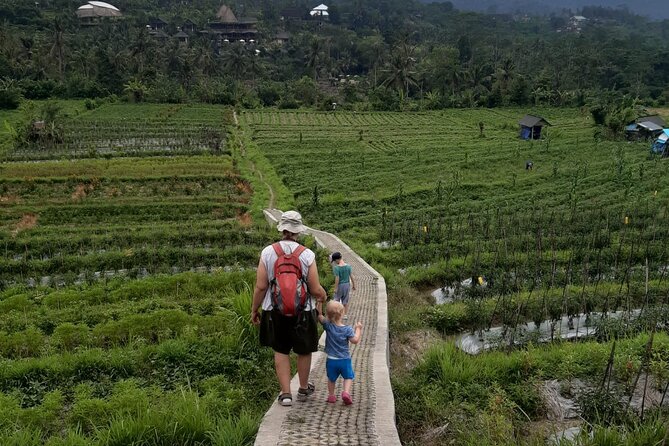
The heart of the outing is the walk through the Subak of Ogang. Subak is Bali’s traditional irrigation system, linking rice fields through shared water management. Here, the value of the walk is not only visual. You get a look at the system that makes rice cultivation possible and at the cooperation required to keep water moving between fields.
The route follows irrigation channels through the paddies. These channels help explain why the rice terraces are shaped as they are, and they make the walk feel connected to the work happening around you. Depending on the season, you might see farmers plowing, planting, or harvesting.
That seasonal point deserves attention. One disappointing experience came when most of the rice had already been harvested, leaving fewer green fields to see. If your main goal is the classic bright-green Sidemen view, ask about current field conditions before you commit. The walk can still offer village life, plants, temples, and irrigation details, but it may not look like the photographs you have in mind.
The guide’s role is particularly useful here. Wayan has been praised for explaining the rice cycle and for sharing information about regional fruit plants. Because he lives in a nearby village and his family farms rice, he can connect the visible work in the fields with practical local experience.
I would treat this as a cultural and nature walk, not simply a photography stop. The best moments may be small ones: a water channel turning between paddies, a farmer working a field, or a plant you would otherwise pass without noticing.
Crossing the wooden bridge
At one point, the route crosses a wooden bridge shared by villagers and motorbikes. This detail gives you a more honest picture of rural Bali. The bridge is not a staged attraction waiting for a photograph. It is part of the local route, and normal village traffic continues around you.
You should pay attention as you cross, especially if the surface is wet. One outing took place after rain, and the guide checked that the walkers had coats and were comfortable with getting muddy. Wayan also helped with tricky sections, which is useful on a route shaped by weather and farm conditions rather than polished for sightseeing.
Rain can change the character of the experience. Wet paths may be slippery or muddy, but the fields and plants can look fresh, and the air may feel cooler. Bring clothing you do not mind getting dirty and shoes suited to uneven outdoor walking. The supplied information confirms bottled water, but it does not list rain gear or special footwear, so you should prepare your own.
The bridge and irrigation paths also show why the one-hour estimate should be treated as approximate. The walking itself may be short, but stops for photographs, questions, farming explanations, and careful crossings can extend the morning. Some experiences described by participants lasted about two hours, and one continued to a waterfall. Confirm what your booking includes if timing matters.
Temples, plants, and village life along the route
The walk passes temples as well as rice fields. These stops help connect agriculture with local religious life, though the details of any temple visit are not specified. You should expect to see temples along the route rather than assume a formal ceremony or guided interior visit is included.
The route also brings you close to ordinary farm work. You may see plowing, planting, or harvesting, depending on the time of year. Those tasks are more informative than a simple terrace viewpoint because they show how the fields function from season to season.
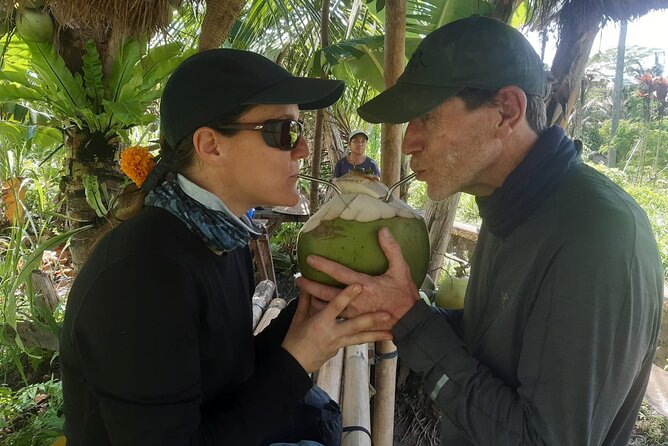
Plant life is another part of the walk. The guide can point out fruit plants from the region and explain features of the area that are easy to overlook. If you enjoy botany, food, or farming, this may be one of the most rewarding parts of the outing.
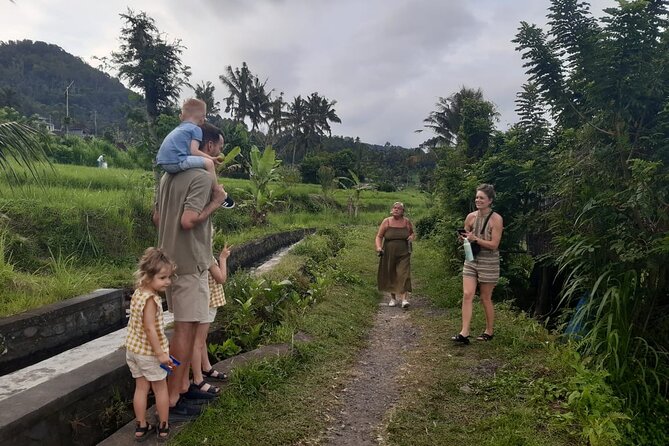
The walk is also suitable for many families. A parent traveling with a toddler found the guide kind and helpful, and appreciated being able to ask questions along the way. That does not mean the route is designed as a stroller path or that every section is effortless. It means the private format and local assistance can make the experience more adaptable than a fixed group tour.
More treks in Ubud:
- Mount Batur Sunrise Hike and Natural Hot Spring Option
★ 5.0 · 1,927 reviews - Mount Batur Sunrise Hike with Breakfast
★ 5.0 · 1,757 reviews - Mount Batur Sunrise Trekking Private All Inclusive
★ 5.0 · 906 reviews - Private Mount Batur Sunrise Trekking Tour
★ 5.0 · 634 reviews
The Mount Agung viewpoint
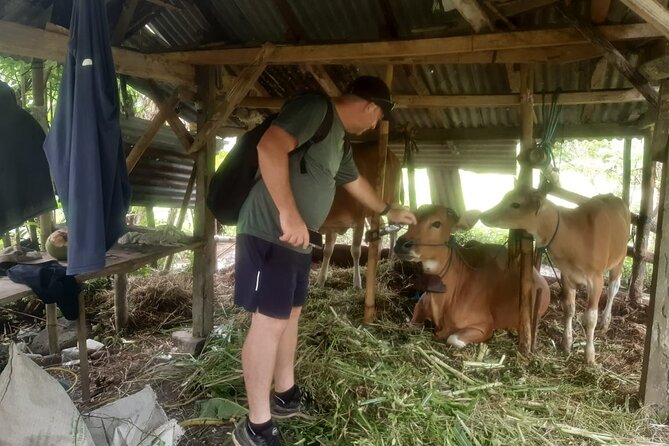
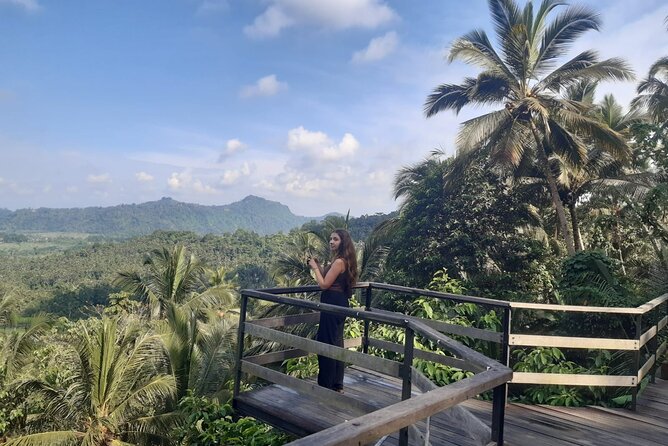
Mount Agung provides the grand visual target for the trek. From the rice terraces, you may get views toward the mountain rising beyond the fields. Weather, cloud cover, and the condition of the paddies will affect how dramatic the view appears.
The mountain is more than a background for photographs. It helps you understand the scale of Sidemen’s setting, with village agriculture spread below a major volcanic peak. The combination of mountain, irrigation channels, temples, and working fields gives the walk its sense of place.
Still, you should keep expectations sensible. This is not presented as a dedicated summit viewpoint or a long mountain hike. The Mount Agung views are part of a village and rice-field route. If clouds block the peak, the experience still has other elements, but the main panorama may be missing.
The early start gives you the best chance of comfortable walking and clearer morning conditions. It also fits the rhythm of agricultural work. I would not book this solely for a guaranteed mountain photograph, but I would choose it if you want a quiet route where the mountain is one part of a larger experience.
What the guide adds to the walk
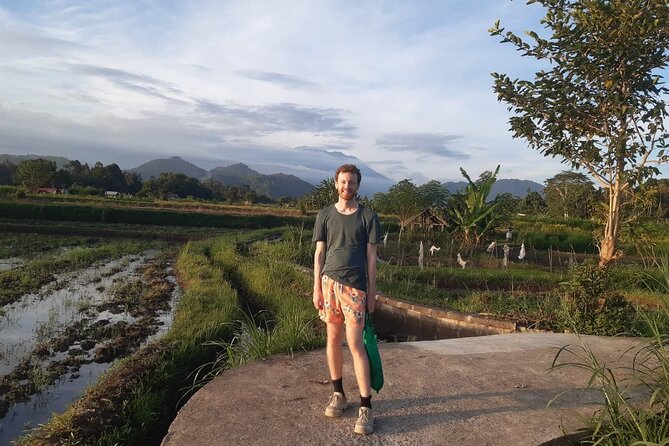
The strongest feature here is the guiding. Wayan receives repeated praise for being friendly, relaxed, and able to explain the area clearly. His local connection matters because the walk is built around details that are not always obvious from a map.
He can discuss the rice-growing process, the irrigation system, local plants, and Sidemen village life. He has also been described as fun and interesting to talk with, which can make a short walk feel more personal. One outing even continued to his family’s warung for a late lunch, though that meal should not be treated as a standard inclusion.
Another outing combined the rice fields and plantations with a waterfall. Again, that appears to be an added arrangement rather than part of the stated one-hour route. Ask in advance if you want more than the listed trek.
A good guide also helps with practical matters. After rain, Wayan checked clothing and comfort levels, then helped with difficult patches. That sort of attention can matter more than a rehearsed speech, particularly on a rural route where conditions change.
The guide cannot control the weather or guarantee green rice. What he can do is explain what you are seeing and help you get more from the setting than you would on your own.
Is $9.80 good value?
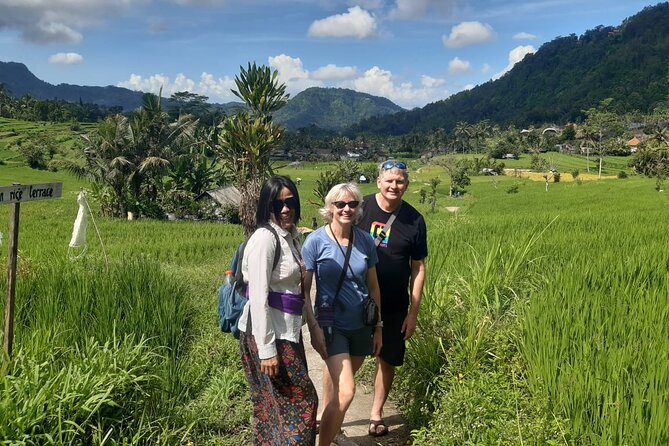
At about $9.80 per person, this is inexpensive for a private guided walk. The price includes bottled water and a trekking guide. Hotel pickup and drop-off are available as an optional service, which may add convenience but is not described as part of the basic price.
The value is strongest if you want interpretation and local context. You could walk near Sidemen independently, but you might not understand the Subak channels, the farming cycle, or the plants and village customs you pass. The guide turns a pleasant walk into a clearer lesson in how the area works.
The value is weaker if you expect a long trek, a guaranteed wall of green rice, or a full sightseeing day. The stated duration is approximately one hour. Some past outings ran longer, but one should not assume that a two-hour walk, waterfall, or family lunch is included.
Because the group is private, the low price is especially appealing for couples, families, or small groups who prefer not to follow strangers. Solo visitors should confirm whether the per-person price changes with group size, since only the listed per-person rate is provided.
Tips are not included. You can budget separately for a gratuity if the guide gives you a helpful morning, especially if he spends extra time answering questions or assisting on wet sections.
Timing, meeting point, and preparation
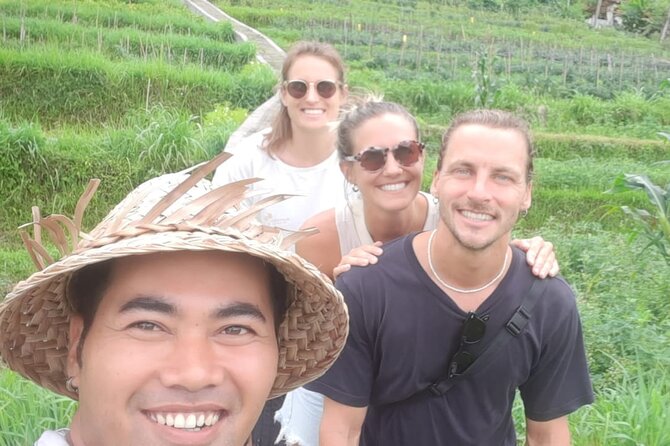
The official start time is 7:00 am, and the activity returns to the same meeting point. Hotel pickup and drop-off are optional, so confirm the arrangement carefully if you are staying away from central Sidemen or Ubud.
The meeting point is listed as Sidemen Rice Terrace, GCJP+77P, Jl. Sidemen-Sangkan Gn., Sangkan Gn., Kecamatan Sidemen, Kabupaten Karangasem, Bali 80864, Indonesia. Use the exact map location and allow time to find the starting place. The information says the area is near public transportation, but it does not specify a particular bus or shuttle service.
Wear practical outdoor clothing. Rain can make sections wet and muddy, and a wooden bridge and irrigation paths are part of the route. Bottled water is supplied, but you should bring any extra drink, sun protection, or rain protection you need.
The activity is described as suitable for most people. That is useful general guidance, not a promise that every path will be smooth. If you have concerns about walking on uneven or muddy ground, ask the provider about current conditions before booking.
Confirmation is received at the time of booking. The cancellation terms are simple: cancel at least 24 hours before the local start time for a full refund. Within 24 hours, the payment is not refunded, and changes made in that period are not accepted.
Who should book this Sidemen trek?
I would choose this for someone who wants a short, low-cost introduction to Sidemen with a local guide. It suits people interested in agriculture, village life, plants, temples, and the Subak irrigation system more than people seeking a strenuous hike.
Families may appreciate the private format and the guide’s patient approach. Couples and solo visitors can also benefit from being able to ask questions without a large group setting. Photographers should enjoy the mountain and rice-field views, but should check the harvest season first.
This is less suitable if you need a fixed, tightly timed one-hour activity. The walk may take longer once you add explanations, stops, wet conditions, or optional additions. It is also not the best choice if your only goal is a perfect green-terrace photograph.
The experience has a 4.6 rating from 12 reviews and a 92 percent recommendation rate. Those figures point to a strong overall reception, while the harvest-season complaint provides an important warning: Sidemen’s appearance changes with the farming calendar.
Should you book it?
Book this trek if you want to understand Sidemen rather than simply photograph it. The low price, private setting, local knowledge, and focus on working rice fields make it a good-value morning, especially with Wayan as your guide.
Before paying, confirm three things: the current condition of the rice fields, the exact walking duration, and whether pickup, a waterfall, or other extras cost more. If you accept that rural paths can be muddy and that harvested fields may look less green, this is a practical and personal way to meet Sidemen.
FAQ
Where does the Sidemen trek start?
It starts at Sidemen Rice Terrace, GCJP+77P, Jl. Sidemen-Sangkan Gn., Sangkan Gn., Sidemen, Karangasem, Bali 80864, Indonesia.
What time does the trek begin?
The stated start time is 7:00 am.
Where does the activity finish?
The activity ends back at the original meeting point.
How long does the trek last?
The listed duration is approximately one hour. Some outings described in the available information lasted about two hours, so confirm the expected duration when booking.
Is hotel pickup available?
Yes. Hotel pickup and drop-off are offered as an optional service.
Is this a private tour?
Yes. Only your group participates in the activity.
What is included?
The basic inclusions are bottled water and a trekking guide. Optional hotel pickup and drop-off may be available.
Are tips included?
No. Tips are not included.
Can most people participate?
The activity information says most people can participate. It does not provide more detailed route or mobility specifications.
Can I cancel for a full refund?
Yes. You must cancel at least 24 hours before the local start time for a full refund. Cancellations or changes made within 24 hours are not refunded or accepted.
Newest reviews from Ubud
- Explore Rice Fields and Hidden Villages with Ubud E-Bike Tour★ 5.0 · 7 reviews
- Monkey Forest Ubud Half day Tour★ 4.0 · 7 reviews
- Private Tour: Heaven Gate Temple, Tirta Gangga and Blue Lagoon Snorkeling★ 5.0 · 7 reviews
- Ubud Monkey Forest Rice Terrace Temple Waterfall Private Tour★ 5.0 · 7 reviews
- UBUD : Temple and Waterfall All Inclusive Day Tour★ 5.0 · 7 reviews
- Bali – Silver Jewelry Making Class★ 5.0 · 7 reviews
- One way fast Boat between Padangbai and Gili Islands or Lombok★ 5.0 · 7 reviews
- Bali ATV Quad Bike and White Water Rafting – All Inclusive★ 5.0 · 7 reviews
Rice Terrace Tours, compared.

Monkey Forest, Jungle Swing, Rice Terrace, and Water Temple
Read our review →Full-Day Tour to Water Temples and UNESCO Rice Terraces in Bali
Read our review →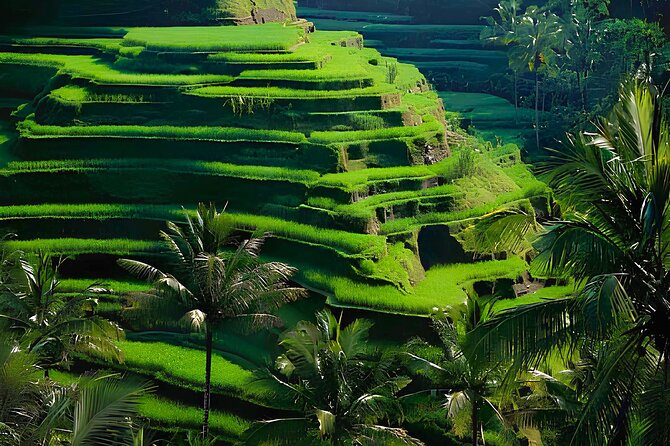
Monkey Forest, Water Temple, Rice Terrace, Waterfall
Read our review →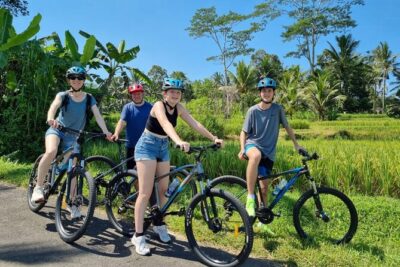
Downhill Cycling with Volcano, Rice Terraces and Meal
Read our review →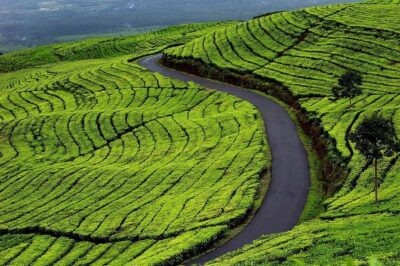
Active Volcano, Rice Field, Hot Spring, Fruit market, Tea Plantation with Lunch
Read our review →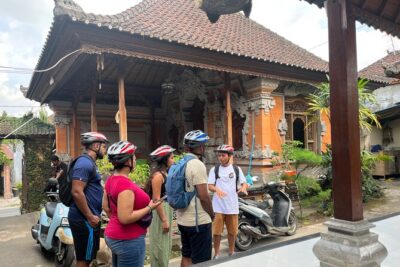
Ubud Top Attractions: Waterfalls, Temples and Rice Terraces
Read our review →Ubud Tour With Sacred Monkey Forest Sanctuary – Waterfall – Rice Terrace
Read our review →Browse the lists this tour appears in