Reviewed · UBUD TOURS
Traditional Balinese Meal in Ubud in Dewa’s Family Village Home
Some meals tell you more than monuments. This two-hour private experience takes you from your Ubud hotel to a traditional family compound, where you can see Balinese home life, learn about local plants, and eat a freshly prepared meal with dishes such as pepes ikan and bumbu kuning. I like the small private setting and the chance to see a real family compound rather than another restaurant dining room. I also like that the food may include ingredients grown at home, from herbs and spices to vegetables.
The main point to understand is that this is not a standard cooking class or a communal dinner. Your hosts, Dewa and his wife Jero, traditionally eat separately from visitors and focus on personal meditation during their own meal. That custom may feel unusual if you expect a long shared conversation at the table, so you should book this for the food, home visit, and cultural setting first.
In This Review
- Key points to know before booking
- From your Ubud hotel to Keliki village
- Entering a traditional Balinese family compound
- Herbs, spices, and a farm-to-table look at Balinese food
- What may appear on the Balinese dinner plate
- The unusual dining custom you need to understand
- A cooking lesson, or simply a home meal?
- How much value do you get for $56?
- Who will enjoy this experience most?
- Practical details for a smoother visit
- Should you book Dewa and Jero’s home meal?
- FAQ
- Where does the experience take place?
- Is hotel pickup included?
- How long does the experience last?
- What food might be served?
- Is a vegetarian meal available?
- Do the hosts eat with visitors?
Key points to know before booking
- A real family compound north of Ubud: You visit an enclosed Balinese home with open pavilions, a central courtyard, family shrines, gardens, and extended-family spaces.
- Fresh ingredients have a story: You may see galangal, cloves, cacao, nutmeg, fruits, herbs, and vegetables near the home, with explanations of their cooking and medicinal uses.
- Dewa and Jero host the meal: Another family member, including Putu, may host alongside Dewa’s family, depending on availability.
- The food is traditional home cooking: Possible dishes include grilled tuna wrapped in banana leaves, turmeric and coconut chicken, corn fritters, and vegetables with grated coconut.
- Hotel pickup is limited to Ubud: If you stay outside Ubud, you must meet at Alam Sari Resort near Keliki.
- This suits curious eaters and culture-minded visitors: It is less suited to anyone who wants a restaurant-style evening with the hosts eating beside them.
From your Ubud hotel to Keliki village
The experience begins with pickup from a hotel in Ubud. That is useful because the family home is in Keliki, in the foothills north of Ubud, rather than in the central restaurant area. Your return transfer to an Ubud hotel is included as well.
If your accommodation is outside the Ubud pickup area, you need to make your own way to Alam Sari Resort on Jl. Raya Keliki. Contact the provider ahead of time to confirm that your hotel is on the pickup list. This small check matters, since the price does not include transport outside the Ubud region.
The meeting information also gives Rumah Makan Jero Nini in Keliki as the start and end point. Because the pickup details and meeting point serve different situations, confirm the exact arrangement after booking. You will receive confirmation within 48 hours, subject to availability.
The ride itself is part of the change in mood. Ubud’s center is busy with shops, cafés, and traffic. Keliki offers a quieter village setting, with homes and family compounds spread through the terraced foothills. You are not simply being taken to a restaurant with Balinese decorations. You are going to a family home where several generations may share the compound.
A few more tours worth putting side by side
- All-Inclusive Ubud Private Tour
★ 5.0 · 14,344 reviews - Best of Ubud Full-Day Tour with Jungle Swing
★ 5.0 · 8,571 reviews - Ubud: Monkey Forest, Jungle Swing, Rice Terrace, and Water Temple
★ 5.0 · 7,160 reviews
Entering a traditional Balinese family compound
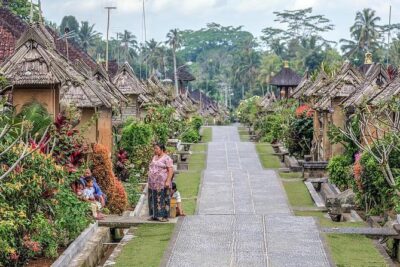
A Balinese family compound is organized around more than one building. Open pavilions face a central courtyard, and the walls create a clear boundary between the home and the road. Here, you get a tour of the family compound and a look at how living spaces, courtyards, gardens, and spiritual areas fit together.
This is one of the strongest parts of the experience. You can see how a private home differs from the polished versions of Balinese architecture found in hotels. The visit gives practical meaning to the family temples and courtyards you may have noticed throughout Bali.
Dewa’s home belongs to an extended family setting, so you should expect a lived-in family space rather than a staged attraction. That can mean the visit feels personal and informal. It also means the pace and conversation may depend on which family members are present and how communication unfolds that day.
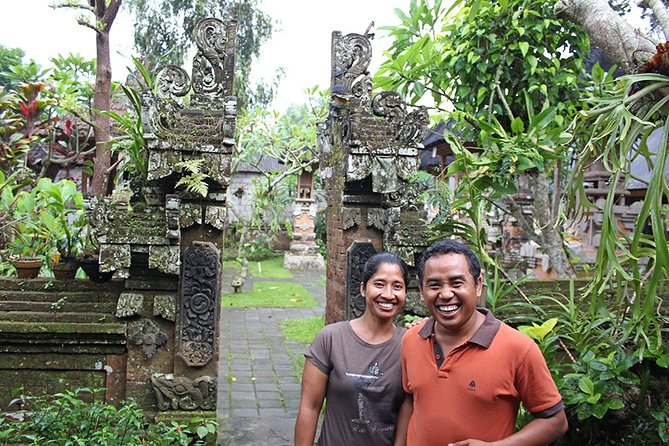
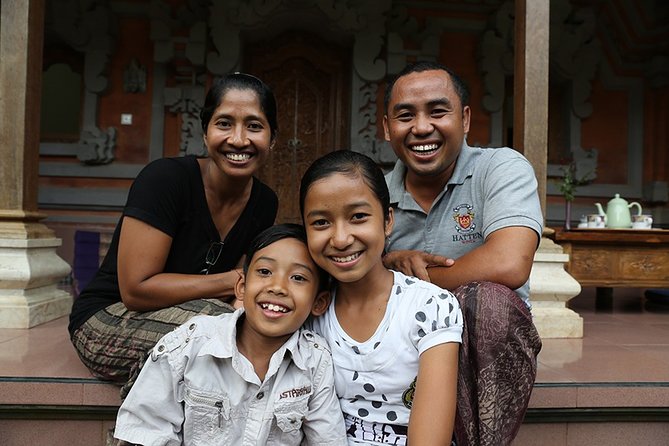
The hosts are Dewa and Jero, though an equally welcoming family member may host with them. Several experiences have been led by Putu, who is described as patient, sincere, and an excellent teacher. If you are hoping specifically to meet Dewa, Jero, or Putu, ask the provider who is scheduled before you go.
Herbs, spices, and a farm-to-table look at Balinese food
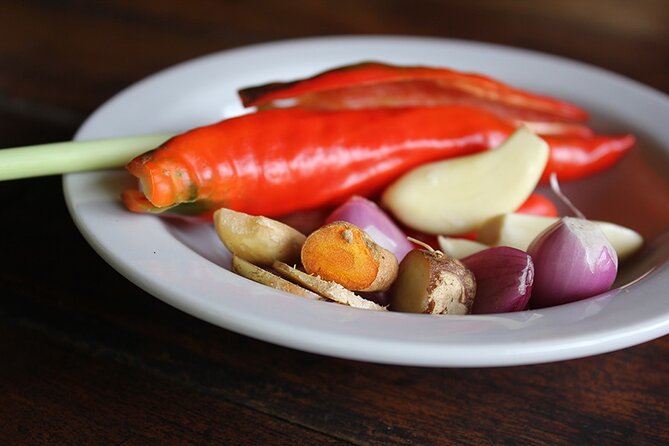
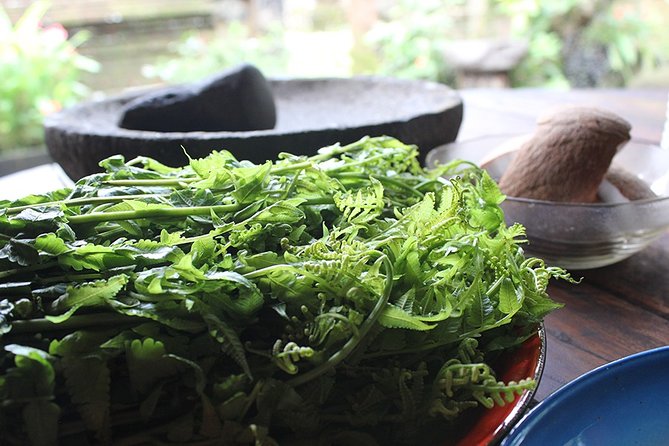
Near the home, you learn about local plants and ingredients. The examples include galangal, cloves, cacao, and nutmeg, along with Balinese fruits, herbs, and spices. The explanations cover not only how these ingredients are used in food, but also their medicinal properties.
I find this useful because it connects the meal to the garden. Instead of treating Balinese cuisine as a list of unfamiliar names, you begin to see the ingredients in their natural setting. Fresh turmeric, coconut, seasonal vegetables, banana leaves, and local spices are not abstract items from a menu. They are part of the home and its daily food traditions.
Several hosts also take time to explain what grows around the house and how the family uses it. Some ingredients may be homegrown, and one account describes the food as truly farm to table, including chicken raised by the family. Since the exact menu changes, do not expect every meal to contain each ingredient or dish described below. The value is in seeing how the food is tied to the household.
A short walk of about 10 minutes takes you to the host’s home for the compound tour and meal. Wear comfortable shoes and bring a little patience. This is a village visit with walking, not a door-to-table restaurant transfer.
What may appear on the Balinese dinner plate
The meal may include several small dishes that show different cooking methods and flavors.
Pepes ikan is tuna grilled in banana leaves. The wrapping helps hold in the aroma and moisture, and the dish offers a good example of how Balinese cooks use leaves as part of food preparation, not just decoration.
Bumbu kuning is chicken cooked with a fresh turmeric and coconut milk sauce. Turmeric gives the dish its yellow color, while coconut milk softens the spice and adds body. This is the sort of dish that can make a home meal feel very different from a generic Indonesian restaurant lunch.
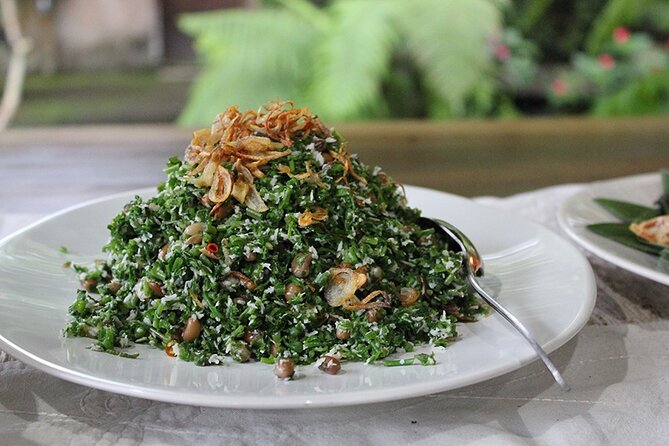
Bregedel are corn fritters, adding a crisp and slightly sweet contrast to the sauced dishes. Jukut urab combines seasonal vegetables with grated coconut and fried shallots. Together, these dishes offer fish, chicken, vegetables, coconut, herbs, and fried elements in one meal.
Beverages are included, as are gratuities. A vegetarian meal is available if you request it when booking. Do not wait until pickup to mention dietary needs. The menu is built around what the household prepares, so advance notice is the practical way to make sure the meal suits you.
A completely different kind of day out on the same trip:
- Best of Ubud 1-Day Private Tour
★ 5.0 · 4,451 reviews - Bali: Ubud Palace Legong Dance Show Ticket
★ 4.4 · 3,979 reviews - Uluwatu Sunset, Kecak Dance, and Dinner Jimbaran Beach
★ 5.0 · 3,681 reviews - Tanah Lot and North Bali Tour: Scenic Journey
★ 5.0 · 3,620 reviews
The unusual dining custom you need to understand
The hosts do not share the meal at the dining table. In keeping with their Balinese family tradition and spiritual practice, they prefer to eat separately and focus on personal meditation to reach a positive state of mind.
This detail changes the feel of the experience. You may still have conversation during the home tour and food preparation, and the family can explain the dishes and household traditions. But you should not assume that dinner means sitting for a long meal with Dewa and Jero beside you.
Some people will appreciate the quiet and the chance to focus on the food. Others may feel disappointed if they expect a classic shared family dinner. I would treat the meal as a respectful look into a household custom, not as a performance arranged around constant conversation.
If you are comfortable with that distinction, the setting becomes more interesting. You are not asking the hosts to copy your idea of hospitality. You are being welcomed into a home while allowing the family to keep its own way of eating.
A cooking lesson, or simply a home meal?
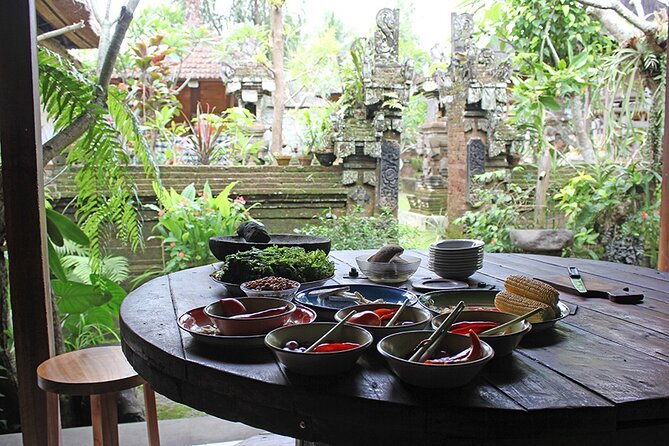
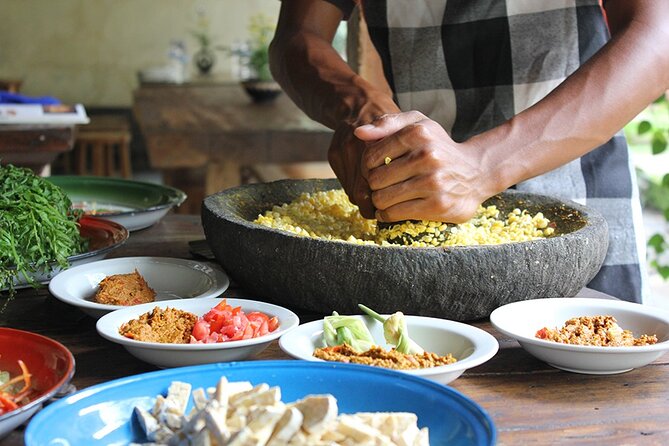
The central description promises a home-cooked meal and a look at family life. In practice, the experience can include a good deal of cooking instruction, especially when Putu hosts. She has guided visitors through traditional recipes, explained the steps carefully, and shown them around the home and garden.
You should think of the cooking element as dependent on the host and the day. This is not presented as a fixed, formal cooking school with a guaranteed recipe list and a set number of hands-on stations. You may learn how ingredients are used, see food being prepared, and leave with family recipes.
That flexible format is part of the charm, but it also calls for realistic expectations. If you want a structured class where you prepare every course yourself, ask what the current host plans to offer. If you want to understand how Balinese food is made in a household setting, the less formal format may suit you better.
Putu’s teaching style has earned especially strong praise. She is described as friendly, patient, and willing to explain each step. She has also taken visitors through a village market before the home visit on some occasions. Market visits are not clearly guaranteed in the stated itinerary, so ask before booking if that is important to you.
How much value do you get for $56?
At $56 per person, this costs more than an ordinary meal in Ubud. You are not paying only for the food. The price covers a private experience for your group, Ubud hotel pickup and drop-off, the compound visit, the garden and ingredient explanations, beverages, gratuities, and the in-home meal.
The private format is especially useful if you want to ask questions without keeping up with a large group. It can also make the cultural visit feel more natural. You have room to move at your own pace, listen carefully, and discuss food or family life with the host.
The value is weaker if you judge it purely by the amount of food or by the number of formal cooking techniques taught. You could eat more cheaply elsewhere. You could also find a cooking class with a clearer lesson plan. This experience earns its price through access to a private home and the chance to see how food, family, plants, and spiritual customs meet in one place.
The rating is 4.8 from 19 reviews, with 95 percent recommending it. That is a small sample, so I would not treat the number as a guarantee. Still, the strongest praise is consistent: kind hosts, excellent home cooking, a welcoming compound, patient instruction, and a meaningful look at Balinese life.
Who will enjoy this experience most?
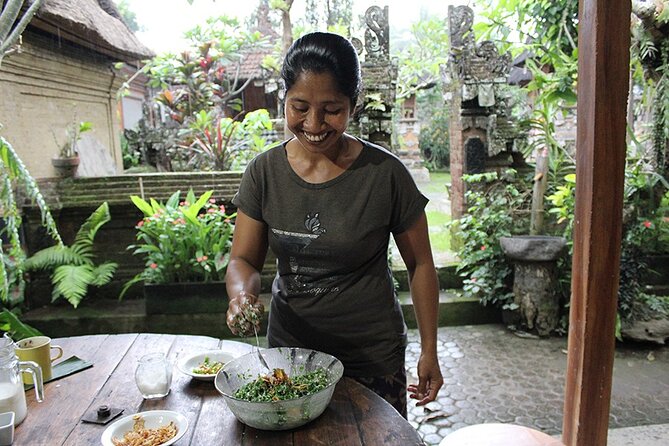
I would recommend it to you if you enjoy food with a personal story. It is a good fit for couples, families, and small private groups who want more than a restaurant meal and who are willing to follow local customs.
It also suits people who are curious about Balinese architecture, family life, garden ingredients, and spirituality. You do not need to be an experienced cook. The home visit and explanations are valuable even if you never pick up a knife.
Vegetarians can request a suitable meal in advance. Most people can participate, and service animals are allowed. The activity is near public transportation, though hotel pickup remains the easier option if you are staying in Ubud.
I would hesitate to recommend it if you want a lively dinner with the hosts eating and chatting at the same table. I would also ask more questions before booking if you need a strictly timed schedule or a guaranteed cooking curriculum.
Practical details for a smoother visit
The experience lasts about two hours, so it fits well into an evening without taking over your entire day. The private format means only your group participates, which is helpful if your companions have different food preferences or want to ask many questions.
Book ahead if your Ubud schedule is tight. It is booked an average of 18 days in advance, and confirmation depends on availability. You can cancel for a full refund up to 24 hours before the local start time. Cancellations or changes made inside that 24-hour window are not refunded or accepted.
Bring an appetite, comfortable footwear, and a respectful attitude toward the family compound. If you need vegetarian food, state that at booking. If you are staying outside Ubud, confirm the Alam Sari Resort meeting arrangement and plan your own transport.
Should you book Dewa and Jero’s home meal?
Book it if you want a private look at Balinese family life, not just another meal in Ubud. The compound, garden ingredients, family recipes, and dishes such as pepes ikan and bumbu kuning give the evening a clear sense of place.
Skip it if your priority is a long shared dinner with the hosts or a formal cooking class with every step guaranteed. For everyone else, $56 is a fair price for transport, food, instruction, and access to a home setting that most restaurant visits cannot provide. Go with an open mind, ask about the host and menu in advance, and let the family’s own customs shape the evening.
FAQ
Where does the experience take place?
It takes place at a traditional Balinese family compound in Keliki, in the terraced foothills north of Ubud. The listed meeting point is Rumah Makan Jero Nini in Keliki.
Is hotel pickup included?
Pickup and drop-off are included for hotels in Ubud only. If you stay outside the Ubud region, transport is not included and you should meet Dewa at Alam Sari Resort near his house.
How long does the experience last?
The experience lasts approximately two hours.
What food might be served?
Possible dishes include pepes ikan, bumbu kuning, bregedel, and jukut urab. The exact menu can vary.
Is a vegetarian meal available?
Yes. A vegetarian option is available, but you should request it at the time of booking.
Do the hosts eat with visitors?
No. Following their family tradition and spiritual practice, the hosts do not share the meal at the dining table and prefer to eat separately while focusing on personal meditation.
Newest reviews from Ubud
- Explore Rice Fields and Hidden Villages with Ubud E-Bike Tour★ 5.0 · 7 reviews
- Monkey Forest Ubud Half day Tour★ 4.0 · 7 reviews
- Private Tour: Heaven Gate Temple, Tirta Gangga and Blue Lagoon Snorkeling★ 5.0 · 7 reviews
- Ubud Monkey Forest Rice Terrace Temple Waterfall Private Tour★ 5.0 · 7 reviews
- UBUD : Temple and Waterfall All Inclusive Day Tour★ 5.0 · 7 reviews
- Bali – Silver Jewelry Making Class★ 5.0 · 7 reviews
- One way fast Boat between Padangbai and Gili Islands or Lombok★ 5.0 · 7 reviews
- Bali ATV Quad Bike and White Water Rafting – All Inclusive★ 5.0 · 7 reviews
Ubud Tours, compared.



Monkey Forest, Jungle Swing, Rice Terrace, and Water Temple
Read our review →


Uluwatu Sunset, Kecak Dance, and Dinner Jimbaran Beach
Read our review →
Tanah Lot and North Bali Tour: Scenic Journey
Read our review →