Reviewed · UBUD TOURS
Transforming Plastic Waste A Hands On Recycling Experience
Waste can become a creative lesson. In Ubud, this 90-minute visit to the r•Plastic studio gives you a close look at how discarded bottle caps and other plastic are sorted, processed, and turned into useful products. You will not simply watch a presentation. You will sort plastic, make a small artwork, and see a CNC machine cut recycled material into items such as surfboard racks and furniture.
I especially like the hands-on format, which makes a complicated subject easier to grasp, and the chance to hear directly from Martijn Huizing, the studio’s founder, about Bali’s waste problems and small-scale recycling. The handmade recycled-plastic keychain is another nice touch. It is useful, light to pack, and tied to what you did rather than being a random souvenir.
The main consideration is the narrow focus. This is not a general Ubud sightseeing trip, and there is no meal, hotel pickup, or larger cultural program included. If you want temples, rice fields, or cooking, choose another activity. If you want a practical look at sustainability, this offers unusually good value for $15.06.
In This Review
- Key points at a glance
- Entering the r•Plastic Studio near Ubud
- Starting with Bali’s plastic problem
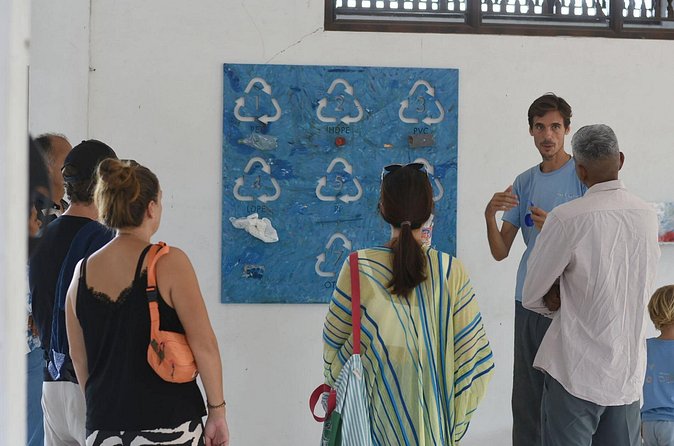
- Sorting bottle caps by color and type
- Creating artwork from recycled plastic
- Watching the machines turn waste into products
- The conversation with Martijn Huizing
- Finishing with a recycled-plastic keychain
- Is $15.06 good value?
- Who should book this experience?
- Should you book r•Plastic?
- FAQ
- Where does the recycling experience take place?
- How long does the activity last?
- Does the activity include transportation?
- Is food provided?
- What will I do during the workshop?
- How many people can join the activity?
- Can I cancel for a full refund?
Key points at a glance
- Sort real bottle caps by type and color: You take part in the first basic step of recycling rather than only hearing about it.
- See self-built recycling machines in action: The studio shows how plastic can be processed on a small, decentralized scale.
- Watch a CNC machine create useful products: Recycled plastic becomes items such as surfboard racks and furniture.
- Make your own recycled artwork: The creative activity works well for families, school-age children, and curious adults.
- Learn about Bali’s waste challenge from Martijn Huizing: The discussion connects local problems with wider questions about materials and consumption.
- Take home a recycled-plastic keychain: It gives the short visit a practical reminder you can use after leaving Bali.
Entering the r•Plastic Studio near Ubud
The meeting point is at F73J+CFR, Jl. Ir. Sutami, Kemenuh, in Sukawati, Gianyar. This puts the activity outside central Ubud, so you will need to plan your own way there. Parking is available, which helps if you are using a hired car or other private transport.
The activity begins and ends at the same studio. That simple arrangement matters in Bali, where a short visit can become awkward if the departure point differs from the arrival point. You can arrive, take part, and leave without arranging a second pickup location.
The studio itself is the attraction. Rather than entering a polished museum or a large industrial plant, you see a working space built around practical recycling and product design. The setting gives the visit a direct, hands-on feel. You can look at the materials, watch the equipment, and understand how a small operation tackles a large problem.
The booking comes with a mobile ticket, and confirmation is sent at the time of booking. The group can reach a maximum of 20 people. That is small enough for an activity involving sorting and making, though the exact feel will depend on how many people are booked for your time.
A few more tours worth putting side by side
- All-Inclusive Ubud Private Tour
★ 5.0 · 14,344 reviews - Best of Ubud Full-Day Tour with Jungle Swing
★ 5.0 · 8,571 reviews - Ubud: Monkey Forest, Jungle Swing, Rice Terrace, and Water Temple
★ 5.0 · 7,160 reviews
Starting with Bali’s plastic problem
The opening talk explains the studio’s purpose and Martijn Huizing’s path into sustainability and product design. You get context before handling the materials, which keeps the practical activities from feeling like a craft project with no larger point.
Bali’s waste challenge is not treated as a distant environmental issue. The discussion connects daily plastic use with the limits of collection, sorting, and processing. You learn why recycling depends on more than placing an item in a bin. Different plastics have different properties, and those differences affect what can be done with them.
This introduction is one of the strongest parts for anyone who wants more than a quick photo opportunity. The subject can be complex, but the format is designed to make it approachable. The studio’s aim is to send you home smarter than you arrived, with a clearer idea of how materials move from waste to a possible new product.
The subject also has a useful dose of realism. Recycling is presented as one possible response to plastic waste, not a magic fix for every environmental problem. That balanced approach gives the visit more value. You can appreciate the creativity while still seeing that collection systems, material types, processing, and economics all matter.
Sorting bottle caps by color and type
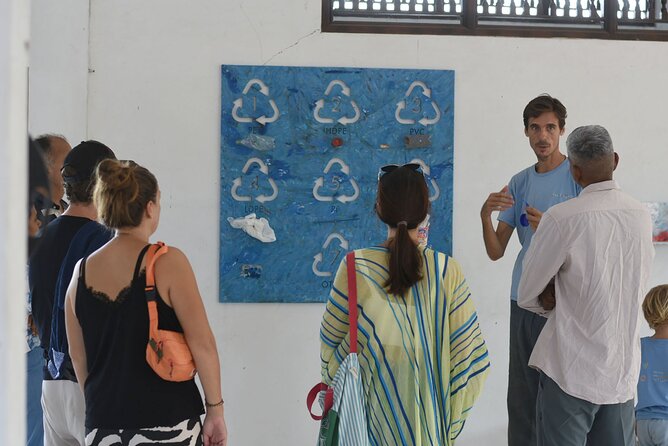
The first practical activity asks you to sort plastic bottle caps by color and type. It sounds simple, but it shows why recycling begins with careful separation. The material is not all the same, and a useful end product depends on putting suitable pieces together.
This is a good activity for children because the instructions are clear and visual. It also gives adults something concrete to do while the guide explains the different types of plastic. School groups have used the workshop to learn about the seven types of plastic, and the activity has worked especially well for primary-age children.
For families, this is the point where younger children are likely to become fully involved. They are not asked to sit still through a long technical lecture. They can handle the materials, compare colors, and see why the sorting step matters.
There is a practical limitation. Sorting plastic by hand is not fast or glamorous. If you expect dramatic machinery from the first minute, this stage may feel modest. I think that is part of its value. It shows the patient, repetitive work that often disappears from the final product.
Creating artwork from recycled plastic
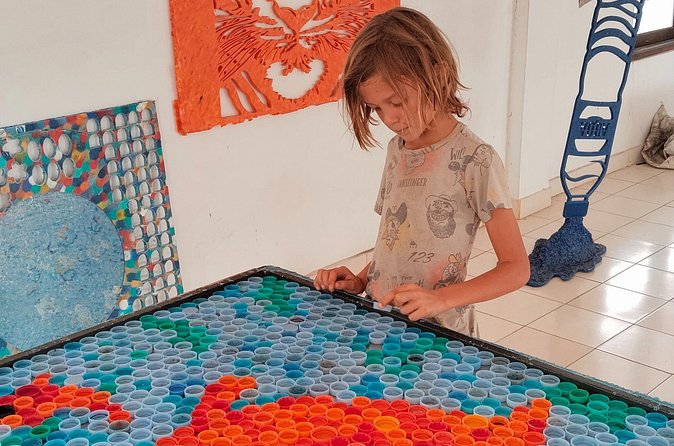
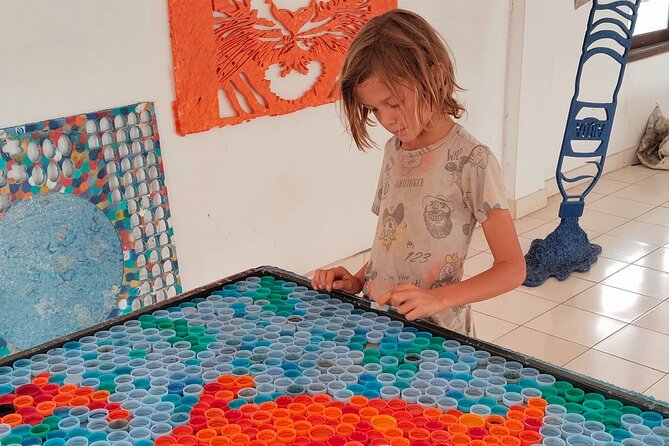
After sorting, you get to make your own artwork from recycled material. This turns the idea of reuse into something personal. Instead of only looking at finished chairs or racks, you make a small object and begin to understand the design decisions involved.
The activity is creative without requiring you to be an artist. The emphasis is on using discarded material in a new way, not producing a perfect souvenir. That makes it suitable for mixed-age groups and families with different levels of confidence.
The studio has also helped visitors turn their own designs into products, showing that recycled plastic can be used for more than one fixed model. The work connects material recovery with product design, which is a useful lesson for anyone interested in making, architecture, education, or sustainability.
I would keep your expectations sensible. You are taking part in a short workshop, not completing a full furniture-making course. The attraction is the process and the change in your attitude toward waste. A bottle cap can look like rubbish at the start and a useful design element by the end.
A completely different kind of day out on the same trip:
- Best of Ubud 1-Day Private Tour
★ 5.0 · 4,451 reviews - Bali: Ubud Palace Legong Dance Show Ticket
★ 4.4 · 3,979 reviews - Uluwatu Sunset, Kecak Dance, and Dinner Jimbaran Beach
★ 5.0 · 3,681 reviews - Tanah Lot and North Bali Tour: Scenic Journey
★ 5.0 · 3,620 reviews
Watching the machines turn waste into products
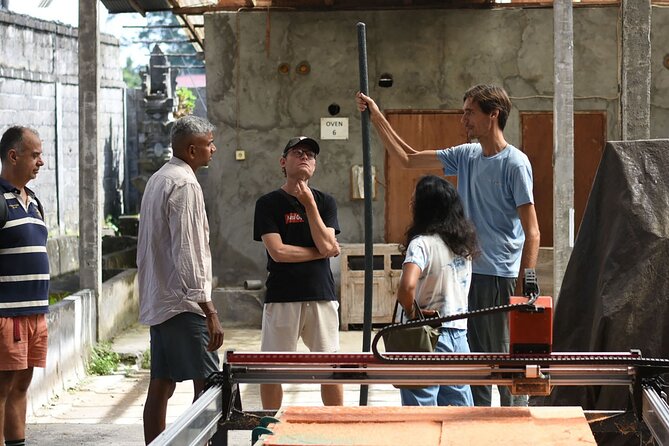
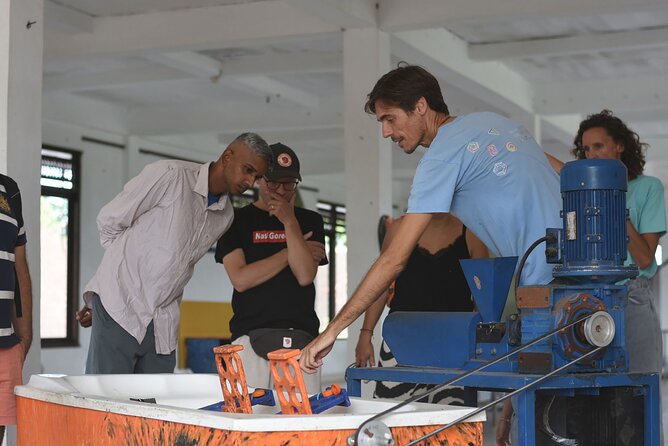
The machine demonstrations provide the most visual part of the visit. You see self-built equipment used to recycle plastic, followed by a demonstration of the CNC machine. CNC technology allows the studio to cut recycled plastic into planned shapes and components.
The examples include surfboard racks and furniture. Those products help explain why the work matters. The goal is not just to melt plastic into an object that will soon be thrown away again. The studio is exploring ways to create items with a practical purpose and a longer life.
The CNC demonstration also shows the link between recycling and manufacturing. Sorting and processing are only part of the job. A material must be shaped, designed, and made into something people actually want to use. This is where the studio’s product-design focus becomes clear.
The machinery may appeal most to adults and older children, especially anyone interested in engineering or design. Younger children can still enjoy seeing the plastic change form, but the technical explanation may be more than they need. The hands-on sorting and artwork will probably be the better parts for them.
Do not expect a large factory tour. This is a small studio using its own equipment, and that is precisely what makes the demonstration useful. You see a local, decentralized approach rather than a distant industrial process hidden behind walls.
The conversation with Martijn Huizing
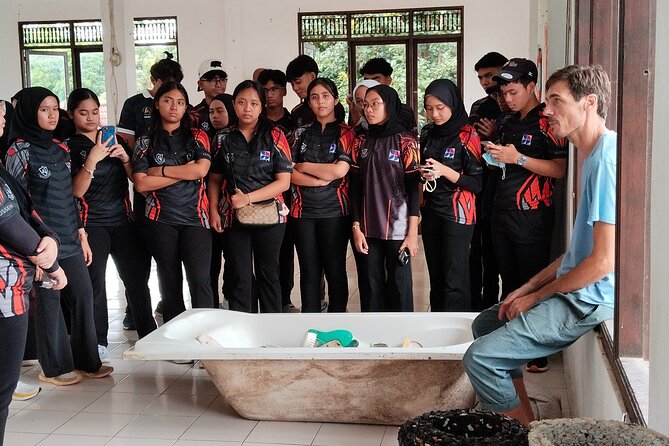
Martijn Huizing’s enthusiasm is central to the visit. His explanation covers plastic types, the practical problems of waste, and the reasons recycling needs thoughtful design. The best part of a small workshop is the chance to ask questions, and the schedule includes time for this.
You can ask about how plastic is sorted, why some materials are harder to reuse, and how recycled products are made. The exact discussion will depend on the group, but the format leaves room for conversation rather than forcing every minute into a fixed script.
This is also where the activity becomes more than a craft session. You are encouraged to think about the wider system: what happens after you throw something away, how materials are collected, and why local solutions can be useful. The message is practical rather than moralizing.
The studio has welcomed school groups from Green School Bali and Taman Rama Intercultural School, including children around seven and eight years old. That background suggests the teaching style is comfortable with younger audiences. Families should still be ready to help children listen during the introductory parts.
Finishing with a recycled-plastic keychain
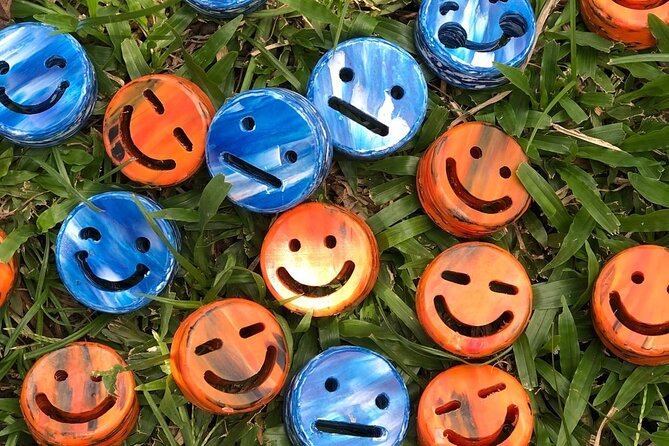
The visit ends back at the studio with a question-and-answer period and a handmade keychain made from Bali’s recycled plastic. It is a small souvenir, but it is better connected to the activity than many standard tourist purchases.
The keychain gives you a physical reminder of the process. You sorted material, saw machines working, and then left with an example of plastic given another use. It also takes up almost no space in your luggage.
If you are visiting with children, the souvenir can help keep the lesson going after the activity ends. You can use it to talk about sorting, reuse, and why products should be made to last. For adults, it is a modest but meaningful memento of a part of Bali that most sightseeing programs do not show.
Water is available for refilling your own bottle. No single-use water bottles are provided, which fits the studio’s purpose. Bring a refillable bottle if you need water during the 90-minute visit. Food and drinks are not available, so eat before or after if your schedule requires a meal.
Is $15.06 good value?
At $15.06 per person, this is inexpensive for a guided activity that includes a studio visit, machine demonstrations, hands-on work, discussion, and a souvenir. The price is especially fair if you value learning and participation more than a long list of included extras.
You are not paying for transport, lunch, or a full-day itinerary. The cost covers a focused 90-minute session at the recycling studio. That makes it easy to add to a day around Ubud, but you should account for the journey to Kemenuh and back.
I see the value in the access. You get to see a working sustainability project, handle the raw material, and watch recycled plastic become a designed product. A conventional sightseeing stop may give you a photograph; this gives you a better understanding of one issue affecting Bali.
The experience is often booked around 23 days ahead. That does not guarantee every date will sell out, but it is a useful sign that planning early makes sense, especially if you are visiting with a family or school group.
Who should book this experience?
I would recommend it most strongly to families, school-age children, design students, makers, and anyone curious about practical sustainability. The sorting and artwork give children an active role, while the machine demonstrations and discussion give adults plenty to think about.
It also suits repeat visitors to Bali who want something beyond temples, waterfalls, and markets. You see a working local project and gain a more grounded understanding of an issue that affects the island.
The activity may not suit you if you want a scenic tour, a relaxed meal, or a full-day cultural program. It is also not a substitute for an organized Ubud tour, since you arrange your own transport and spend the entire time on recycling.
Most people can participate, and service animals are allowed. The group maximum is 20 people. Since the activity requires good weather and a minimum number of participants, a cancellation is possible in those cases. You would then be offered another date or experience, or a full refund.
Free cancellation is available up to 24 hours before the start time. Cancel later than that and the payment is not refunded, so leave some room in your schedule if your Bali plans are still shifting.
Should you book r•Plastic?
Book it if you want a short, useful activity that lets you take part rather than stand around taking photographs. The best reasons are the direct teaching, the clear sorting exercise, the CNC machine demonstration, and Martijn Huizing’s passionate explanations.
I would especially choose it for a family day or as an educational stop between other Ubud activities. The $15.06 price is modest, the keychain adds a personal finish, and the studio offers a side of Bali that standard sightseeing rarely covers.
Skip it if you need hotel pickup, food, or a broader tour of Ubud. For everyone else, r•Plastic is a smart way to spend 90 minutes, with a practical lesson that stays with you after the keychain goes into your pocket.
FAQ
Where does the recycling experience take place?
It takes place at the r•Plastic studio at F73J+CFR, Jl. Ir. Sutami, Kemenuh, Kecamatan Sukawati, Kabupaten Gianyar, Bali 80582, Indonesia.
How long does the activity last?
The experience lasts approximately 1 hour and 30 minutes.
Does the activity include transportation?
No transportation is listed. You meet at the studio and the activity ends at the same meeting point. Parking is available.
Is food provided?
No. Lunch, food, and drinks are not included or available at the studio. You can refill your own water bottle for free.
What will I do during the workshop?
You will learn about Bali’s plastic waste challenges, sort bottle caps by color and type, create artwork from recycled plastic, watch recycling machines and a CNC machine in action, and take part in a question-and-answer session.
How many people can join the activity?
The maximum group size is 20 people.
Can I cancel for a full refund?
Yes. You can cancel at least 24 hours before the experience start time for a full refund. Cancellations or changes made less than 24 hours before the start time are not accepted for a refund. If poor weather or an insufficient minimum number of participants causes the activity to be canceled, you will be offered another date or experience, or a full refund.
Newest reviews from Ubud
- Explore Rice Fields and Hidden Villages with Ubud E-Bike Tour★ 5.0 · 7 reviews
- Private Tour: Heaven Gate Temple, Tirta Gangga and Blue Lagoon Snorkeling★ 5.0 · 7 reviews
- Monkey Forest Ubud Half day Tour★ 4.0 · 7 reviews
- Ubud Monkey Forest Rice Terrace Temple Waterfall Private Tour★ 5.0 · 7 reviews
- UBUD : Temple and Waterfall All Inclusive Day Tour★ 5.0 · 7 reviews
- Bali – Silver Jewelry Making Class★ 5.0 · 7 reviews
- One way fast Boat between Padangbai and Gili Islands or Lombok★ 5.0 · 7 reviews
- Bali ATV Quad Bike and White Water Rafting – All Inclusive★ 5.0 · 7 reviews
Ubud Tours, compared.



Monkey Forest, Jungle Swing, Rice Terrace, and Water Temple
Read our review →


Uluwatu Sunset, Kecak Dance, and Dinner Jimbaran Beach
Read our review →
Tanah Lot and North Bali Tour: Scenic Journey
Read our review →