
Reviewed · RICE TERRACE TOURS
Jatiluwih Batukaru Mountain Nature’s Best Tour
Trade beaches for rice terraces. This tour takes you into Bali’s farming country, where curved paddies, forest roads, village life, and the sacred Pura Luhur Batukaru Temple replace beach clubs and city traffic. I like the peaceful temple setting and the chance to see how Bali’s food, flowers, spices, and income come from carefully worked volcanic soil. The friendly guides, including Darta, Rody, Arya, and Radiawan, have helped make the day especially personal and informative.
I also like the hotel pickup, air-conditioned vehicle, included entrance fees, and small-group format. You can relax while someone else handles Bali’s winding roads. The main caution is time: the tour can run longer than eight hours, much of the day is spent driving, and some departures add craft shops or plantation stops that can feel like shopping detours rather than part of the advertised visit.
In This Review
- The Details That Matter Most
- Leaving Bali’s Towns Behind
- Mount Batukaru’s Farming Country
- Jatiluwih Rice Terraces: The Day’s Big View
- Pura Luhur Batukaru in the Forest
- Craft Shops, Coffee, and the Value Question
- Guides Make the Difference
- Who Will Enjoy This Eight-Hour Excursion?
- Practical Details Before You Book
- Should You Book Jatiluwih and Batukaru?
- FAQ
- Where does the tour take place?
- What time does the tour start?
- How long does the experience last?
- Is hotel pickup included?
- What is the maximum group size?
- Is transportation included?
- Is a guide included?
- Are entrance fees included?
- Are meals and drinks included?
- Can most people participate?
- Can I cancel for a full refund?
The Details That Matter Most
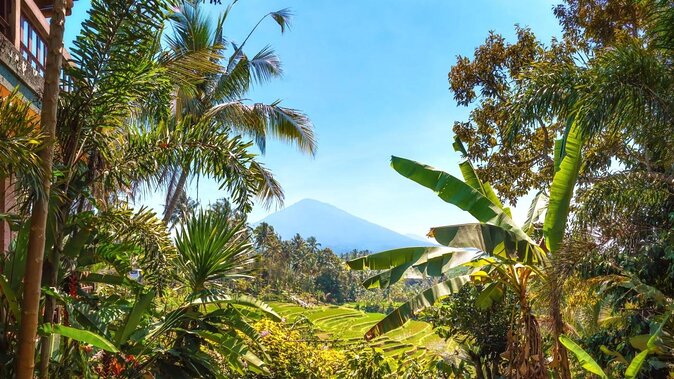
- Jatiluwih’s sweeping rice terraces: See one of Bali’s most memorable farming areas and learn how terrace cultivation supports local families.
- Pura Luhur Batukaru in the forest: Visit one of Bali’s holiest Hindu temples in a quiet mountain setting, with time to pause and meditate.
- Small groups, but confirm the size: The experience is promoted as highly personal, with some departures limited to six people, while the formal maximum is 15.
- A full day from hotel to hotel: Pickup is offered from major hotels in Kuta, Seminyak, Sanur, Jimbaran, and Nusa Dua, with a listed start time of 8:30 a.m.
- Driving is part of the experience: Roads into the Batukaru foothills are winding and bumpy, and city traffic can lengthen both ends of the day.
- Shopping stops may appear: Batik, silver, spice, and coffee visits have been included on some departures, but they are not equally welcome with every guide or group.
Leaving Bali’s Towns Behind
The morning begins with hotel pickup roughly 30 to 60 minutes before the 8:30 a.m. start. The route heads north past Denpasar, where dense city streets gradually give way to farm fields, palms, tropical vegetation, and distant mountains.
That change is one of the pleasures of the day. You watch Bali shift from urban traffic to rural life through the vehicle window. It is not a quick transfer to a single attraction. The road itself shows you how much of the island remains tied to agriculture.
The pickup system is useful if you are staying in one of the listed resort areas. It saves you from arranging a taxi before sunrise or figuring out an unfamiliar meeting point. At the same time, multiple hotel pickups can add delays, especially in heavy traffic. The formal meeting information is somewhat confusing because it lists Batu Karu Temple as the start and end point, while the tour description promises hotel pickup and drop-off. Confirm your exact pickup arrangement before departure.
An air-conditioned vehicle matters here. Bali can be hot and humid, but the Batukaru foothills are reached by roads that twist and rise. Several hours in a cool vehicle is easier than trying to manage a rental car, especially if winding roads make you uncomfortable.
More rice terrace walks:
- Ubud: Monkey Forest, Jungle Swing, Rice Terrace, and Water Temple
★ 5.0 · 7,160 reviews - Full-Day Tour to Water Temples and UNESCO Rice Terraces in Bali
★ 5.0 · 2,539 reviews - Ubud: Downhill Cycling with Volcano, Rice Terraces and Meal
★ 5.0 · 536 reviews
Mount Batukaru’s Farming Country
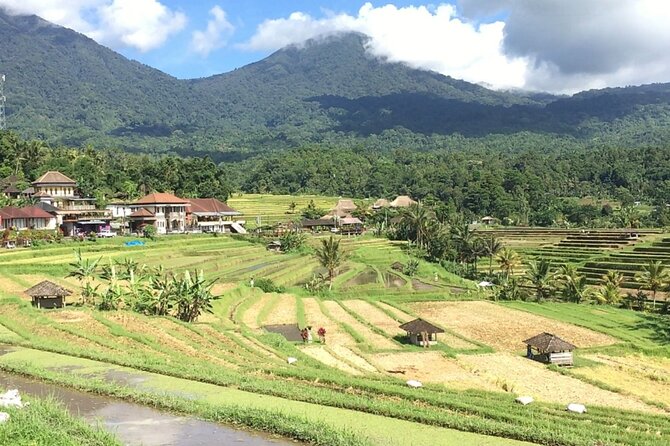
The first major portion of the day explores the fertile foothills of the Batukaru Mountains. Volcanic soil supports tropical fruit, vegetables, spices, flowers, and other crops. The guide helps connect what you see in the fields with Balinese daily life, rather than treating the scenery as a backdrop for photographs.
This is a useful stop for anyone who wants more context than a viewpoint provides. Rice is not simply planted in flat fields here. Hillsides are shaped into stepped paddies, and farming depends on shared work and local water management. The terraces are practical, but they also have a carefully composed beauty.
The listed timing gives this part about two hours, though the exact balance between walking, driving, explanations, and photo stops can vary. You might spend much of the time looking across the fields, or you may visit a more active farming area. Ask your guide questions about planting, harvesting, irrigation, and which crops are seasonal. That turns a scenic stop into a better understanding of Bali’s rural economy.
Some departures have also included a spice garden or coffee plantation. A plantation visit can be pleasant if you enjoy sampling local teas and coffees. One particularly popular stop offered around 10 varieties to taste, along with coffee products for sale. Coffee made from beans processed after passing through a local mongoose is also offered in Bali, though you may find the story more interesting than the drink.
The downside is commercial pressure. A few plantation and craft stops can become sales visits, with limited demonstrations and plenty of time devoted to buying. If you are not interested, tell the guide early that you prefer more time in the countryside or at the temple. The day’s quality depends greatly on how your guide manages these additions.
Jatiluwih Rice Terraces: The Day’s Big View
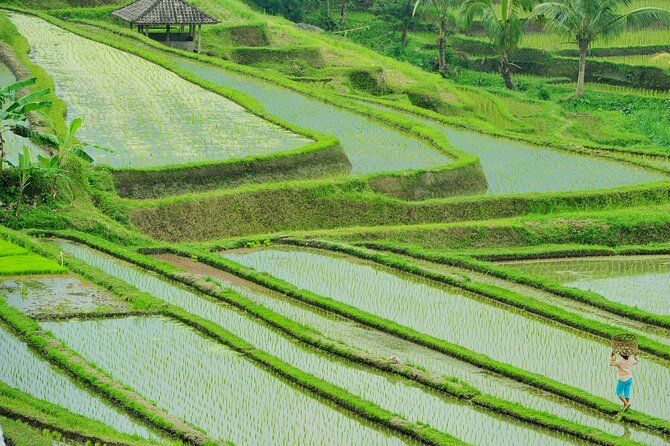
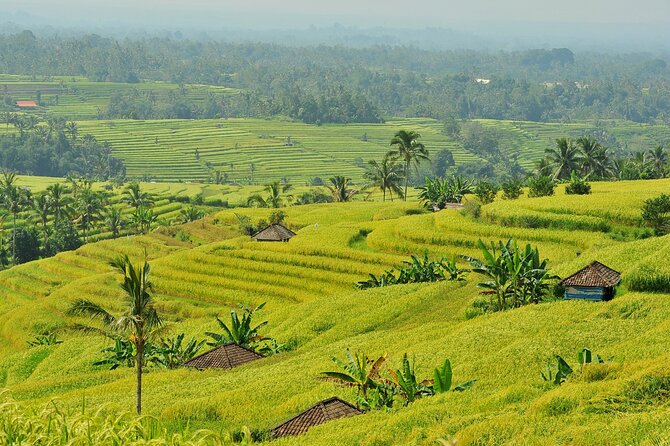
Jatiluwih is the visual centerpiece. Here, rice paddies curve across the hills in layers, creating the classic Bali scene many people hope to see. The terraces are not a single manicured garden. They are working fields shaped by generations of farming and maintained as part of village life.
You have about two hours listed for this stop. That should give you time to look from several angles, take photographs, and listen to an explanation of how the community uses the land. The terraces can look different depending on the growing stage. Green rice creates the strongest color, while recently harvested or flooded fields offer a more patterned view.
This stop is best approached slowly. Resist the urge to take one picture and hurry back to the van. The appeal is in the repeated curves, the narrow paths, the changing height of the paddies, and the way farms occupy the hills below the mountain.
A restaurant stop overlooking the terraces may be offered around this part of the day. Food and drinks are not included, so bring money for lunch. The setting can be excellent, but food quality is not guaranteed. Some meals have been described as cold or overpriced, and the dining area may not meet every visitor’s idea of cleanliness. You can ask what is available before ordering.
The tour is not the best choice if you want a long, strenuous rice-field hike. The description promises a short forest walk and time among the rural scenery, but it does not specify a long trekking route. If your main goal is serious hiking, ask the operator exactly how much walking is planned.
Pura Luhur Batukaru in the Forest
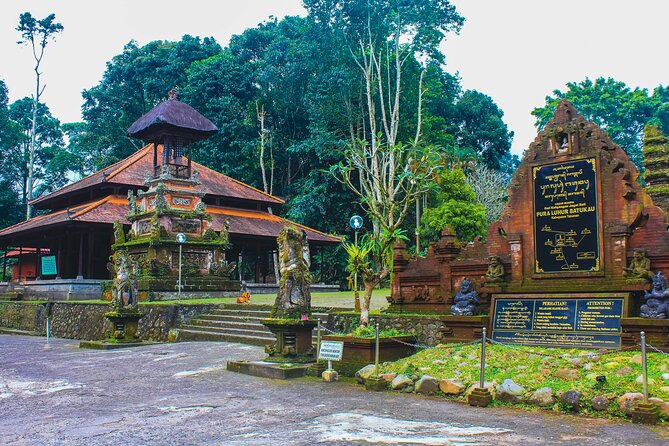
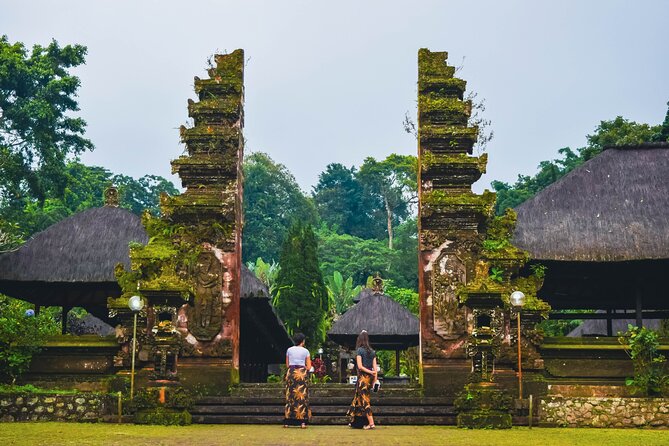
The strongest cultural stop is Pura Luhur Batukaru, reached through thick tropical forest beneath Mount Batukaru. The temple is considered one of Bali’s most sacred Hindu sites, with only Besakih generally ranked above it in importance.
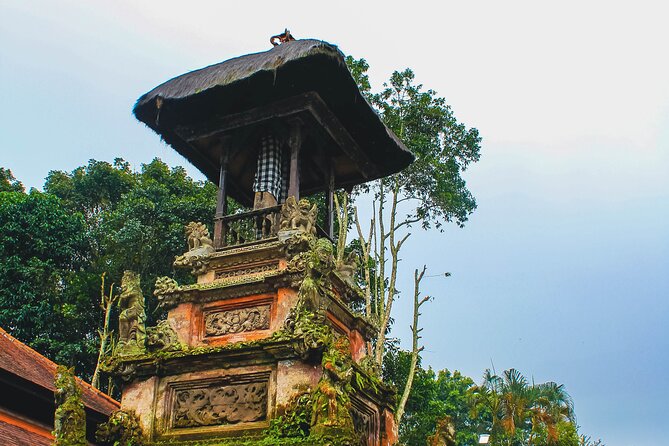
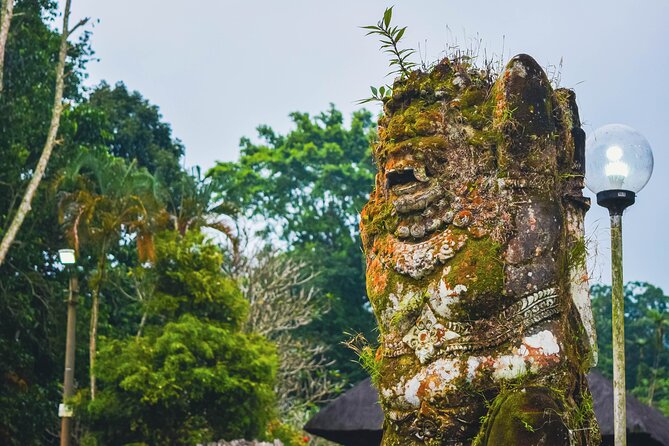
The setting makes the visit special. Instead of a large commercial complex surrounded by constant activity, you may find a quiet collection of shrines, paths, mossy surfaces, trees, birds, and butterflies. The temple’s position on the mountain slope gives it a secluded feel, and the forest muffles the sound of the road.
Allow time for the atmosphere to work on you. Several visitors have been able to sit quietly or meditate for about 15 minutes, and a considerate guide may give you that space. Radiawan, Rody, and other guides have been praised for allowing extra time for photographs, questions, and quiet observation.
The temple has a long story, but the information provided for the tour does not promise a detailed historical lecture. Ask your guide about the temple’s role, the shrines, the water features, and the meaning of the architecture. One guide, Arya, was especially appreciated for explaining Balinese people, customs, and culture in clear English.
Conditions can be slippery. A German-speaking visitor specifically noted moss and moisture on steps and paths, so wear shoes with a firm grip. The walk is described as short, but the ground and stairs may be uneven. Most people can participate, though anyone with mobility concerns should ask about the route before booking.
The visit also has a religious dimension. Treat the complex as a living place of worship, not just a photo stop. Listen to your guide about appropriate behavior and move carefully around shrines and water areas.
A few more tours worth putting side by side
- All-Inclusive Ubud Private Tour
★ 5.0 · 14,344 reviews - Best of Ubud Full-Day Tour with Jungle Swing
★ 5.0 · 8,571 reviews - Best of Ubud 1-Day Private Tour
★ 5.0 · 4,451 reviews - Bali: Ubud Palace Legong Dance Show Ticket
★ 4.4 · 3,979 reviews
Craft Shops, Coffee, and the Value Question
Some departures include visits to batik and silver workshops, local craft makers, or a coffee plantation. These additions can broaden the day. A batik stop may help you understand how patterned cloth is made, while a silver workshop can show a traditional Balinese art form. Coffee and tea sampling is an easy way to try local products without committing to a full meal.
But these stops are not a guaranteed strength. Some people have found them interesting, while others felt that nearly two hours disappeared into four craft houses with little actual demonstration. The best version of the tour keeps these visits brief and gives priority to Jatiluwih and Batukaru Temple.
You can protect your time by asking at the start whether shopping stops are planned. If you want local products, choose one or two areas that appeal to you. If you want nature and culture, politely explain that you would rather spend extra time at the terraces or temple.
At $61.54 per person, the tour offers fair value if you are staying in the covered pickup areas and want transport, a guide, the mountain route, and several major stops in one day. The price is less attractive if you spend most of the day in traffic or are taken to several sales-oriented businesses.
The small-group promise improves the value when it holds. Some departures have had only a couple or a handful of people, effectively creating a private outing without the full private-tour price. The formal maximum is 15, however, so do not assume every departure will be limited to six. Ask before paying if group size is central to your decision.
Guides Make the Difference
The strongest part of the experience is often the guide. A good guide makes the fields, temple, and village stops fit together. You get more than a driver who points at scenery from the front seat.
Guides named Darta, Rody, Arya, Radiawan, Gus, Benny, Mandara, and Rai A. have received individual praise for kindness, cultural explanations, flexibility, or care. Rai A. was singled out for giving clear information and answering questions fully. Radiawan was praised for punctuality and for creating a calm temple visit. Rody was appreciated for stopping when the group wanted photographs.
The experience is not perfectly consistent. One guide was described as serious and somewhat distant, while another spent too much time showing off his own expertise and too little time explaining useful details. That is a reminder to speak up. Ask direct questions, request a pause, and tell the guide what matters most to you.
The separate guide and driver arrangement is helpful on difficult roads. A clean van and a pleasant driver can make a long day easier, while the guide is free to focus on explanations. If you suffer from motion sickness, prepare carefully. The winding, stop-and-start road can be hard on the stomach, even with preventive measures.
Who Will Enjoy This Eight-Hour Excursion?
I would recommend this tour to you if you want:
- A look at Bali beyond beaches and resort districts
- Rural scenery with cultural explanation
- A quiet temple visit rather than a crowded attraction
- Hotel transport and a guide
- A flexible small-group day
- A moderate amount of walking rather than a demanding hike
You may want another option if you dislike long drives, sales stops, or uncertain lunch arrangements. The journey can take more than eight hours, and traffic on the return may be heavy. A separate volcano excursion could also cover similar mountain roads and rice-field scenery, so compare the two if your schedule is tight.
The tour suits first-time visitors especially well. It gives you an early introduction to farming, religious practice, village life, handicrafts, and the island’s interior in one outing. It is also a good fit for couples or friends who would rather watch the scenery than navigate Bali’s roads themselves.
The experience is not designed around luxury dining or intense physical activity. Food and drinks cost extra, and the main reward is the setting and cultural explanation.
Practical Details Before You Book
The tour lasts about eight hours and starts at 8:30 a.m. Pickup is offered from major hotels in Kuta, Seminyak, Sanur, Jimbaran, and Nusa Dua. Additional charges apply to cruise passengers.
A mobile ticket is available, and confirmation is provided at booking. Free cancellation applies when you cancel at least 24 hours before the start time. Changes or cancellations made inside that period are not accepted for a refund.
Bring money for lunch, drinks, coffee, and any craft purchases. Wear sturdy shoes for damp temple paths, and carry protection from rain because the mountain area can be wet. The vehicle is air-conditioned, but the road remains winding and sometimes rough.
Should You Book Jatiluwih and Batukaru?
Book it if your ideal Bali day includes Jatiluwih’s terraces, a forest temple, rural views, and cultural explanations more than a polished tourist schedule. The best departures feel personal, calm, and genuinely rewarding, especially when the guide gives you time to meditate and photograph the countryside.
Before booking, confirm your pickup point, likely group size, lunch plan, and whether craft or plantation stops are included. If the operator can keep shopping brief, this is a strong-value way to reach Bali’s interior without driving yourself. If you want a short five-hour outing, guaranteed solitude, or a serious hike, the long road time and variable additions may leave you disappointed.
FAQ
Where does the tour take place?
The experience visits the Batukaru Mountain foothills, Jatiluwih Rice Terraces, and Pura Luhur Batukaru Temple in Bali.
What time does the tour start?
The listed start time is 8:30 a.m. Hotel pickup may take place about 30 to 60 minutes earlier.
How long does the experience last?
It lasts approximately eight hours, although some departures may run longer because of traffic, hotel pickups, or added stops.
Is hotel pickup included?
Pickup and drop-off are included from major hotels in Kuta, Seminyak, Sanur, Jimbaran, and Nusa Dua. Confirm the exact arrangement because the meeting information also lists Batu Karu Temple.
What is the maximum group size?
The formal maximum is 15 people. Some departures are promoted as smaller groups of six or fewer, but this is not guaranteed for every date.
Is transportation included?
Yes. The tour includes round-trip transport in an air-conditioned vehicle when using the covered pickup service.
Is a guide included?
Yes. An English-speaking licensed guide is included.
Are entrance fees included?
The tour includes entrance fees according to the inclusions provided.
Are meals and drinks included?
No. Food and drinks are purchased at your own expense, including any restaurant stop near the rice terraces.
Can most people participate?
The information states that most people can participate. The temple paths may be damp, slippery, and uneven, so ask about the walking route if you have mobility concerns.
Can I cancel for a full refund?
Yes, if you cancel at least 24 hours before the experience starts. Cancellations or changes made less than 24 hours beforehand are not refunded.
Newest reviews from Ubud
- Explore Rice Fields and Hidden Villages with Ubud E-Bike Tour★ 5.0 · 7 reviews
- Monkey Forest Ubud Half day Tour★ 4.0 · 7 reviews
- Private Tour: Heaven Gate Temple, Tirta Gangga and Blue Lagoon Snorkeling★ 5.0 · 7 reviews
- Ubud Monkey Forest Rice Terrace Temple Waterfall Private Tour★ 5.0 · 7 reviews
- UBUD : Temple and Waterfall All Inclusive Day Tour★ 5.0 · 7 reviews
- Bali – Silver Jewelry Making Class★ 5.0 · 7 reviews
- One way fast Boat between Padangbai and Gili Islands or Lombok★ 5.0 · 7 reviews
- Bali ATV Quad Bike and White Water Rafting – All Inclusive★ 5.0 · 7 reviews
Rice Terrace Tours, compared.
Monkey Forest, Jungle Swing, Rice Terrace, and Water Temple
Read our review →Full-Day Tour to Water Temples and UNESCO Rice Terraces in Bali
Read our review →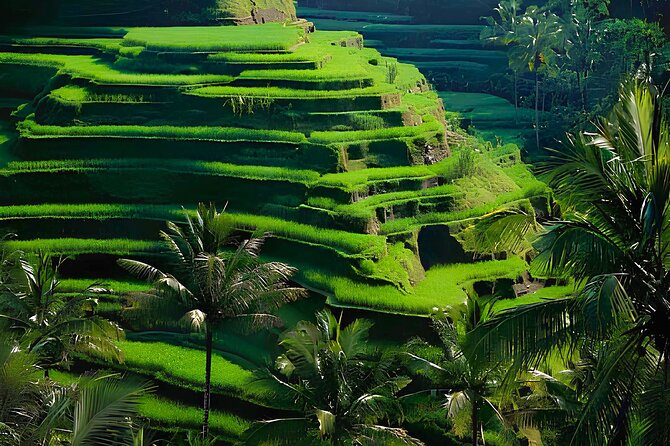
Monkey Forest, Water Temple, Rice Terrace, Waterfall
Read our review →
Downhill Cycling with Volcano, Rice Terraces and Meal
Read our review →
Active Volcano, Rice Field, Hot Spring, Fruit market, Tea Plantation with Lunch
Read our review →
Ubud Top Attractions: Waterfalls, Temples and Rice Terraces
Read our review →Ubud Tour With Sacred Monkey Forest Sanctuary – Waterfall – Rice Terrace
Read our review →Browse the lists this tour appears in