
Reviewed · WORKSHOPS
Threads of Tradition Miniature Keliki Painting Workshops
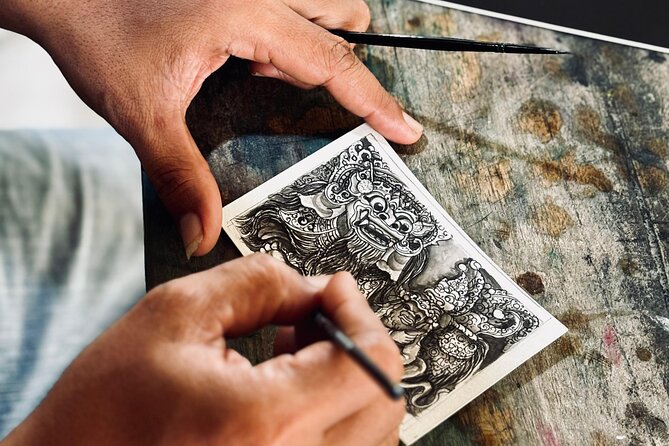
Small paintings, big stories. This three-hour workshop at Five Arts Studio gives you a hands-on way to learn Keliki painting, a Balinese style known for fine detail, layered drawing, and scenes tied to village life and local myths. I like the chance to work directly with local artists, Gusti and Kedek, and I also like that you take your finished miniature home rather than leaving with only a few photographs.
The price is $29 per person, which is good value for an art class that includes materials, tea, coffee, snacks, water, and personal instruction. The main consideration is location: the studio is in Keliki, in the Tegallalang area, rather than central Ubud, and transport is not listed as part of the standard price. You may need to arrange your own ride or add transport if available.
In This Review
- Key details before you book
- Why Keliki painting makes a good Ubud activity
- Arriving at Five Arts Studio in Keliki
- The three-hour painting process
- Meeting Gusti and Kedek
- Afternoon tea and local conversation
- What you take home
- Is $29 a fair price?
- Group size, clothing, and accessibility
- Who will enjoy this workshop most?
- Booking and cancellation advice
- Should you book the Keliki painting workshop?
- FAQ
- How long does the Keliki painting workshop last?
- Where does the workshop begin and end?
- Do I need previous painting experience?
- What materials are used?
- Are refreshments included?
- Can I cancel for a full refund?
Key details before you book
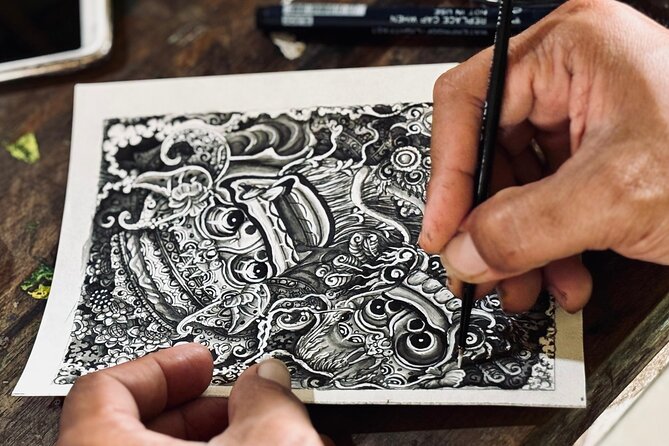
- You work with Gusti and Kedek: The two local artists guide you through the painting process and help you work at a comfortable pace.
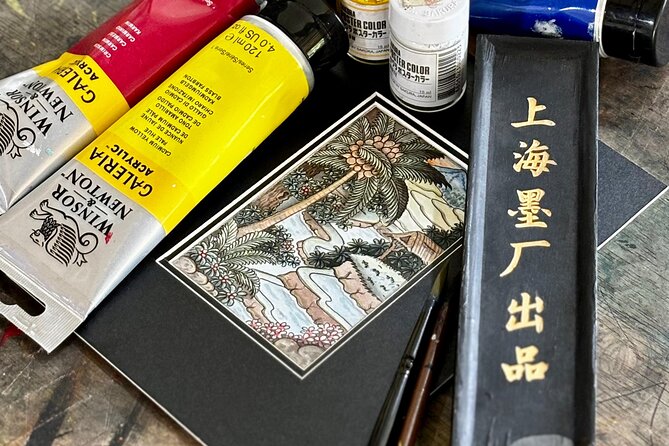
- Keliki painting is built in layers: You use Chinese ink and acrylic paint, learning a method that combines drawing, line work, and color.
- The setting is a Balinese home studio: Five Arts Studio operates from a traditional house compound, giving the class a more personal feel than a large commercial art school.
- Your artwork becomes a souvenir: You create a small miniature painting to take home, making the class both an activity and a keepsake.
- Tea is part of the afternoon: Coffee, tea, snacks, and mineral water are included, with local food available to order if you want something more substantial.
- The class welcomes beginners: You do not need previous painting experience, and most people can take part.
Why Keliki painting makes a good Ubud activity
Ubud offers plenty of ways to look at Balinese art. This class asks you to slow down and make some yourself. That difference matters. Instead of simply passing through a gallery, you learn how a local painting style is built from the first marks to the final color.
Keliki painting comes from the Keliki area north of Ubud. The style is associated with small, detailed works that often show rural village scenes, daily life, and stories from Balinese beliefs. The scale is part of the appeal. You are not trying to fill a large canvas with broad strokes. You are working carefully, adding detail step by step.
The class also gives useful cultural context. Gusti and Kedek explain the background of Keliki paintings, including the kinds of village life and myths that appear in the art. That makes the finished piece more meaningful. You are not just producing a decorative picture. You are learning why certain subjects and methods belong to Balinese artistic tradition.
I especially like this for anyone who has already visited Ubud’s temples, markets, and galleries and wants a quieter afternoon. The workshop offers a change of pace without asking you to be a serious artist. The point is the process, not a perfect result.
More workshops and classes in Ubud:
- Ubud Cooking Class Bali with Balinese Chef
★ 5.0 · 1,609 reviews - Ubud Silver Class Jewelry making in bali
★ 5.0 · 978 reviews - PRIVATE Authentic Balinese Cooking Class in Ubud at Putu’s Home
★ 5.0 · 644 reviews
Arriving at Five Arts Studio in Keliki
The meeting point is Five Arts Studio on Jl. Raya Keliki, Keliki, in the Tegallalang area of Gianyar Regency. The activity begins and ends there. Since Keliki is outside the busiest central streets of Ubud, check the route and allow enough time to reach the studio.
The location is part of the experience. You are attending a class in a traditional Balinese house compound, not in a generic hotel meeting room. That home-studio setting helps the afternoon feel connected to the place where the art is practiced.
The standard experience does not include lunch or alcohol. Local food can be ordered, and alcohol is available to purchase, but neither is part of the $29 price. If you want a full meal, plan around the workshop rather than assuming snacks will be enough.
Transport deserves attention before you pay. A transport add-on may be available, but the basic details identify the studio as the start and end point. If you are staying in Ubud, arrange your own transportation unless you have confirmed an add-on. This is a small point, but it can affect the value of an otherwise inexpensive activity.
The three-hour painting process
The workshop lasts about three hours, giving you enough time to learn the method without turning the class into an all-day commitment. You work with traditional materials and techniques, including Chinese ink and acrylic paint.
The process is taught in layers. You learn how drawing and painting build on one another, rather than simply receiving a blank sheet and being told to copy a finished image. The instructors show you the steps and help you apply them to your own miniature.
For a beginner, this structure is reassuring. You do not need to arrive with a plan or a portfolio. The class is designed for all levels, including people with no previous painting experience. You can focus on learning the marks, the sequence, and the feel of the materials.
The work also rewards patience. Fine-detail painting is not a race, and the class allows you to work at your own pace. That is an important strength. Some art workshops push everyone through the same steps on a strict schedule. Here, you have room to spend more time on a line or small section if you want to.
Gusti and Kedek are praised for being personable and fun, which matters in a close, hands-on class. Good instruction is not only about technical skill. It is also about making you comfortable enough to try, make mistakes, and continue. The tone appears to be friendly rather than formal.
Meeting Gusti and Kedek
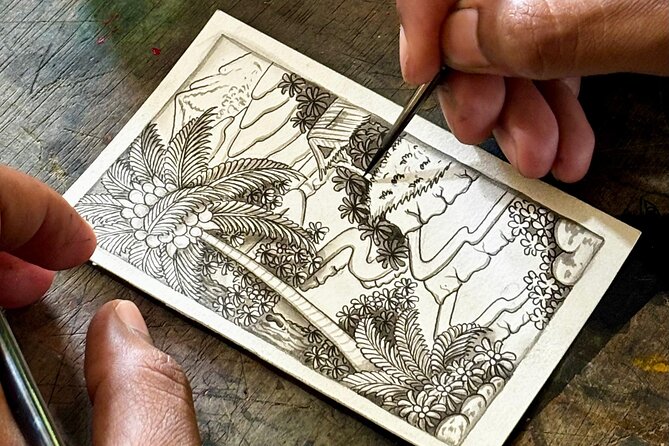
The two instructors are central to the experience. You learn from Gusti and Kedek as local artists, not from a distant demonstration or a prerecorded lesson. Their role includes explaining the technique, helping you understand the stages, and talking about the cultural background of the work.
That direct contact is one of the strongest reasons to choose this workshop. You can ask questions as you paint, and you can get help when your lines do not look quite as planned. Since the group can include up to 20 people, the level of individual attention may vary, especially if the class is full. Still, the workshop is built around practical instruction rather than a simple show-and-tell.
The class has also been praised for its relaxed pace. I would value that, particularly if you are traveling with a partner or friend who has a different level of artistic confidence. One person can work slowly while another moves ahead. You are not expected to produce identical results.
Couples may find this a particularly pleasant shared activity. You can compare your designs, work side by side, and leave with separate souvenirs. Families with older children or groups of friends may also enjoy it, provided everyone is happy spending several hours on careful artwork.
A few more tours worth putting side by side
- All-Inclusive Ubud Private Tour
★ 5.0 · 14,344 reviews - Best of Ubud Full-Day Tour with Jungle Swing
★ 5.0 · 8,571 reviews - Ubud: Monkey Forest, Jungle Swing, Rice Terrace, and Water Temple
★ 5.0 · 7,160 reviews - Best of Ubud 1-Day Private Tour
★ 5.0 · 4,451 reviews
Afternoon tea and local conversation
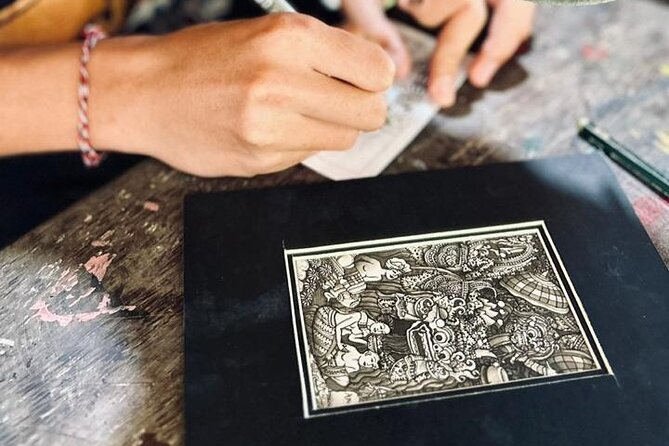
Tea, coffee, snacks, and mineral water are included. This is more than a practical refreshment stop. The afternoon tea gives you a natural pause during the painting and time to talk with the artists.
Small details like this help a workshop feel social without distracting from the main activity. You can ask about Keliki painting, local customs, or the subjects in the artwork while taking a break from fine lines and layered color.
Do not confuse the included snacks with lunch. If you need a full meal, local food is available to order, but lunch costs extra. Alcohol is also not included. The simple food and drink arrangement keeps the base price down, but you should plan accordingly if this class takes place during your usual meal time.
What you take home
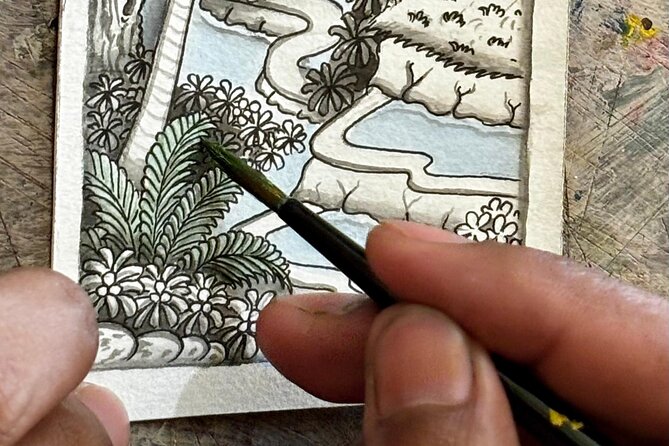
The finished miniature is one of the best practical features of the class. You leave with a piece of art that you made yourself, rather than a factory-produced souvenir bought in a shop.
It may not look like a professional Keliki painting, and that is not the right standard to use. The value is in knowing how it was made and remembering the afternoon behind it. The artwork can also serve as a useful conversation piece at home because you can explain the technique, the materials, and the cultural themes.
Pack it carefully for the journey. The supplied information confirms that you take the artwork home, but it does not specify protective packaging or shipping. If you are concerned about keeping it safe, ask the studio what protection is provided before you begin.
Is $29 a fair price?
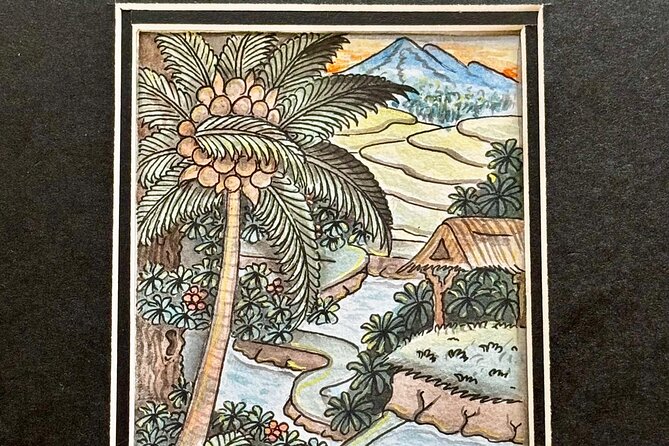
At $29 per person, the class offers solid value. The fee covers about three hours of instruction, the use of materials, refreshments, and a finished artwork. You also get time with two local artists and a setting connected to Balinese home life.
The value is strongest if you want an activity rather than a passive cultural stop. A short gallery visit may cost less, but it will not give you the same practical understanding. A longer private art lesson may offer more personal attention, but it would likely cost more.
The price does not cover lunch, alcohol, or standard transportation. Those extras can change the final cost. If you need a ride from Ubud, confirm the transport option and price before booking so there are no surprises.
The class is also a good choice for a rainy afternoon or a day when you want to reduce the amount of driving and sightseeing. Three hours is long enough to feel worthwhile but short enough to fit around other Ubud plans.
Group size, clothing, and accessibility

The maximum group size is 20 people. That is not a tiny private lesson, so you should not expect uninterrupted one-to-one teaching. On the other hand, the presence of two artists gives the class more support than a single-instructor workshop of the same size.
Smart casual clothing is requested. Wear something comfortable that allows you to sit and work for several hours, but avoid anything you would be upset to stain. The class uses ink and acrylic paint, so practical clothing makes sense.
Most people can participate, and service animals are allowed. The studio is near public transportation. The information does not give detailed mobility notes about the house compound or seating, so contact the provider if you have specific access needs.
A vegetarian option is available. You should advise the provider when booking if you need it.
Who will enjoy this workshop most?
I would recommend this class to you if you want a cultural activity with something tangible at the end. It suits beginners, couples, solo visitors who enjoy meeting local people, and families with older children who can stay focused on detailed work.
It is also a good fit if you like learning through your hands. You will get more from the workshop if you enjoy a calm pace and do not need constant sightseeing action. The class is about patient observation, careful marks, and conversation.
You may want to skip it if you have very little time in Ubud, dislike seated activities, or are mainly looking for a polished professional artwork. You should also think twice if reaching Keliki without transport would be difficult.
The high rating and full recommendation suggest that the class delivers the friendly, relaxed experience it promises. Still, the group limit and home-studio setting mean the atmosphere may feel informal rather than highly structured. That is a benefit for some people and a drawback for others.
Booking and cancellation advice
The experience is often booked about 10 days ahead, so reserve early if your Ubud schedule is fixed. Confirmation is provided at booking, and the ticket is mobile, which keeps the arrival process simple.
Free cancellation is available if you cancel at least 24 hours before the local start time. Cancellations made within 24 hours are not refunded, and changes inside that period are not accepted. Keep the timing in mind if your transport plans are uncertain.
Should you book the Keliki painting workshop?
Book it if you want a personal, hands-on look at Balinese art and like the idea of returning home with your own miniature painting. The combination of local instruction, Chinese ink and acrylic techniques, afternoon tea, and a traditional home-studio setting gives the class more substance than a quick craft stop.
I would be most likely to choose it for a relaxed afternoon in Ubud, especially after several days of temples and sightseeing. Just confirm how you will reach Keliki, allow for the three-hour session, and remember that lunch and transport may cost extra. For $29, it is an appealing choice for curious beginners and anyone who prefers making a memory to simply buying one.
FAQ
How long does the Keliki painting workshop last?
The workshop lasts approximately three hours.
Where does the workshop begin and end?
It begins and ends at Five Arts Studio, Jl. Raya Keliki, Keliki, Tegallalang, Gianyar, Bali 80561, Indonesia.
Do I need previous painting experience?
No. The workshop welcomes all artistic levels, and no prior painting knowledge is required.
What materials are used?
You learn with traditional materials and techniques, including Chinese ink and acrylic paint.
Are refreshments included?
Yes. Snacks, coffee or tea, and mineral water are included. Lunch and alcohol are not included, though local food can be ordered and alcohol is available to purchase.
Can I cancel for a full refund?
Yes, if you cancel at least 24 hours before the experience start time. Cancellations or changes made less than 24 hours before the start time are not refunded or accepted.
Newest reviews from Ubud
- Explore Rice Fields and Hidden Villages with Ubud E-Bike Tour★ 5.0 · 7 reviews
- Monkey Forest Ubud Half day Tour★ 4.0 · 7 reviews
- Private Tour: Heaven Gate Temple, Tirta Gangga and Blue Lagoon Snorkeling★ 5.0 · 7 reviews
- Ubud Monkey Forest Rice Terrace Temple Waterfall Private Tour★ 5.0 · 7 reviews
- UBUD : Temple and Waterfall All Inclusive Day Tour★ 5.0 · 7 reviews
- Bali – Silver Jewelry Making Class★ 5.0 · 7 reviews
- One way fast Boat between Padangbai and Gili Islands or Lombok★ 5.0 · 7 reviews
- Bali ATV Quad Bike and White Water Rafting – All Inclusive★ 5.0 · 7 reviews
Workshops, compared.
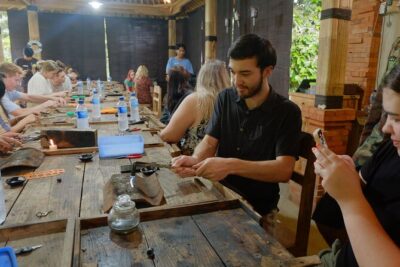

PRIVATE Authentic Balinese Cooking Class in Ubud at Putu’s Home
Read our review →

Learn to cook Indonesian food at Gili Cooking Classes Trawangan
Read our review →
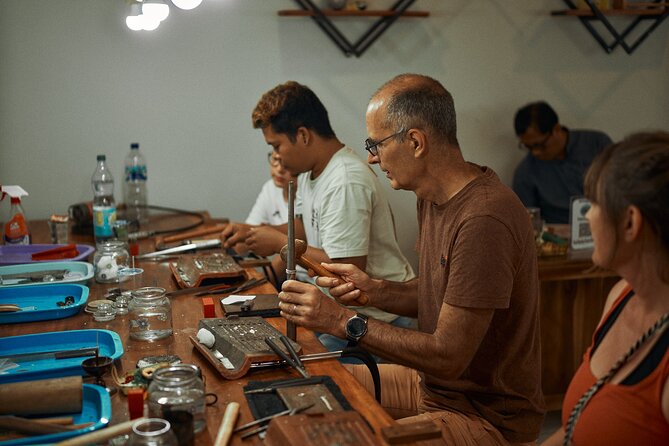
Ubud Monkey Forest Silver Class – Craft Your Own Silver Jewelry
Read our review →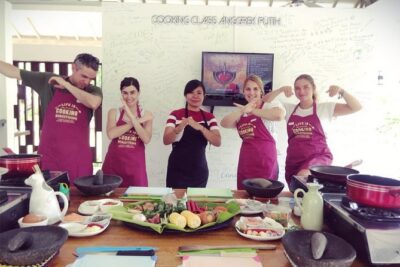
Browse the lists this tour appears in