
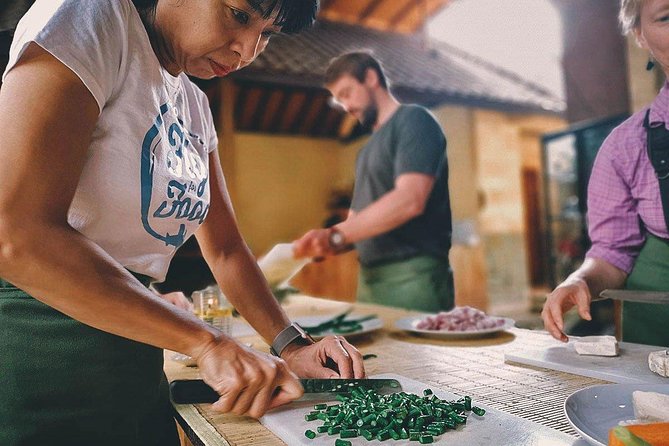
Reviewed · COOKING CLASSES
Balinese Cooking class with traditional morning market visit
Food tells Bali’s story better than a souvenir. This six-hour Ubud experience begins at a local morning market, then moves to the village of Laplapan for an interactive cooking class with a Balinese chef. I like the market visit because unfamiliar herbs, fruit, spices, and vegetables become easier to understand when someone explains how they are used. I also like the small-group format, with a maximum of eight people, which gives you a better chance to chop, mix, cook, and ask questions.
The class includes an introduction to making a canang, the small Balinese offering basket used in daily religious practice. That cultural touch gives the morning more meaning than a standard cooking lesson. The main consideration is the early start and long six-hour schedule. You will spend a good part of the day on transport, shopping, preparation, and a sit-down meal, so this is not a quick add-on activity.
In This Review
- Key points to know before booking
- Why this six-hour Ubud experience works
- The morning market: your first taste of Balinese food culture
- Laplapan village and the making of a canang
- Cooking with Wayan, Dewa, and the local kitchen team
- What you may cook and what you take home
- The final meal: a satisfying end to the work
- Transport, timing, and group size
- What could be better
- Who should book this class
- Should you book it?
- FAQ
- How long does the Balinese cooking class last?
- Is hotel pickup included?
- How many people can join the class?
- Does the experience include a morning market visit?
- Will I learn how to make a Balinese offering?
- Are vegetarian or dietary options available?
- What is included in the $35 price?
Key points to know before booking
- Start at a real morning market: You choose from local vegetables, herbs, meat, spices, fruit, and sweets before cooking.
- Learn to make a Balinese offering: The canang demonstration explains an everyday religious tradition as well as a craft.
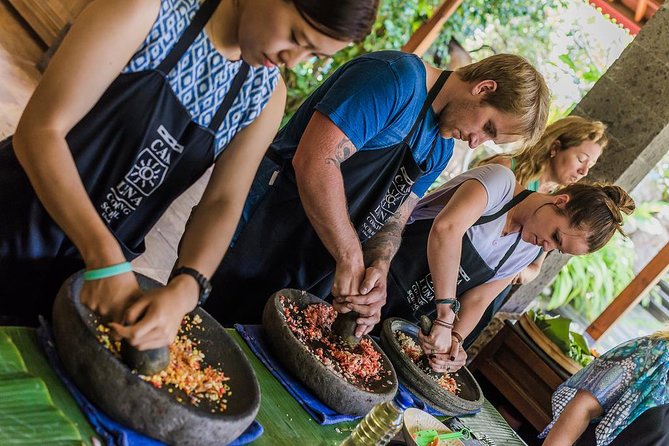
- Small groups improve the class: The maximum group size is eight, allowing more hands-on time and direct help from the chef.
- Prepare several local dishes: Depending on the session, you may cook starters, main dishes, dessert, or as many as nine items.
- Hotel pickup is included: Air-conditioned transport connects your hotel with the market, village, and cooking venue.
- Eat what you prepare: The class ends with a shared sit-down meal, and recipes are provided in at least some sessions.
Why this six-hour Ubud experience works
Cooking classes can sometimes feel like stage shows. You watch a chef do the work, stir something once, and receive a plate at the end. This Ubud class is designed differently. You get a market visit, cultural instruction, hands-on preparation, and a full meal, all in one morning and early afternoon.
At $35 per person, the price is strong for what is included. You are not paying only for ingredients and a lesson. The cost also covers cooking equipment, class fees, taxes, and air-conditioned transport from your hotel. Pickup is especially useful if you are staying outside central Ubud, with one booking noting convenient transport from as far away as Sanur.
I would not call the class a bargain simply because the price is low. Its value depends on how much you want to participate. If you only want to eat Balinese food, a restaurant will be cheaper and faster. If you want to understand the ingredients and learn techniques you can repeat at home, the class earns its price.
More Cooking Classes in Ubud
- Ubud Cooking Class Bali with Balinese Chef
★ 5.0 · 1,609 reviews - PRIVATE Authentic Balinese Cooking Class in Ubud at Putu’s Home
★ 5.0 · 644 reviews - Balinese Ubud cooking school (9 Dish Cooking and Market Tour)
★ 5.0 · 540 reviews
The morning market: your first taste of Balinese food culture
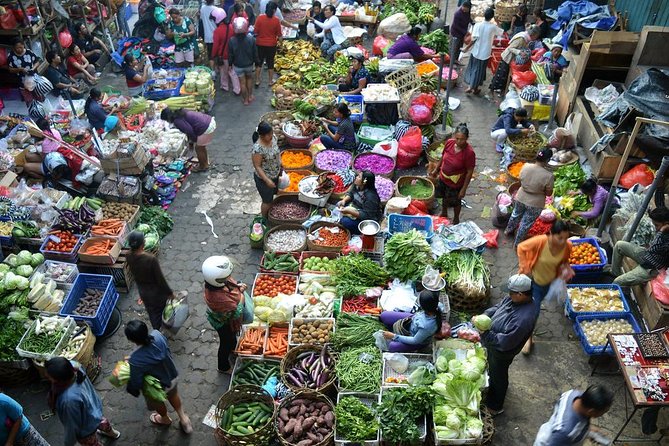
The day begins with hotel pickup, followed by a visit to a local fresh-food market. The air-conditioned vehicle matters in Bali, especially after an early start or when your hotel is some distance from Ubud. It also saves you from arranging separate taxis between the market and the cooking school.
At the market, you select ingredients for the class. The choices can include vegetables, herbs, meat, spices, fruit, and local sweets. This is more useful than simply walking through a market with a camera because the guide can explain what the ingredients are and how they fit into Balinese cooking.
You might smell or taste foods you have never encountered before. The market portion is described as brief, but it still gives you a practical introduction to local produce. One useful lesson is seeing which foods are common to Bali and which items have arrived from elsewhere. That distinction helps you understand what makes Balinese cooking different from generic Indonesian food.
The market is also a good place to ask questions about unfamiliar ingredients. If you are curious about herbs, chili, spices, or fruit, ask early. The class becomes easier to follow once you recognize the raw materials on the worktable.
Do not expect a long market tour with a detailed history of every stall. The market visit is a working part of the class, not a separate sightseeing excursion. You are there to choose and understand ingredients, then move on to cook them.
Laplapan village and the making of a canang
After the market, the group continues to the traditional village of Laplapan. You receive a local welcome before the cooking begins, which helps shift the mood from shopping trip to cultural activity.
One of the most distinctive parts of the experience is learning to make a canang, a small offering basket. You are shown how to shape the basket and arrange the materials used for the offering. The activity is simple enough for beginners, but it also opens a window onto a daily Balinese tradition.
This is not just a craft project added to fill time. The offering helps explain how religion appears in ordinary Balinese life. You are learning about an object made and used in homes, temples, and other everyday settings, rather than looking at culture only through monuments or performances.
Several people particularly enjoyed this portion because it gave them a clearer idea of the meaning behind the offering. It can also be a welcome pause before the cooking starts. You use your hands, listen to the explanation, and get a chance to ask about the practice without the pressure of following a fast recipe.
Families can benefit from this section as well. Children have something physical to make, while adults get a cultural explanation. The activity is likely to appeal to you if you enjoy learning how ordinary local customs work.
Cooking with Wayan, Dewa, and the local kitchen team
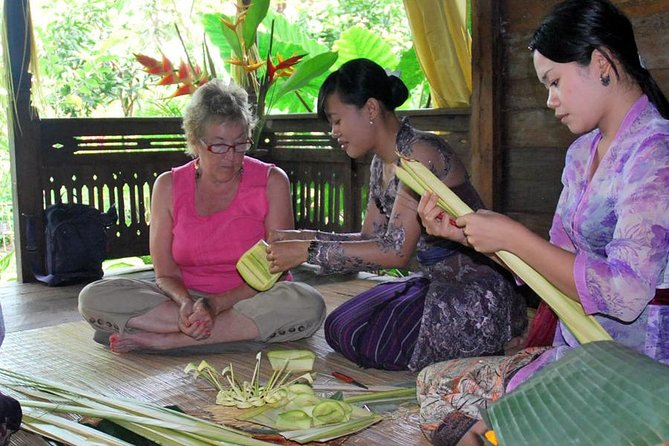
The cooking class is led by local staff, with Wayan and Dewa receiving especially warm praise for their hospitality and teaching. Putu is also named as a friendly and patient guide and instructor in several accounts. The names matter because the tone of the class depends heavily on the people leading it, and this team appears to place real importance on warmth, humor, and individual help.
The class covers traditional methods for preparing starters, main courses, and dessert. In some sessions, the group prepares as many as nine dishes. Another description refers to a five-course set, so the exact menu may vary, but you should expect several dishes rather than one recipe.
You will not necessarily perform every step from raw ingredient to finished plate. Some items may be prepared in advance to keep the timing under control. That is sensible. Without some advance preparation, a menu with many dishes could turn into a long wait between chopping and eating.
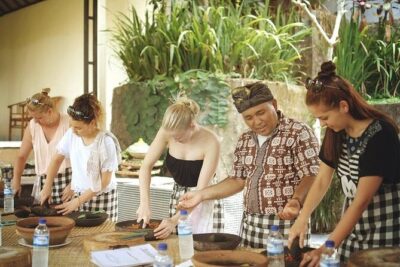
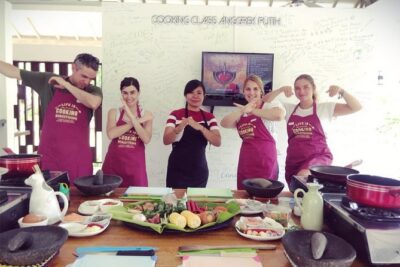
The balance appears to work well. You still get plenty of hands-on work, while the chef keeps the class moving. You may chop, pound, mix, season, and cook, with guidance available when a technique is unfamiliar. The small group size gives the instructor more time to correct a method or answer a question.
The cooking is also social. You work beside other people, share tasks, and watch how different cooks handle the same ingredients. Solo visitors can meet others without needing to force conversation, while couples and families can work together.
Expect a relaxed class rather than a formal culinary school lesson. The aim is to help you understand Balinese home cooking and enjoy the process. The chef’s humor and easy manner are part of the appeal, particularly if you are new to cooking classes.
More Market Tours in Ubud
- PRIVATE Ubud Market Tour & Balinese Cooking Class with Putu
★ 5.0 · 125 reviews - Ubud Cooking Class with Optional Market Visit Pickup Included
★ 5.0 · 70 reviews - Balinese Cooking Class with Traditional Market Tour
★ 5.0 · 66 reviews - Bali Food Tour: Savor Street Food and Night Market Adventures
★ 5.0 · 46 reviews
What you may cook and what you take home
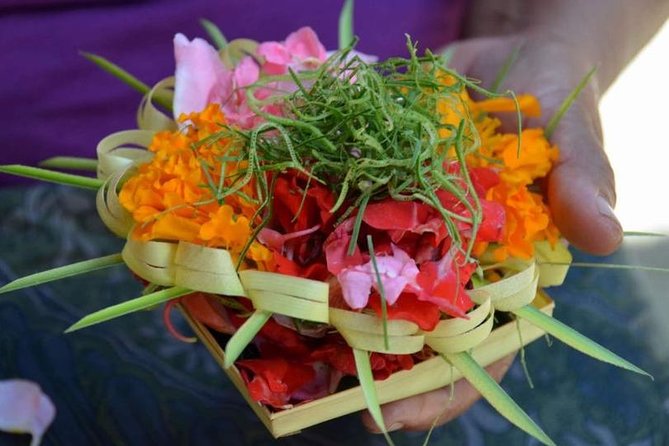
The menu is built around fresh local ingredients chosen earlier in the day. The exact dishes are not specified in advance, so you should not book expecting one particular recipe unless the operator confirms it directly.
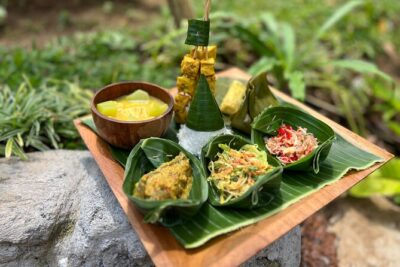
You can expect a range of flavors and preparations. The class includes starters, main dishes, and an authentic dessert, with some sessions producing enough food for a substantial multi-course meal. Several people describe the portions as generous, which means you should arrive ready to eat but not overly full.
Vegetarian options are available, and the cooking team has adapted the food for dietary requirements. You should communicate your needs when booking or before the class begins. The available information confirms flexibility, but it does not list every possible allergy or substitution, so ask specific questions if you have a serious restriction.
The practical benefit is that you learn more than a list of ingredients. You see how Balinese flavors are built through preparation, seasoning, and traditional cooking techniques. The recipes can be recreated at home, and some sessions provide a recipe book or recipes to take with you.
That take-home material adds real value. A cooking class is easy to forget when all you have is a full stomach and a few photographs. Written recipes give you a chance to repeat the meal later, even if you need to adjust ingredients available in your own country.
The final meal: a satisfying end to the work
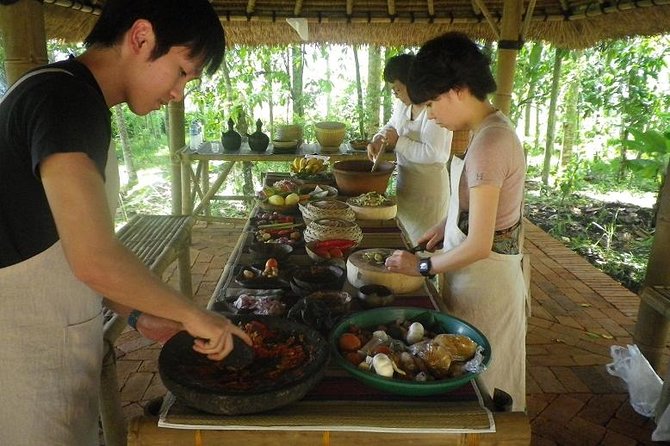
The class finishes with a sit-down meal featuring the food you prepared. This is the moment when the morning’s separate tasks come together. The market produce, the offering lesson, the chopping, and the cooking now have a clear result on the table.
Eating your own work changes the experience. You notice the texture and seasoning more closely, and you can ask the chef what you might change when making the dish at home. It also turns the meal into a shared occasion rather than a quick tasting.
The setting is described as clean, attractive, and surrounded by Ubud’s jungle scenery. Do not read that as a promise of a luxury restaurant. The appeal is a pleasant cooking environment with a local feel, not formal dining or elaborate service.
The meal can also be useful for families. Children who might lose interest during a market explanation can take pride in food they helped prepare. The class has worked well for children aged six, eight, and nine, according to one family experience, although younger children will still need adult supervision around knives, heat, and kitchen equipment.
Transport, timing, and group size
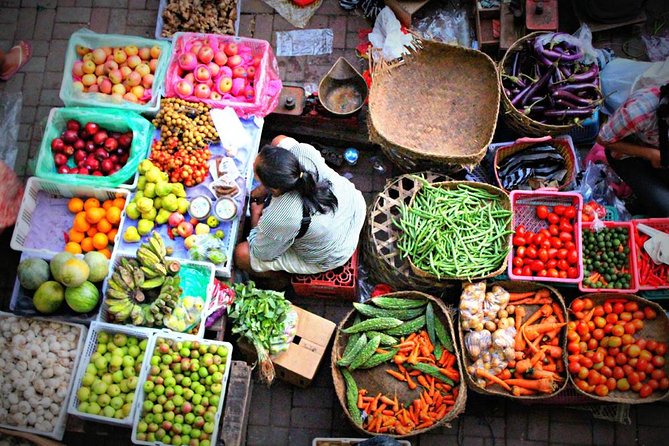
The experience lasts about six hours, including pickup, the market visit, the village stop, the offering activity, cooking, and the meal. That is a substantial block of time, so plan it as one of your main Ubud activities rather than something to squeeze between temple visits.
Hotel pickup is included, and the vehicle is air-conditioned. This is one of the less glamorous but more useful parts of the package. Bali traffic can make short distances take time, and transport is particularly valuable if you are staying outside Ubud.
The maximum group size is eight people. That is small enough to feel personal, though the amount of hands-on time can still depend on how tasks are shared. If you want to perform every step of every dish, mention that preference to the instructor. One solo participant received a private lesson and was able to prepare and cook each meal, but a private class should not be assumed.
The class also suits different kinds of parties. Couples can share the work, families can cook together, and solo visitors can join a small group. Group discounts are offered, which may improve the value for a larger booking.
The early market visit is important. Morning markets offer the best setting for this kind of activity, but you should be prepared for an early pickup and a full schedule. Comfortable clothing is sensible, and you will want to arrive with enough appetite for the final meal.
What could be better
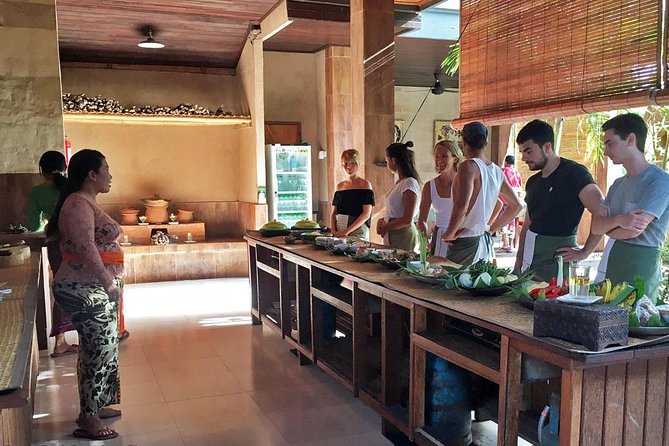
The experience has a very high overall rating, but it is still worth knowing its limits. The market visit is brief, so you should not book it as a dedicated market tour. If your main goal is photography, bargaining, or extended people-watching, another market visit may suit you better.
The menu is not fully specified in the information available. That gives the chef room to work with seasonal ingredients and dietary needs, but it also means you cannot be certain which dishes you will cook until the day.
The six-hour length may feel long if cooking is not a strong interest. Transport, preparation, and the meal all take time. You also need to accept that the class may include group work rather than giving you complete control of every recipe.
Finally, this is a cultural cooking experience, not a professional chef course. You will learn useful methods and recipes, but the instruction is aimed at curious visitors who want to cook local food at home. If you expect advanced knife skills, restaurant techniques, or a tightly structured culinary curriculum, the class may feel informal.
Who should book this class
I would recommend it most strongly to food-focused visitors who want more than a restaurant meal. It is also a good pick for first-time cooking-class participants because the instructors provide guidance and keep the mood light.
Families can benefit from the mix of food, craft, and local culture. The offering activity gives children a break from cooking, while the final meal rewards their effort. Couples and solo visitors should also find the small-group setting easy to enjoy.
This experience is less suitable for anyone with very limited time in Ubud, anyone who dislikes early starts, or anyone who wants a guaranteed menu in advance. It is also not ideal if you want a quiet private lesson unless that arrangement is confirmed before booking.
Free cancellation is available when you cancel at least 24 hours before the start time. Changes or cancellations made later are not accepted for a refund, so keep that deadline in mind when planning your Ubud schedule.
Should you book it?
At $35, this is a well-priced way to connect food with Balinese daily life. You visit a real market, learn about ingredients, make a canang, cook several dishes with local instructors, and sit down to eat the result. The included pickup and small group make the package even more useful.
I would book it if you want an active cultural morning and recipes you can use after Bali. I would skip it only if you dislike cooking, need a short activity, or want a carefully published menu with no surprises. For most food lovers, the combination of market, craft, cooking, and meal makes this one of the stronger value experiences around Ubud.
FAQ
How long does the Balinese cooking class last?
The experience lasts approximately six hours, including hotel pickup, the morning market visit, the village stop, the offering activity, cooking, and the final meal.
Is hotel pickup included?
Yes. Pickup is offered from your hotel, and air-conditioned transport is included for the journey to the market and cooking workshop.
How many people can join the class?
The activity has a maximum of eight travelers.
Does the experience include a morning market visit?
Yes. You visit a local fresh-food market and choose ingredients such as vegetables, herbs, meat, spices, and fruit for the cooking class.
Will I learn how to make a Balinese offering?
Yes. Before the cooking class, you learn about the process of making a canang and other offering equipment.
Are vegetarian or dietary options available?
Vegetarian options are available, and the cooking team has adapted dishes for dietary requirements. Share your needs before the class so the staff can plan appropriately.
What is included in the $35 price?
The price includes cooking equipment, cooking class fees, taxes, and air-conditioned transportation. Personal expenses are not included.
More Shopping Trips in Ubud
- Ubud City Tour I: Monkey Forest, Ubud Palace, Art Market, and Waterfall
★ 5.0 · 31 reviews - Ubud Day Tour : Waterfall, Temple and Local Night Market Tour
★ 5.0 · 17 reviews - Ubud City Tour II: Monkey Forest, Palace, Art Market, and Rice Terrace
★ 4.5 · 17 reviews - Bali Night Market Experience and Ubud Highlights tour
★ 5.0 · 16 reviews
More Balinese Cooking Classes in Ubud
- PRIVATE Balinese Cooking Class in Ubud with Dewa with Transfers
★ 5.0 · 213 reviews - Jambangan Bali Cooking Class
★ 5.0 · 142 reviews - Bali Cooking Class with Culture Experience
★ 5.0 · 78 reviews - Exclusive Authentic Balinese Cooking Class at Family home
★ 5.0 · 57 reviews
Newest reviews from Ubud
- Explore Rice Fields and Hidden Villages with Ubud E-Bike Tour★ 5.0 · 7 reviews
- Private Tour: Heaven Gate Temple, Tirta Gangga and Blue Lagoon Snorkeling★ 5.0 · 7 reviews
- Monkey Forest Ubud Half day Tour★ 4.0 · 7 reviews
- Ubud Monkey Forest Rice Terrace Temple Waterfall Private Tour★ 5.0 · 7 reviews
- UBUD : Temple and Waterfall All Inclusive Day Tour★ 5.0 · 7 reviews
- Bali – Silver Jewelry Making Class★ 5.0 · 7 reviews
- One way fast Boat between Padangbai and Gili Islands or Lombok★ 5.0 · 7 reviews
- Bali ATV Quad Bike and White Water Rafting – All Inclusive★ 5.0 · 7 reviews
Cooking Classes, compared.
PRIVATE Authentic Balinese Cooking Class in Ubud at Putu’s Home
Read our review →
Balinese Ubud cooking school (9 Dish Cooking and Market Tour)
Read our review →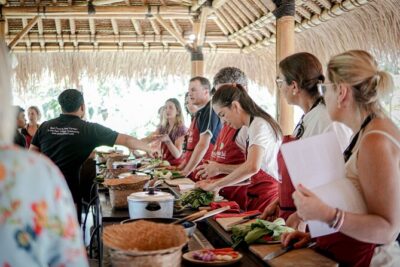

Learn to cook Indonesian food at Gili Cooking Classes Trawangan
Read our review →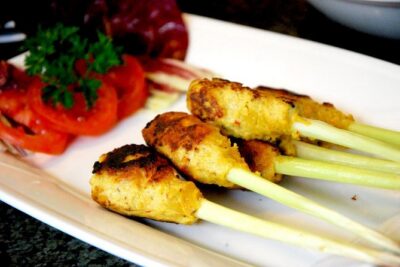
Browse the lists this tour appears in