
Reviewed · COOKING CLASSES
PRIVATE Balinese Cooking Class in Ubud with Dewa with Transfers
Bali tastes better at the family table. This four-hour private experience takes you from Ubud into the village of Keliki, where Dewa and his family share their home, garden, cooking methods, and Balinese traditions. I like the small private setting, which lets your group ask questions and work at its own pace. I also like the garden visit, since you see where ingredients such as galangal, cacao, nutmeg, and herbs begin before they reach the cooking pot.
The meal is a major reason to book. You help prepare several dishes, then sit down to eat them with beer and water. The only real drawback is that this is not a polished culinary school with restaurant-style equipment or formal chef instruction. It is a home visit first and a cooking lesson second, which is exactly its appeal for some people and less suitable for others.
Dewa is the central figure here, guiding you through his village, family compound, beliefs, farming customs, and kitchen. His wife, Jero, helps teach the cooking, and another family member may host if Dewa is unavailable. The experience has earned a 5-star rating from 213 customers, with 99 percent recommending it, but the warm reception is most useful when paired with clear expectations: you are visiting a working family home, not attending a professional kitchen course.
In This Review
- Key Points at a Glance
- From Ubud to Keliki, a Short Ride with a Change of Pace
- Walking Through Dewa’s Village and Garden
- Entering a Traditional Balinese Family Compound
- Cooking with Mortar, Fire, and Fresh Ingredients
- Eating the Meal You Helped Prepare
- Is $69 a Good Value?
- Who Will Enjoy This Most?
- Practical Details Before You Book
- Should You Book Dewa’s Cooking Class?
- FAQ
- How long does the Balinese cooking experience last?
- Is hotel pickup included?
- Where does the experience take place?
- Is this a private activity?
- Is a vegetarian meal available?
- What dishes might I learn to cook?
- Are drinks included?
- Can I cancel for a full refund?
Key Points at a Glance
- Private four-hour visit: Only your own group takes part, making it easier to ask questions and take part in the preparation.
- Pickup from Ubud: Round-trip transport is included from Ubud hotels and vacation rentals, but not from outside the Ubud area.
- Village and garden walk: Dewa introduces local plants, spices, farming practices, and the setting of his family compound.
- Traditional cooking methods: You use a pestle and mortar and cook on a wood-fired stove.
- Several Balinese dishes: Depending on the menu, you may prepare pepes ikan, bumbu kuning, bregedel, and other dishes, often totaling five to seven recipes.
- Recipes to take home: A handmade or locally produced notebook lets you record the dishes and remake them later.
From Ubud to Keliki, a Short Ride with a Change of Pace
The class takes place in Keliki, a village in the terraced foothills north of Ubud. If you are staying in Ubud, Dewa can arrange private transportation both ways. Some accounts describe the ride as roughly 15 to 30 minutes, while one person reported a much longer journey, so allow extra time for Bali traffic and confirm the pickup details in advance.
The drive matters because this is not a cooking studio in central Ubud. You leave the busy restaurant streets and head toward a quieter village setting, with terraces and greenery along the way. The change helps place Balinese food in its proper setting: as part of family life, agriculture, religion, and daily routines.
The listed meeting point is Rumah Makan Jero Nini at Jl. Arjuna in Keliki. If you stay outside Ubud, transport is not included, and you meet Dewa directly at his home instead. That restriction is important. A low price can become less attractive if you need to arrange a separate taxi from another part of Bali, so check your hotel location before booking.
More Airport Transfers in Ubud
- Electric Cycling Tour of Ubud with Free Hotel Transfer and Lunch
★ 5.0 · 1,397 reviews - White Water Rafting Ubud Bali With Hotel Transfer
★ 5.0 · 422 reviews - All Inclusive : Bali Blue Lagoon Snorkeling with Lunch &Transfers
★ 5.0 · 163 reviews
Walking Through Dewa’s Village and Garden
The experience begins with more than a quick look at a few vegetables. Dewa leads you through the village, gardens, and nearby greenery, explaining plants and ingredients that will later appear in your meal. You may see or learn about galangal, cacao, nutmeg, lemongrass, bananas, herbs, and other local produce.
This part gives the class its real value. In many cooking lessons, ingredients arrive measured and anonymous. Here, you learn something about their growing conditions, uses, and place in Balinese life before grinding, chopping, or cooking them. Dewa also explains medicinal properties, farming practices, and the connection between food and local customs.
Several accounts describe the walk as a mix of village streets, forest paths, rice fields, and community gardens. Comfortable walking shoes are a smart choice. The information describes a walk rather than a strenuous hike, but uneven village paths and tropical conditions are possible, so sandals may not be the best footwear.
Dewa also uses the walk to explain Balinese religion, including Hindu, Buddhist, and animist influences, as well as ideas about balance and living in harmony with nature. Some people may find this cultural discussion more memorable than the recipes. If you only want to cook, the longer introduction could feel like a delay. If you want to understand the food in context, it is one of the strongest parts of the day.
Entering a Traditional Balinese Family Compound
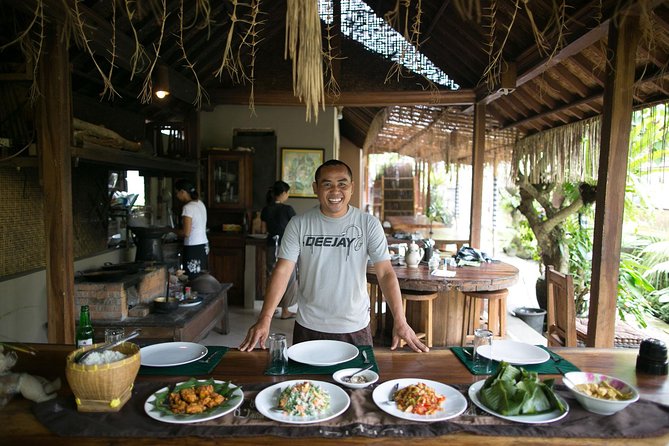
The cooking takes place in Dewa’s traditional walled family compound. Several open pavilions surround a central courtyard, and extended family members may be present. This is not a staged restaurant attraction. You are welcomed into the kind of home setting that gives the meal its meaning.
The compound also gives you a look at how family life is arranged. You may see the open kitchen, garden, courtyards, and other household spaces, while Dewa explains how his family lives. The setting is peaceful and green, but the experience is still a visit to someone’s home. You should approach it with the same courtesy you would use when invited into any private household.
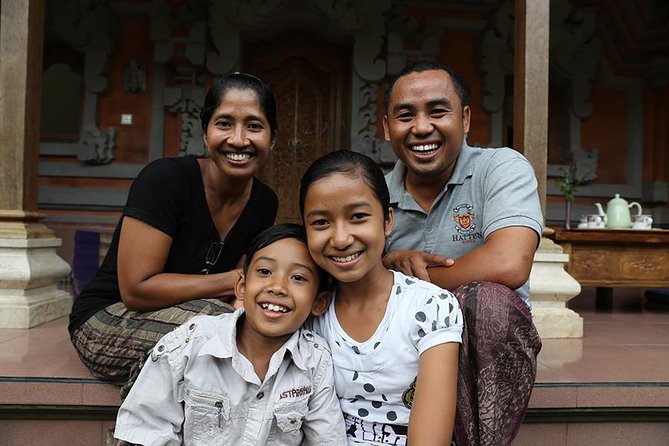
The family’s hospitality receives especially strong praise. Dewa is often described as warm, generous, calm, and willing to explain both simple details and larger questions about Balinese values. Jero takes an active role in the kitchen, and the wider family may greet you or help with the meal.
This personal welcome is also why group size matters. Since the activity is private, only your party participates. That gives you more freedom than a large class, though the exact amount of hands-on work can depend on your group and the family’s teaching style.
Cooking with Mortar, Fire, and Fresh Ingredients
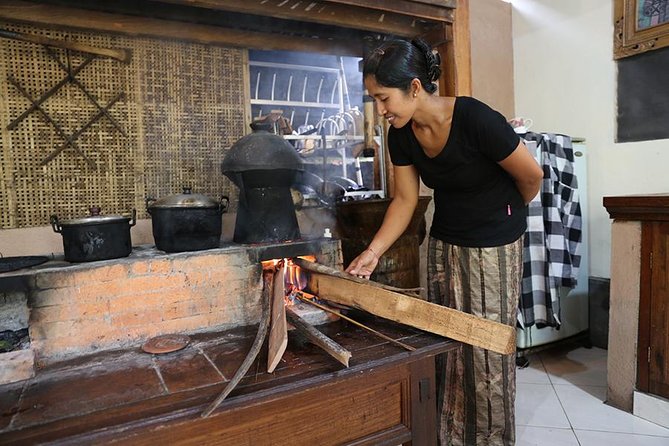
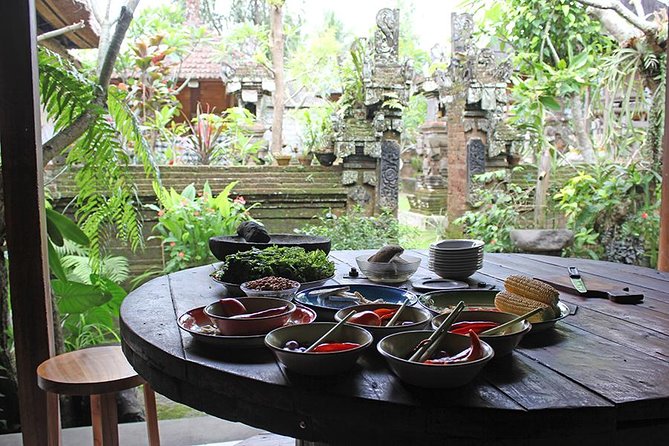
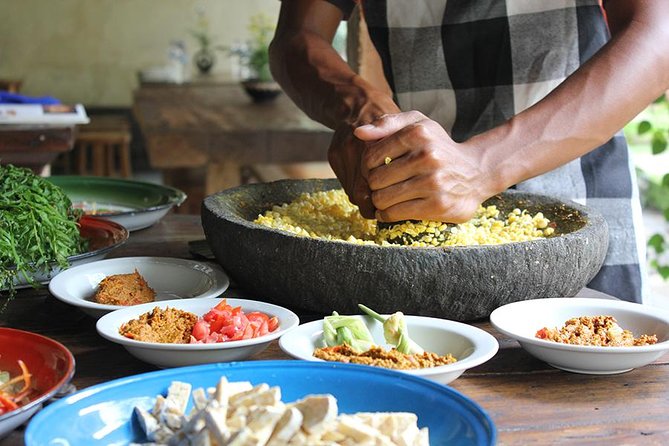
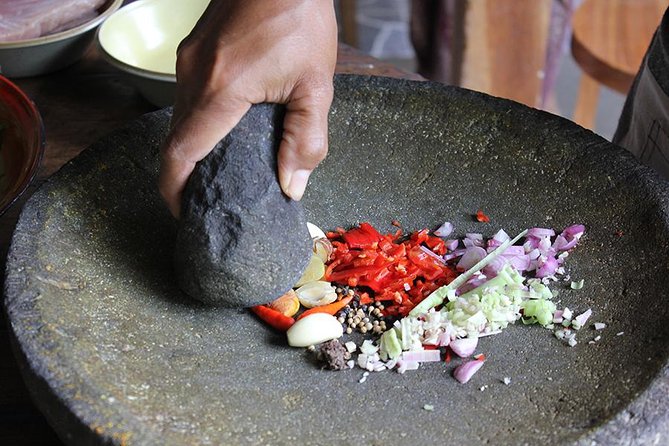
The kitchen lesson uses traditional tools rather than a modern demonstration counter. You work with a pestle and mortar to prepare pastes and seasonings, and you cook over a wood-fired stove. These methods show why Balinese cooking depends so much on fresh aromatics, spice pastes, coconut, herbs, and careful preparation.
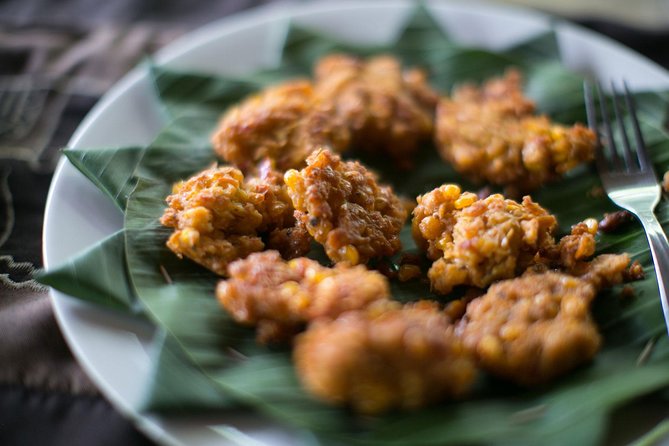
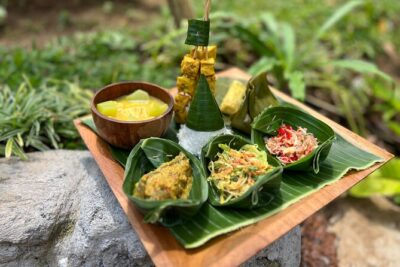
You may prepare pepes ikan, tuna grilled in banana leaves; bumbu kuning, chicken with fresh turmeric and coconut milk; and bregedel, hand-ground corn fritters. The exact selection can vary, but several accounts describe preparing five or six dishes, with one person reporting seven recipes. Menus can include salad, main courses, and dessert.
The lesson is intended to be hands-on. You may chop, grind, mix, and follow each recipe step by step rather than simply watching Dewa cook. One particularly useful touch is the recipe notebook, sometimes described as handmade or made locally, where you can write down the dishes as you go.
Do not expect professional-chef technique or a timed examination. The class is about home cooking and shared work. Instructions may be practical rather than highly formal, and the pace includes conversation about culture and family life. That makes it a good fit if you want to learn dishes you can recreate at home, especially if you enjoy asking questions while you cook.
The food itself is prepared in a traditional home style. It may use less salt than you are used to, since the emphasis is on fresh ingredients, spices, and food as part of a healthy daily routine. That does not mean bland food. The combination of turmeric, coconut milk, herbs, chili, and freshly ground spices creates the character of the meal.
More Cooking Classes in Ubud
- Ubud Cooking Class Bali with Balinese Chef
★ 5.0 · 1,609 reviews - PRIVATE Authentic Balinese Cooking Class in Ubud at Putu’s Home
★ 5.0 · 644 reviews - Balinese Ubud cooking school (9 Dish Cooking and Market Tour)
★ 5.0 · 540 reviews - Balinese Farm Cooking Class by Pemulan Bali
★ 5.0 · 410 reviews
Eating the Meal You Helped Prepare
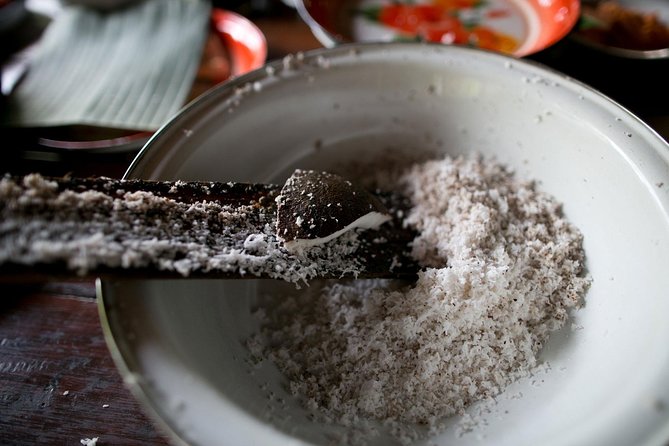
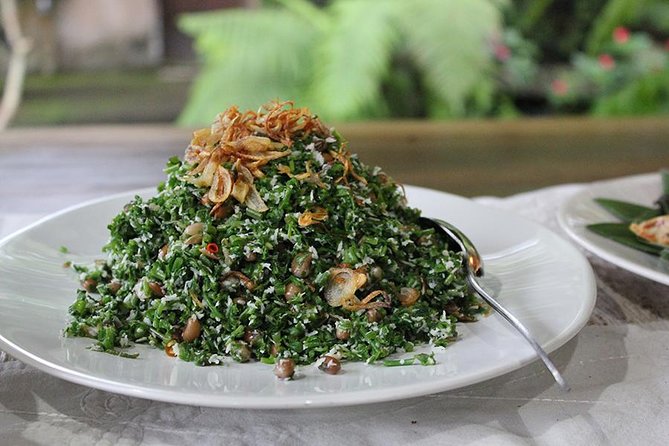
After the cooking, you sit down to eat what your group has made. The meal is served in the family compound, often in a relaxed garden or courtyard setting. Beer and water are included, and the meal may cover several courses depending on the day’s menu.
This is where the cooking lesson becomes a social experience. You are not just sampling a plate made by someone else. You have handled the ingredients, learned their names, and followed the steps, so each dish has a clear connection to the morning or afternoon.
The food receives some of the strongest praise. People regularly describe it as among the best meals of their Bali visit, with particular appreciation for the freshness and the chance to eat in a family home. I would treat those claims as a sign of the setting and personal connection rather than a promise of restaurant-level presentation. The reward is a meal with a story behind it.
Vegetarian food is available if requested at booking. Make that request early, since the menu includes dishes such as tuna and chicken by default. The supplied information does not specify other dietary adaptations, so anyone with allergies or strict dietary needs should ask before confirming.
Is $69 a Good Value?
At $69 per person, this is not the cheapest food activity around Ubud. The price includes a private four-hour experience, round-trip transport from Ubud, the village and garden visit, instruction, the meal, water, and local beer.
The value improves if you would otherwise pay separately for a private taxi to Keliki and a meal in Ubud. You are also paying for access to a family home, personal guiding by Dewa, cultural explanations, and a private group format. Those elements are difficult to compare with a standard restaurant meal.
The price may feel less compelling if you want a tightly focused cooking course with professional workstations, printed recipes already prepared, or advanced culinary instruction. This experience gives you several recipes and practical methods, but it is also a cultural visit and conversation with a local family.
Because the tour is commonly booked 36 days ahead, it is sensible to reserve early if your Ubud dates are fixed. Confirmation is sent within 48 hours, subject to availability. Free cancellation is available until 24 hours before the start time, but cancellations or changes inside that window are not refunded or accepted.
Who Will Enjoy This Most?
I would recommend this experience to you if food is one of the ways you like to understand a place. It suits couples, families, and friends who want a private activity with room for conversation. It also works well for people who are curious about Balinese religion, agriculture, family compounds, and the connection between food and daily life.
It is a particularly good choice if you want to leave Bali with recipes rather than only photographs. The notebook and repeated practice with spice pastes, fresh produce, banana leaves, and traditional tools make the lesson useful after the holiday.
You should think twice if you dislike walking, heat, village paths, or informal home visits. The activity includes a village and garden tour, and the kitchen is a traditional family kitchen rather than an air-conditioned classroom. It may also disappoint you if your main goal is advanced knife work, pastry technique, or instruction from a formally trained chef.
The private format is helpful for mixed groups. A keen cook can take the lead, while someone less interested in cooking can focus on the food, village, and cultural discussion. Still, everyone should expect to participate rather than simply sit back and watch.
Practical Details Before You Book
Plan for about four hours, but keep some flexibility around pickup and traffic. The activity ends back at the meeting point or with the included return transfer to Ubud, depending on your arrangement.
Wear comfortable shoes for the village and garden walk. Clothing should be suitable for visiting a family home and moving around an outdoor kitchen. The supplied information does not list a dress code, so modest, practical clothing is the safe choice.
Tell the operator at booking if you need a vegetarian meal. Service animals are allowed, and the meeting point is near public transportation, though Ubud pickup is the simpler choice for most people.
Dewa hosts the experience when available. If he cannot host, an equally welcoming family member may lead the visit alongside Jero. Since the activity takes place in a real household, the exact flow, menu, and family interaction can vary slightly. That is part of the charm, but it also means you should not expect a rigid schedule.
Should You Book Dewa’s Cooking Class?
Yes, if you want the cooking to open a door into Balinese life. The strongest parts are the walk through Keliki, the garden ingredients, the family compound, Dewa’s cultural storytelling, and the chance to eat food you helped make. The meal and recipes are valuable, but the personal welcome is the real reason this experience earns such high marks.
Book it early, especially if you need Ubud pickup on a particular day. Ask for a vegetarian menu in advance, wear good walking shoes, and arrive ready for a home visit rather than a formal culinary course.
If that sounds like your kind of Bali, $69 is a fair price for four hours of food, transport, teaching, and personal contact. If you want polished kitchen facilities or advanced chef training, spend your money elsewhere. For an honest look at village life with a memorable meal attached, this is one of Ubud’s better choices.
FAQ
How long does the Balinese cooking experience last?
The experience lasts approximately four hours.
Is hotel pickup included?
Round-trip transportation is included from hotels and vacation rentals in the Ubud area. Pickup and drop-off are not included for accommodation outside the Ubud region.
Where does the experience take place?
The activity takes place at a traditional family home in Keliki, north of Ubud. The listed meeting point is Rumah Makan Jero Nini at Jl. Arjuna, Keliki, Tegallalang, Gianyar, Bali.
Is this a private activity?
Yes. Only your group participates in the activity.
Is a vegetarian meal available?
Yes. A vegetarian option is available, but you must request it when booking.
What dishes might I learn to cook?
Possible dishes include pepes ikan, tuna cooked in banana leaves; bumbu kuning, chicken in fresh turmeric and coconut milk sauce; and bregedel, hand-ground corn fritters. The menu may include five to seven dishes.
Are drinks included?
Yes. Local beer and water are included.
Can I cancel for a full refund?
You can cancel at least 24 hours before the experience start time for a full refund. Cancellations or changes made less than 24 hours before the start time are not accepted for a refund.
More Workshops and Classes in Ubud
- Ubud Silver Class Jewelry making in bali
★ 5.0 · 978 reviews - Ubud Monkey Forest Silver Class – Craft Your Own Silver Jewelry
★ 5.0 · 254 reviews - Balinese Authentic Cooking Class in Ubud
★ 5.0 · 239 reviews - Canggu Scooter Lessons
★ 5.0 · 195 reviews
More Balinese Cooking Classes in Ubud
- Balinese Cooking class with traditional morning market visit
★ 5.0 · 161 reviews - Jambangan Bali Cooking Class
★ 5.0 · 142 reviews - PRIVATE Ubud Market Tour & Balinese Cooking Class with Putu
★ 5.0 · 125 reviews - Bali Cooking Class with Culture Experience
★ 5.0 · 78 reviews
Newest reviews from Ubud
- Explore Rice Fields and Hidden Villages with Ubud E-Bike Tour★ 5.0 · 7 reviews
- Monkey Forest Ubud Half day Tour★ 4.0 · 7 reviews
- Private Tour: Heaven Gate Temple, Tirta Gangga and Blue Lagoon Snorkeling★ 5.0 · 7 reviews
- Ubud Monkey Forest Rice Terrace Temple Waterfall Private Tour★ 5.0 · 7 reviews
- UBUD : Temple and Waterfall All Inclusive Day Tour★ 5.0 · 7 reviews
- Bali – Silver Jewelry Making Class★ 5.0 · 7 reviews
- One way fast Boat between Padangbai and Gili Islands or Lombok★ 5.0 · 7 reviews
- Bali ATV Quad Bike and White Water Rafting – All Inclusive★ 5.0 · 7 reviews
Cooking Classes, compared.
PRIVATE Authentic Balinese Cooking Class in Ubud at Putu’s Home
Read our review →
Balinese Ubud cooking school (9 Dish Cooking and Market Tour)
Read our review →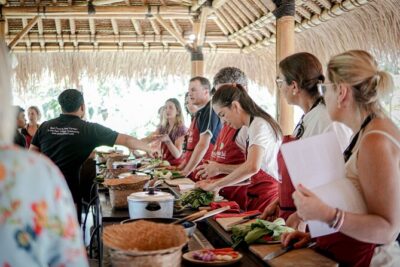

Learn to cook Indonesian food at Gili Cooking Classes Trawangan
Read our review →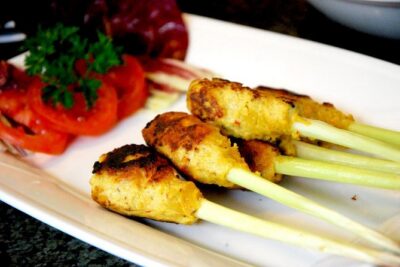
Browse the lists this tour appears in