
Reviewed · COOKING CLASSES
Exclusive Authentic Balinese Cooking Class at Family home
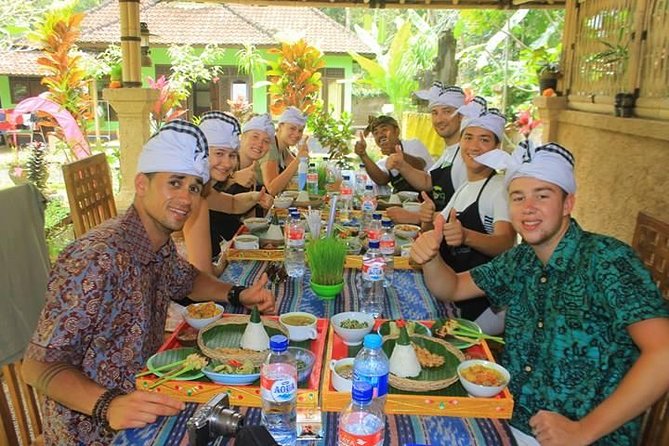
Taste Bali at the chopping block. This six-hour private class near Ubud combines Payangan Market with hands-on cooking in a family compound, giving you food, conversation, and a closer look at daily Balinese life. I especially like the local market visit and the chance to prepare every dish yourself, rather than watching a chef do all the work. The main consideration is the non-refundable booking policy, plus extra transfer charges if you stay outside Ubud or Payangan.
The class is a strong choice for curious eaters, families with older children, and anyone who wants more than a restaurant meal. You’ll work with a traditional wooden chopping block and stone mortar, then sit down to eat what you made. Six hours is a sizable chunk of your day, and the open-air kitchen means weather can affect the schedule.
In This Review
- Key points to know before booking
- Why this Ubud cooking class feels different
- Payangan Market: start with ingredients and local life
- Entering the Balinese family compound
- Grinding spices the old-fashioned way
- The five-dish Balinese meal
- What the six hours actually include
- Is $75 good value?
- Vegetarian, family, and dietary details
- What the experience does best, and where it falls short
- Who should book this class?
- Should you book the Payangan cooking class?
- FAQ
- Where does the cooking class take place?
- Does the experience include a market visit?
- Is hotel pickup included?
- Is the class private?
- Can I request a vegetarian menu?
- What food will I learn to prepare?
- What is the cancellation policy?
Key points to know before booking
- Payangan Market comes first: Morning sessions visit the traditional morning market, while afternoon sessions use the night market.
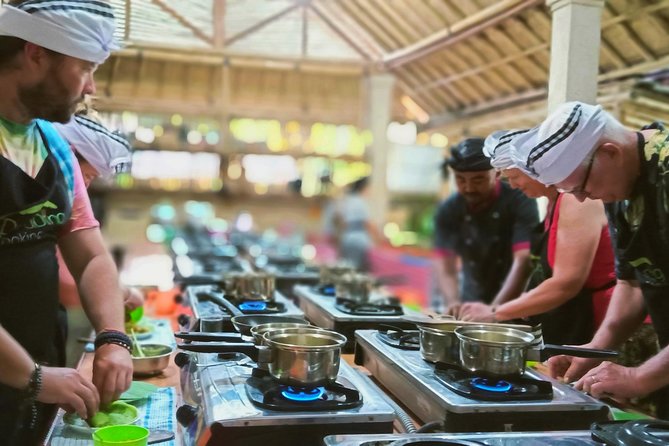
- You do the cooking: Chopping, pounding, grinding, grilling, sauce-making, and plating are all part of the work.
- The family compound is central: The class takes place in a traditional Balinese home, not an impersonal cooking studio.
- Five dishes are on the menu: Expect dishes such as jukut urab, sate lilit, chayote soup, tahu mesanten, and dadar gulung.
- Vegetarian cooking is available: Tell the operator in advance so the ingredients can be prepared properly.
- Transport has limits: Pickup and drop-off are free in Ubud and Payangan, but vehicles hold six passengers and larger groups may pay extra.
Why this Ubud cooking class feels different
Many cooking classes give you a recipe, a quick demonstration, and a plate of food. This one adds a market visit and a family-home setting, which changes the feel of the day. You see ingredients before they reach the kitchen, then learn how they become familiar Balinese dishes.
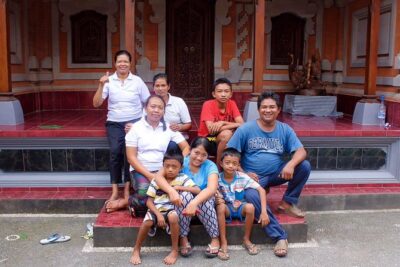
The setting matters. The cooking school operates within a Balinese family compound, with an open kitchen and garden area. You may also be introduced to members of the family and see parts of the home. One account describes meeting a rescued pet monkey, while another notes that the family keeps honey from native bees. These details are not guaranteed parts of every session, but they show the kind of personal setting the class offers.
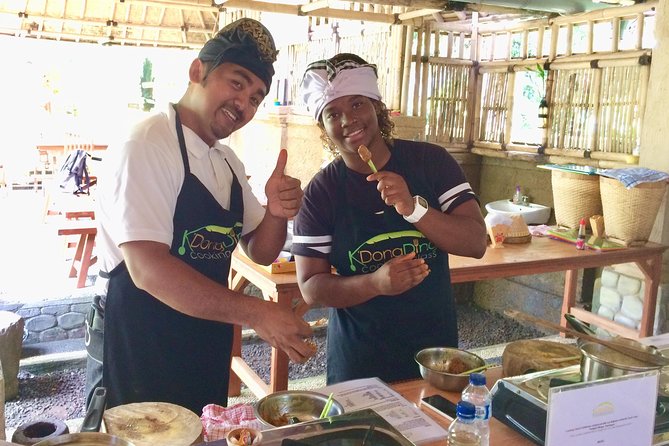
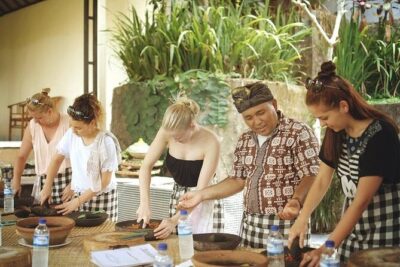
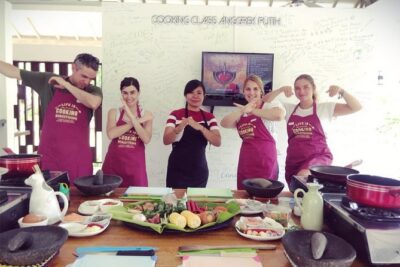
The strongest part is the hands-on format. You are not placed at a table to watch someone else cook. Each participant gets a cooking station, kitchen tools, ingredients, and direct guidance. You chop, pound, grind, mix, and cook your own food. That makes the final meal feel earned, even if your knife work is not quite restaurant-ready.
The class is private for your group, with a minimum of one person and a maximum of 12. That gives a solo visitor the chance to receive close attention, while a family or small group can share one kitchen experience. For groups of more than six, check the transport arrangement carefully because the vehicle is listed as holding up to six passengers.
More Cooking Classes in Ubud
- Ubud Cooking Class Bali with Balinese Chef
★ 5.0 · 1,609 reviews - PRIVATE Authentic Balinese Cooking Class in Ubud at Putu’s Home
★ 5.0 · 644 reviews - Balinese Ubud cooking school (9 Dish Cooking and Market Tour)
★ 5.0 · 540 reviews
Payangan Market: start with ingredients and local life
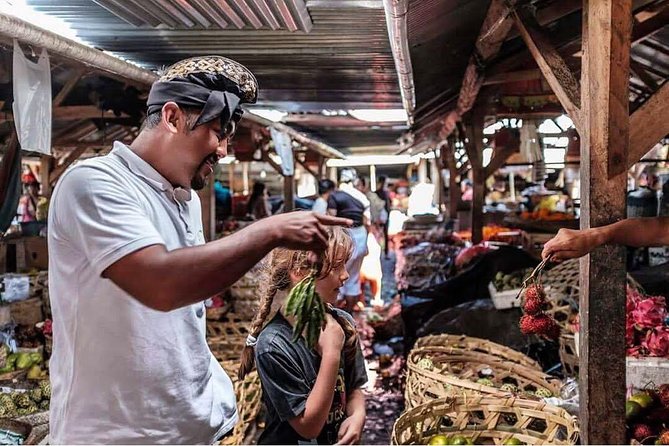
The first stop is Payangan Traditional Farmer Market, at the meeting point on Unnamed Road in Melinggih, Payangan. A morning class visits the traditional morning market. An afternoon class visits the night market instead.
This is more than a quick shopping stop. The guide explains the spices, vegetables, and other produce used in Balinese cooking. You might see ingredients that are hard to identify at first, which makes the later kitchen work easier to follow. Seeing the food in its everyday setting gives you a better sense of what local households actually buy and cook.
The market also brings you close to ordinary village life. One account describes seeing unusual foods and a stall selling pieces of freshly cooked suckling pig. That sort of sight is useful context, especially if you are interested in how food fits into Balinese daily routines and ceremonies.
A practical tip: choose the morning session if the market visit is your main reason for booking. The morning option is specifically tied to a traditional morning market, while the afternoon schedule uses a night market. Both can be worthwhile, but they are not the same experience.
The market is also the one part of the day where the schedule may feel less controlled. Market visits depend on the pace of the group, the guide’s explanations, and what is available that day. You are not simply ticking off a sightseeing stop. You are there to look, ask questions, and connect market ingredients with the meal ahead.
Entering the Balinese family compound
After the market, you go to the family compound and receive a welcome drink of Bali coffee or tea, along with a Balinese cake or seasonal snack. Coffee and tea can be refilled, and you are encouraged to bring your own water bottle to reduce single-use plastic.
The compound gives the class much of its character. You are welcomed into a working family home, then shown toward the open-air kitchen. Several accounts describe the property as attractive, clean, and set in a garden. The kitchen has about 12 cooking stations, although the actual number in use depends on your group.
This is a useful cultural exchange, but it is still a cooking class first. You should not expect a formal architectural tour with a long lecture about every part of the compound. The home setting is valuable because it puts the food in context and lets you see how a family-run operation functions.
The host’s personality can shape the day. Nyoman Mahendra is named in several accounts as the chef and guide, praised for his warmth, professional cooking background, and willingness to answer questions about ingredients and their place in Balinese culture. Another account refers to Wayan, so the exact instructor may vary. The class is described as family-owned and run, with a friendly approach rather than a polished hotel-school atmosphere.
Grinding spices the old-fashioned way
Balinese cooking depends heavily on spice pastes and sauces. This is where the class becomes genuinely practical. You learn two basic preparation methods: chopping on a wooden block and grinding ingredients in a stone mortar.
The mortar work can be physical. You are expected to do it yourself, rather than watch a guide create a perfect paste while you take notes. The process helps you understand the texture and smell of the spice mixture before it is cooked.
You also get to test the spice ingredients. That small step is useful because it turns a list of recipe names into something you can recognize with your senses. You begin to notice which flavors are sharp, earthy, hot, sweet, or fragrant before they are blended into a dish.
The class covers traditional utensils and methods, but you also receive practical cooking advice from an experienced local chef. This combination works well. You learn not only what goes into a recipe, but also how the ingredients are prepared and why a paste is chopped in one case and ground in another.
No previous cooking experience is required. The format is designed for participation, but the chef guides you through each stage. If you are an experienced home cook, ask about ingredient origins and substitutions. If you are new to Balinese food, focus on the order of preparation and the feel of the spice paste.
More Balinese cooking classes in Ubud:
- PRIVATE Balinese Cooking Class in Ubud with Dewa with Transfers
★ 5.0 · 213 reviews - Balinese Cooking class with traditional morning market visit
★ 5.0 · 161 reviews - Jambangan Bali Cooking Class
★ 5.0 · 142 reviews - PRIVATE Ubud Market Tour & Balinese Cooking Class with Putu
★ 5.0 · 125 reviews
The five-dish Balinese meal
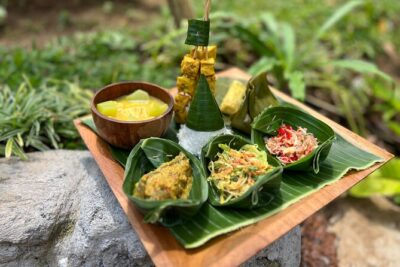
The menu is built around several classic dishes, with vegetarian versions available when requested ahead of time. The exact menu can be adjusted for dietary needs, but the listed dishes include:
- Jukut urab: A vegetable dish mixed with a seasoned coconut preparation.
- Sate lilit ayam, or tofu: A Balinese-style minced mixture shaped around a skewer, with tofu offered for a vegetarian version.
- Calon be siap with chayote soup: A chicken dish served with chayote soup, with tofu available for a vegetarian option.
- Tahu mesanten: A tofu dish prepared with Balinese seasoning.
- Dadar gulung: A rolled Balinese pancake dessert, listed here in the Kedongding style.
The menu gives you a broad look at Balinese cooking. You work with vegetables, tofu or chicken, spice pastes, soup, grilled food, and dessert. That is more useful than learning one signature dish and calling it a day.
Chayote is also highlighted for its nutrients, fiber, and low calorie content. Treat the health claims as general food information, not medical advice. The important point for the class is that chayote adds a mild vegetable base to the meal and shows how Balinese cooking uses local produce in several ways.
The final meal is either lunch or dinner. In the morning, you cook and eat lunch. In the afternoon, you cook and eat dinner. Since you prepare the menu yourself, the meal is not a separate restaurant service waiting at the end. Your timing and teamwork help determine when everything is ready.
What the six hours actually include
The advertised duration is about six hours, and the day has several parts:
- Pickup in the Ubud or Payangan area, if arranged
- A visit to Payangan Market
- Transfer to the family compound
- Coffee or tea and a Balinese snack
- A tour of the compound
- Introduction to spices and ingredients
- Hands-on preparation and cooking
- Lunch or dinner
- Recipe book and cooking workshop certificate
- Return transport to the meeting point or your hotel area
That is a full half-day. I would not pair it with a tightly timed temple visit or a long list of afternoon stops. The cooking is the main event, and rushing through the market or meal would weaken the experience.
The air-conditioned vehicle is a welcome feature for transport, particularly in Bali’s heat. Free pickup and drop-off apply in Ubud and Payangan. If you stay in Sanur, the listed extra transfer fee is IDR 350,000 per booking. Hotels in Kuta, Seminyak, Legian, Nusa Dua, and Jimbaran are listed at IDR 500,000 per booking. The supplied information gives slightly different dollar conversions, so confirm the current rupiah amount before paying.
For parties of seven to 12, the vehicle limit matters. The stated extra cost is $15 per person for guests seven through 12. Larger groups can reserve the date for their own group, but you should ask how the transport and kitchen logistics will be handled.
Is $75 good value?
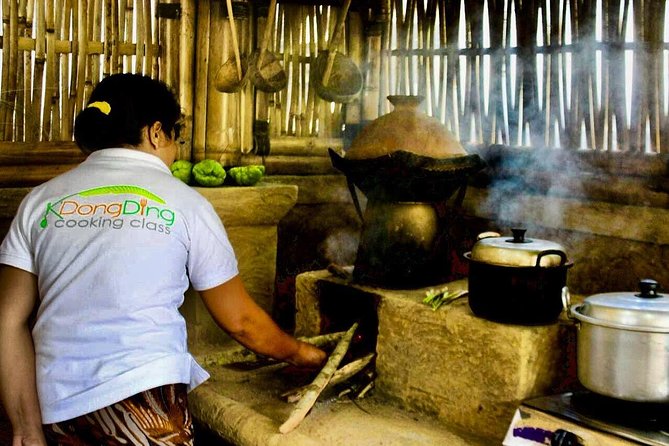
At $75, this is not the cheapest cooking lesson in Bali. But you are paying for more than a few hours at a stove. The price includes the market visit, transport in the Ubud and Payangan area, ingredients, cooking equipment, a welcome drink, snacks, the meal, recipes, and a certificate.
The private format improves the value for couples, families, and small groups. You are not placed with a large crowd, and the class can focus on your pace and questions. A solo participant pays more per person than someone sharing a private booking, but the minimum booking is one person, so you do not need to find a group.
The best value comes if you care about the full chain from market to meal. If you only want to eat Balinese food, a local restaurant will cost less and take less time. If you want to understand the ingredients, learn traditional preparation, and leave with recipes you can use at home, the price is easier to justify.
The certificate is a pleasant extra, but I would not choose the class for that reason. The recipes and the skills are the lasting souvenirs. One particularly appealing detail is that you can return home and recreate the dishes for friends, using the written recipes as a guide.
Vegetarian, family, and dietary details
Vegetarian cooking is available, but you must request it in advance. The listed menu includes tofu alternatives for the sate lilit and the chicken dish. Do not wait until you arrive, since the operator needs time to prepare the ingredients correctly.
The minimum age is 12, and children must be accompanied by an adult. The class suits older children who enjoy practical activities, but the mortar work, knives, hot cooking surfaces, and full six-hour schedule require attention. The information does not specify a separate children’s menu.
You should also report allergies and other dietary requirements when booking. The operator specifically asks for this information in advance. Bottled water is not included, so bring your own refillable bottle.
What the experience does best, and where it falls short
The biggest strength is the combination of food and personal contact. You are welcomed into a family compound, introduced to local ingredients, and given real work to do. That is why the class feels more personal than a standard demonstration.
The instructors also seem to be the heart of the experience. Nyoman Mahendra is repeatedly praised for being passionate, funny, patient, and willing to explain small details about food and culture. One account describes having the chef’s full attention during a private session, which allowed for many questions about the origins and cultural role of each dish.
The food itself earns high marks, but the important point is that you make it. The class does not hide the messy steps. You chop, pound, grind, and cook. For some people, that is the fun. For others, the physical preparation may feel slow, especially if you want a quick activity.
The main drawbacks are practical. Six hours is long, the class depends on good weather, and transport from the southern resort areas costs extra. The booking is non-refundable and cannot be changed for personal reasons. If poor weather cancels the activity, you are offered another date or a full refund. The same applies if the minimum number of participants is not met.
Who should book this class?
I would choose this experience if you:
- Want a private, hands-on food lesson rather than a demonstration
- Enjoy local markets and family-run experiences
- Have at least half a day available near Ubud
- Like learning traditional techniques, not just collecting recipes
- Are happy to eat the meal you prepare
- Have a vegetarian diet or other needs you can report in advance
- Are traveling with children aged 12 or older
I would skip it if you dislike open-air kitchens, have a very tight sightseeing schedule, or want a polished restaurant-style cooking school. I would also check the transfer cost first if you are staying in Sanur, Kuta, Seminyak, Legian, Nusa Dua, or Jimbaran.
Should you book the Payangan cooking class?
Yes, if your idea of a good Bali experience includes meeting a local family, walking through a real market, and getting your hands dirty with spice paste. The strongest features are the family-home setting, full participation, and the chance to make five dishes before eating them for lunch or dinner.
Book the morning session if the traditional market is your priority. Choose the afternoon option if a night market fits your schedule better. Confirm pickup, dietary requests, group size, and transfer fees before committing, since the cancellation terms are strict.
For food-focused visitors, this is one of the more meaningful ways to spend a day near Ubud. You leave with a meal, recipes, and a better feel for how Balinese food is actually prepared at home.
FAQ
Where does the cooking class take place?
The class takes place near Ubud in a Balinese family compound in the Payangan area. The cooking is held in a traditional open kitchen.
Does the experience include a market visit?
Yes. The itinerary includes a visit to Payangan Traditional Farmer Market. Morning sessions visit a traditional morning market, while afternoon sessions visit a night market.
Is hotel pickup included?
Free pickup and drop-off are provided for hotels in the Ubud and Payangan areas. Extra transfer fees apply for several areas outside Ubud, including Sanur and southern resort zones.
Is the class private?
Yes. Only your group participates. The minimum is one person, and the maximum is 12 people per booking.
Can I request a vegetarian menu?
Yes. Vegetarian options are available, including tofu alternatives for some dishes. You must request a vegetarian menu in advance.
What food will I learn to prepare?
The listed dishes include jukut urab, sate lilit ayam or tofu, calon be siap with chayote soup or tofu, tahu mesanten, and dadar gulung.
What is the cancellation policy?
The experience is non-refundable and cannot be changed for personal reasons. If poor weather or an insufficient number of participants causes the operator to cancel, you are offered another date or a full refund.
More Workshops and Classes in Ubud
- Ubud Silver Class Jewelry making in bali
★ 5.0 · 978 reviews - Balinese Farm Cooking Class by Pemulan Bali
★ 5.0 · 410 reviews - Ubud Monkey Forest Silver Class – Craft Your Own Silver Jewelry
★ 5.0 · 254 reviews - Balinese Authentic Cooking Class in Ubud
★ 5.0 · 239 reviews
Newest reviews from Ubud
- Explore Rice Fields and Hidden Villages with Ubud E-Bike Tour★ 5.0 · 7 reviews
- Monkey Forest Ubud Half day Tour★ 4.0 · 7 reviews
- Private Tour: Heaven Gate Temple, Tirta Gangga and Blue Lagoon Snorkeling★ 5.0 · 7 reviews
- Ubud Monkey Forest Rice Terrace Temple Waterfall Private Tour★ 5.0 · 7 reviews
- UBUD : Temple and Waterfall All Inclusive Day Tour★ 5.0 · 7 reviews
- Bali – Silver Jewelry Making Class★ 5.0 · 7 reviews
- One way fast Boat between Padangbai and Gili Islands or Lombok★ 5.0 · 7 reviews
- Bali ATV Quad Bike and White Water Rafting – All Inclusive★ 5.0 · 7 reviews
Cooking Classes, compared.
PRIVATE Authentic Balinese Cooking Class in Ubud at Putu’s Home
Read our review →
Balinese Ubud cooking school (9 Dish Cooking and Market Tour)
Read our review →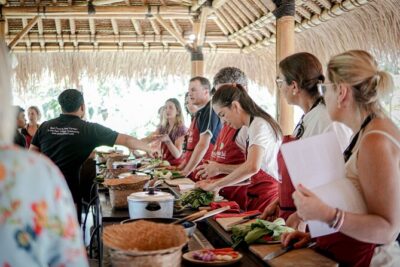

Learn to cook Indonesian food at Gili Cooking Classes Trawangan
Read our review →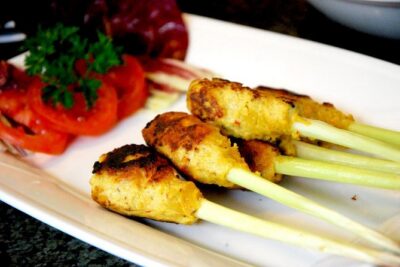
Browse the lists this tour appears in