
Reviewed · COOKING CLASSES
From Ubud : Ubud Balinese cooking class with Market tour
Come hungry and ready to get messy. This five-hour Ubud experience pairs a traditional morning market visit with a hands-on Balinese cooking class, giving you more than a meal and a recipe sheet. You see where local ingredients begin, then use them in a family-style kitchen.
I like the chance to make nine Balinese dishes and take home copies of every recipe. I also like the small group, capped at 12 people, plus hotel pickup and drop-off in central Ubud. The main concern is spice: one participant found the food far too hot, so ask for a milder version before you begin.
The morning departure has the fullest program, with the market and rice paddies included. The afternoon option swaps those visits for making a canang offering, so check the start time carefully when booking. The food, local setting, and friendly instruction make this a strong choice for families and curious eaters, though the presentation may feel rushed at times.
In This Review
- Key points to know before booking
- Why this cooking class is worth your morning
- The morning begins at Tampaksiring market
- Rice paddies add a quiet rural stop
- Welcome drink, spice paste, and nine dishes
- Spice levels can make or break the meal
- The buffet meal is the payoff
- Recipe copies make the experience useful at home
- Transport is easy, with one important limit
- Who should book this Ubud experience?
- Should you book the Balinese cooking class?
- FAQ
- How long does the Ubud cooking class last?
- Is hotel pickup included?
- Does the morning class include a market visit?
- What does the afternoon class include instead?
- How many people can join the class?
- Can I request vegetarian food?
- What is the cancellation policy?
Key points to know before booking
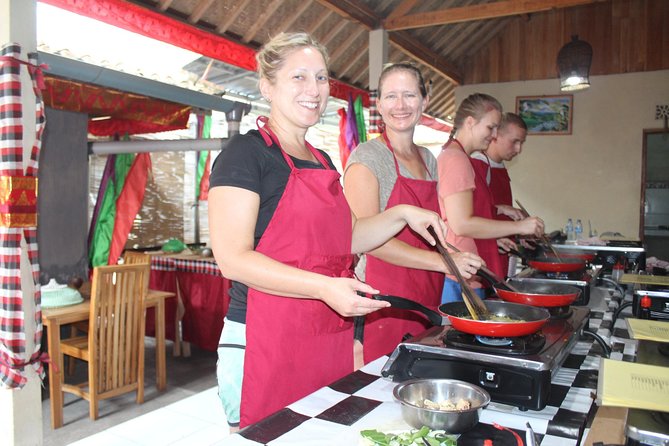
- Nine Balinese recipes in one class: You work with a broad set of dishes, including fried tempe, Balinese chicken, vegetable soup, and other local specialties.
- Morning market access: The traditional market visit is available only with the morning class and takes you to Tampaksiring village.
- Rice paddies or a canang offering: Morning participants visit rice paddies, while afternoon participants make a traditional offering.
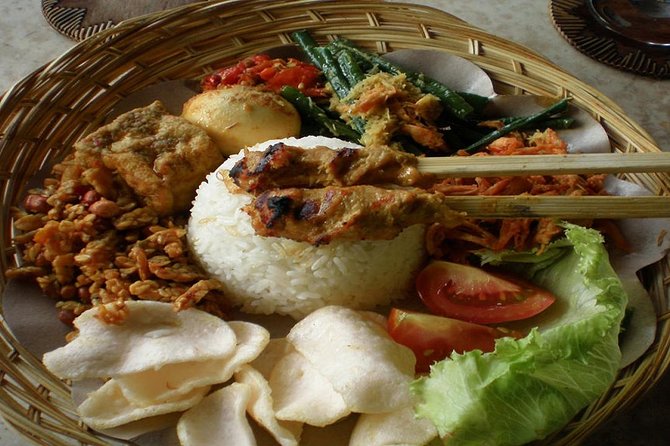
- Meal included after cooking: You eat a buffet-style meal made from the dishes prepared during the class.
- Central Ubud pickup: Hotel transport is included within central Ubud, but pickup outside the area costs extra.
- Spice levels need attention: Tell the class about your tolerance, and request vegetarian food at least one day ahead if needed.
Why this cooking class is worth your morning
Balinese food is built around balance. Chili, garlic, shallot, ginger, turmeric, coconut, herbs, and shrimp paste can all appear in the same meal, but the point is not simply to make food hot. The goal is to bring salty, sweet, sharp, earthy, and spicy notes together.
That makes a cooking class more useful than a standard restaurant meal. You can taste the ingredients separately, see how a spice paste becomes the base for several dishes, and learn how the same flavors work across meat, vegetables, and tempe. You also get a chance to ask questions while the food is being prepared, rather than trying to guess what is in your plate.
The class lasts about five hours, including transport and the sightseeing stops. It is long enough to feel like a proper half-day activity, but not so long that you lose a full day in Ubud. At $58, the price is not the cheapest cooking lesson in Bali, yet it covers pickup in central Ubud, a guide and driver, market and rice paddy visits on the morning schedule, the meal, drinks, and nine recipe copies.
For me, the value rests on the combination. You are not paying only for a cooking demonstration. You are also getting a local market visit, a rural stop, transport, and a substantial meal. If you want only a short lesson, this may feel like too much. If you want food, scenery, and local context in one booking, the price makes more sense.
More Cooking Classes in Ubud
- Ubud Cooking Class Bali with Balinese Chef
★ 5.0 · 1,609 reviews - PRIVATE Authentic Balinese Cooking Class in Ubud at Putu’s Home
★ 5.0 · 644 reviews - Balinese Ubud cooking school (9 Dish Cooking and Market Tour)
★ 5.0 · 540 reviews
The morning begins at Tampaksiring market
The morning class starts with pickup from your hotel, provided it is in central Ubud. From there, the vehicle heads toward the local market at Tampaksiring village. One family described the drive from Ubud as about 40 minutes through villages, which gives you a useful sense of the timing.
A local market is the right place to begin a food lesson. You see ingredients before they become polished dishes, and the visit helps explain the shopping side of Balinese cooking. The market is described as colorful and interesting, and guide Wayan was praised for knowing people there and adding local information along the way.
Do not expect a long, formal food lecture at every stall. The value comes from seeing the everyday setting and connecting ingredients to the meal you will later prepare. Bring your camera if you like taking pictures, but be respectful in a working market and ask before photographing people.
The market stop is only offered on the morning class. That detail matters. If fresh produce, village life, and a fuller schedule appeal to you, select the morning departure rather than assuming both class times include the same stops.
Rice paddies add a quiet rural stop
After the market, the morning program includes a visit to local rice paddies. This is a scenic pause before the cooking begins and gives the outing a wider sense of place. The stop is not presented as a long farm visit, so think of it as a short look at the rural setting rather than a full agricultural tour.
I like this pairing because food does not begin in the kitchen. Rice remains central to meals across Indonesia, and the paddy visit gives you a simple reminder of the work behind one of the region’s basic foods. It also breaks up the drive and keeps the class from feeling like a cooking lesson in isolation.
The schedule is less full in the afternoon. Instead of the market and rice paddies, the afternoon class includes making a canang offering. This is a traditional Balinese offering, and making one gives you a cultural activity connected to daily religious practice.
Choose based on your interests. The morning has more sightseeing and a stronger food-shopping focus. The afternoon offers the canang activity and may suit anyone who prefers a later start. The available information does not give exact departure times, so confirm the specific schedule at booking.
Welcome drink, spice paste, and nine dishes
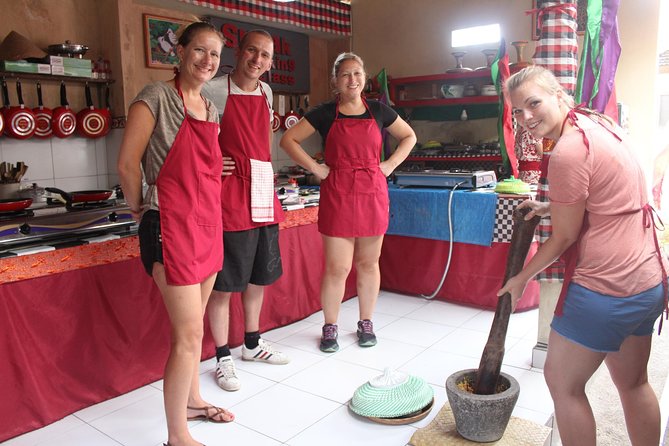
At the cooking venue, you receive a welcome drink, described as cold iced tea, before the hands-on work starts. The class takes place at a Balinese house, with cooking in an outside kitchen. That setting matters. You get a look at a home-style cooking space rather than a polished restaurant classroom.
The first major lesson is the Balinese spice paste. This paste serves as a base or sauce for many dishes, so learning it gives you a practical foundation for cooking at home. It is also where you begin to understand the layered taste of Balinese food. Ingredients are ground and combined before they are cooked, rather than added one at a time like a simple Western sauce.
The program then moves through nine Balinese recipes. The listed examples include fried tempe, Balinese chicken, and vegetable soup, with several other local dishes included as well. The exact recipe list is not stated, so do not book expecting a particular ninth dish unless the provider confirms it.
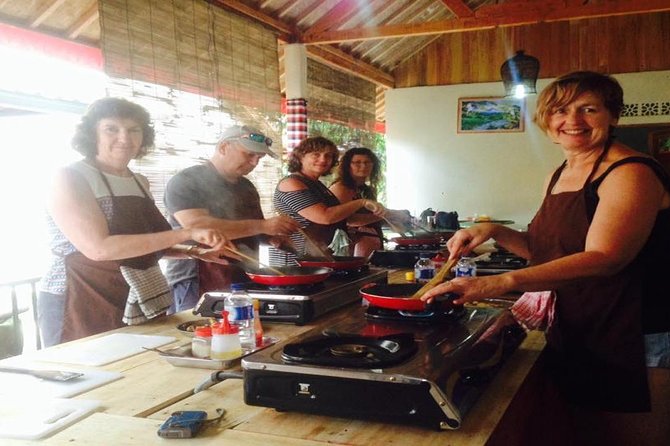
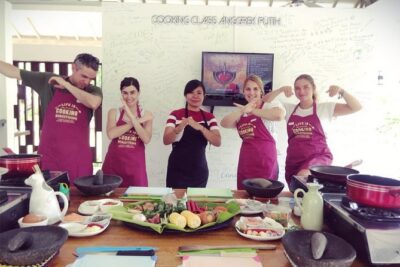
The hands-on part is the main attraction. You are not just watching a chef work from a distance. You take part in preparing the dishes and then eat what the group has made. A family of four particularly enjoyed making all nine dishes, and that is a useful sign for households looking for an activity everyone can share.
Still, pace and teaching style may vary. One participant found the presentation rushed and mechanical, even though the cooking itself was fun. If you learn best through slow explanations, ask questions as you go and pay attention during the spice-paste stage. That is likely the most useful technique to carry home.
More Market Tours in Ubud
- Balinese Cooking class with traditional morning market visit
★ 5.0 · 161 reviews - PRIVATE Ubud Market Tour & Balinese Cooking Class with Putu
★ 5.0 · 125 reviews - Ubud Cooking Class with Optional Market Visit Pickup Included
★ 5.0 · 70 reviews - Balinese Cooking Class with Traditional Market Tour
★ 5.0 · 66 reviews
Spice levels can make or break the meal
The strongest caution concerns heat. One participant found every dish too spicy, including dishes that other spice lovers struggled to finish. This is not a minor detail if you are sensitive to chili.
Tell the instructor before cooking begins that you want milder food. The provided information does not promise a specific adjustment, so make the request early rather than waiting until the meal is served. You should also state dietary needs at least one day before the class. Vegetarian requests are specifically accepted with advance notice.
The class can still work well for people with different tastes, since you are preparing several dishes and learning how the flavors are built. But do not assume that Balinese food will be toned down for international palates. If you enjoy heat, you may find the meal exciting. If you do not, advance communication is essential.
Alcoholic drinks are not included, though they can be purchased. Bottled water and the welcome drink are included, so you do not need to plan around refreshments during the class.
The buffet meal is the payoff
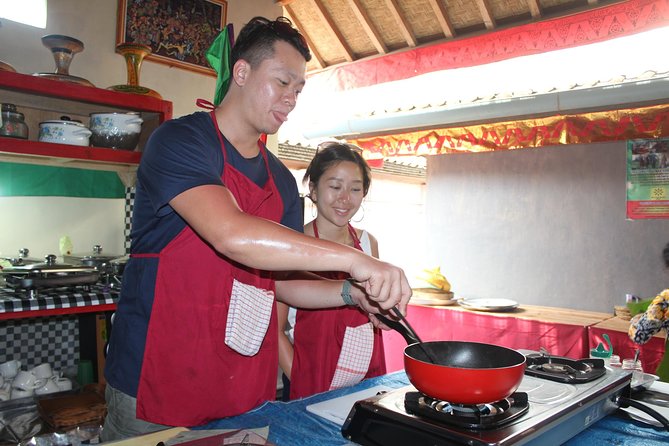
Once the cooking is finished, you sit down at the Balinese house for a buffet meal. The wording for the included meal varies between lunch and dinner, but the experience is clearly built around eating the food prepared during the session.
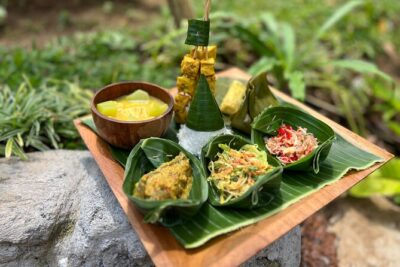
This is one of the best parts of the format. You see the dishes at different stages, then taste the finished results together. It also turns the class into a social meal, giving you time to talk with the other food lovers in your group.
The group limit is 12 people, which is small enough to make the cooking practical without making the activity feel private. A group this size can still have different skill levels and dietary needs, so expect a shared class rather than personal chef instruction. The strongest feedback praises helpful teachers, tasty food, and the chance to make many dishes.
The less positive account suggests that the meal can lose some of its pleasure if the food is too spicy or the presentation feels hurried. That is why the class suits people who care more about learning and participating than receiving a carefully paced gourmet lesson.
Recipe copies make the experience useful at home
You receive PDF copies of the nine Balinese recipes after the class. This is a real benefit. Food tours can be fun in the moment but hard to repeat once you return home. Written recipes give you a way to recreate at least some of the meal and remember which spice paste formed the base.
The recipes also help you compare the lesson with your own kitchen. You may need to find substitutes for local ingredients, and the final results may differ if you reduce the chili. Still, the handout turns the class into something practical rather than a one-time lunch.
Bring a camera if you want pictures of the market, rice paddies, kitchen, or finished dishes. The tour notes specifically suggest bringing one. You should also carry some cash for purchases or extra transport charges, especially if your hotel is outside central Ubud.
Transport is easy, with one important limit
Pickup and drop-off are included only for hotels in central Ubud. The vehicle is air-conditioned, and a driver is included, which removes the need to arrange a taxi for the morning or afternoon.
If you stay outside Ubud, request transport in advance and expect an additional charge. Do not assume the pickup will be arranged automatically. The booking notes make clear that outside-area transport requires a specific request.
The vehicle and driver are especially useful for the morning program because the market and paddy visits take you beyond a simple class transfer. The drive through villages was part of the appeal for one family, but keep in mind that road time is part of the five-hour total.
Confirmation is provided at booking, and reservations should be made at least one day before the class. The cancellation policy allows a full refund when you cancel at least 24 hours before the start time. Changes or cancellations inside that window are not accepted for a refund.
Who should book this Ubud experience?
I would recommend this class to families, couples, and solo food lovers who want more contact with local life than a restaurant meal provides. It works particularly well for families because the day combines a market, scenery, cooking, and a shared meal. One family with two children enjoyed the mix and took home recipes and memories from the day.
The morning version is best for anyone who wants the fullest outing. You get the market and rice paddies before cooking. Choose the afternoon class if making a canang offering appeals more than market shopping, or if you prefer not to start early.
This is also a good fit for cooks who want to understand Balinese flavor bases. The spice paste and nine-dish format give you more range than a class focused on one curry or one snack.
I would hesitate to recommend it to anyone who dislikes chili, dislikes group activities, or expects a slow, highly polished culinary school. The class may feel rushed, and the heat may be difficult unless you request adjustments ahead of time.
Should you book the Balinese cooking class?
Book it if you want a full half-day that links ingredients, village life, and cooking. The market visit, rice paddies, outside kitchen, buffet meal, and recipe PDFs give you plenty for the $58 price, especially with central Ubud transport included.
Choose the morning schedule for the most complete program, and tell the provider about vegetarian needs or low spice at least one day ahead. If you prefer cultural craft work and a later class, the afternoon canang offering is the better match.
Skip it if you want a short, quiet, restaurant-style lesson or cannot tolerate spicy food. For most curious eaters, though, this is a friendly and useful way to leave Ubud with more than photographs. You leave with cooking skills, nine recipes, and a better idea of how Balinese food reaches the table.
FAQ
How long does the Ubud cooking class last?
The experience lasts approximately five hours, including pickup, the visits included in your chosen schedule, the cooking class, and the meal.
Is hotel pickup included?
Pickup and drop-off are included for hotels in central Ubud. Transport outside Ubud requires an advance request and an additional charge.
Does the morning class include a market visit?
Yes. The traditional market visit is offered only with the morning class. The morning schedule also includes a visit to local rice paddies.
What does the afternoon class include instead?
The afternoon class includes making a canang offering instead of the morning market and rice paddy visits.
How many people can join the class?
The activity has a maximum of 12 travelers.
Can I request vegetarian food?
Yes. You should make a vegetarian request at least one day before the class.
What is the cancellation policy?
You can receive a full refund if you cancel at least 24 hours before the experience start time. Cancellations or changes made less than 24 hours before the start time are not accepted for a refund.
More Shopping Trips in Ubud
- Bali Food Tour: Savor Street Food and Night Market Adventures
★ 5.0 · 46 reviews - Ubud City Tour I: Monkey Forest, Ubud Palace, Art Market, and Waterfall
★ 5.0 · 31 reviews - Ubud Day Tour : Waterfall, Temple and Local Night Market Tour
★ 5.0 · 17 reviews - Ubud City Tour II: Monkey Forest, Palace, Art Market, and Rice Terrace
★ 4.5 · 17 reviews
More Balinese Cooking Classes in Ubud
- PRIVATE Balinese Cooking Class in Ubud with Dewa with Transfers
★ 5.0 · 213 reviews - Jambangan Bali Cooking Class
★ 5.0 · 142 reviews - Bali Cooking Class with Culture Experience
★ 5.0 · 78 reviews - Exclusive Authentic Balinese Cooking Class at Family home
★ 5.0 · 57 reviews
Newest reviews from Ubud
- Explore Rice Fields and Hidden Villages with Ubud E-Bike Tour★ 5.0 · 7 reviews
- Monkey Forest Ubud Half day Tour★ 4.0 · 7 reviews
- Private Tour: Heaven Gate Temple, Tirta Gangga and Blue Lagoon Snorkeling★ 5.0 · 7 reviews
- Ubud Monkey Forest Rice Terrace Temple Waterfall Private Tour★ 5.0 · 7 reviews
- UBUD : Temple and Waterfall All Inclusive Day Tour★ 5.0 · 7 reviews
- Bali – Silver Jewelry Making Class★ 5.0 · 7 reviews
- One way fast Boat between Padangbai and Gili Islands or Lombok★ 5.0 · 7 reviews
- Bali ATV Quad Bike and White Water Rafting – All Inclusive★ 5.0 · 7 reviews
Cooking Classes, compared.
PRIVATE Authentic Balinese Cooking Class in Ubud at Putu’s Home
Read our review →
Balinese Ubud cooking school (9 Dish Cooking and Market Tour)
Read our review →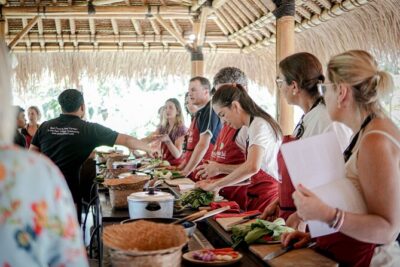

Learn to cook Indonesian food at Gili Cooking Classes Trawangan
Read our review →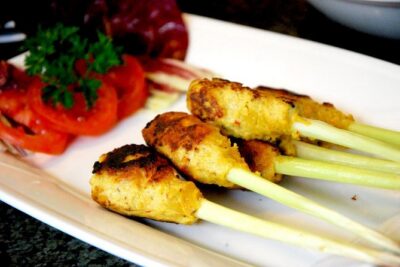
Browse the lists this tour appears in